
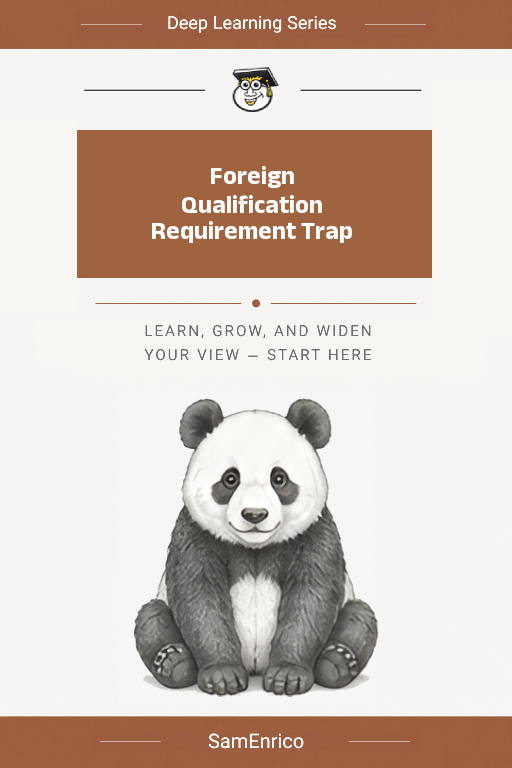
Non-FictionBusiness BriefForeign Qualification
Foreign Qualification Requirement Trap eBook
Register your Delaware or Wyoming LLC as foreign e
Register your Delaware or Wyoming LLC as foreign entity in states where you have physical presence including penalties for non compliance.
Formats
Free sample
Chapter 1: The $60 Lie--The most dangerous sentence in American small business is also the shortest: “Just form in Wyoming.”It appears in You Tube shorts. It scrolls past on Tik Tok. It gets whispered in Facebook groups for e-commerce sellers, freelancers, and digital nomads. The message is always the same, delivered with the casual confidence of someone who has never actually been sued, audited, or fined: Don’t form your LLC in your home state. Use Wyoming.
Or Delaware. It’s cheaper. It’s private. The gurus all say so.And for a moment, it sounds brilliant.You imagine saving hundreds, maybe thousands of dollars a year. You imagine keeping your name off public records.
You imagine operating like the big corporations—the ones that incorporate in Delaware for the famous Court of Chancery, the ones that seem to play by a different set of rules.So you spend sixty dollars. You fill out a simple online form. You get a certificate of formation that looks official, feels important, and seems to solve every problem you worried about when you decided to start your own business.Congratulations. You just stepped into a trap that has cost small business owners hundreds of thousands of dollars. And you won’t even know you’re trapped until something goes wrong.The Formation Fallacy Let’s start with a simple truth that the online gurus never mention: forming an LLC and operating an LLC are two completely different legal activities, and the law treats them differently.When you file paperwork with the Wyoming Secretary of State—paying your sixty dollars, listing your registered agent, naming your members—you have formed an LLC.
That’s it. You have created a legal entity that exists on paper. That entity has the right to hold assets, sign contracts, and be sued. But formation alone does not give you the right to operate that LLC anywhere except Wyoming.Operating means something else entirely. Operating means hiring employees.
Operating means opening a physical office—even a home office. Operating means storing inventory in a warehouse, signing a lease for equipment, or sending a salesperson into a state to solicit business. Operating means putting your feet on the ground and your goods on the shelf and your people at desks.And here is the brutal truth that the sixty-dollar formation services will never put in their marketing materials: every state where you operate has the legal right to require you to register there.Not just your home state. Every single state where you have physical presence.This is called foreign qualification. It is not optional.
It is not a suggestion. It is the law in all fifty states, enforced by statutes, penalties, and courts that have no patience for entrepreneurs who thought they found a loophole.Meet Sarah: The Snowbird Fallacy To understand how this trap actually works, meet Sarah. (Her real name is different, and she asked that her identity be protected because she is still repairing the damage.)Sarah started an online boutique selling handmade children’s toys. She lived in California. She worked from a spare bedroom in her apartment in Sacramento—a desk, a laptop, a label printer, and boxes of inventory stacked against the wall.Before she launched, she watched a popular You Tube video titled “Why You Should NEVER Form an LLC in California.” The video had over a million views.
The creator—a smiling man in a hoodie—explained that California charges an $800 annual franchise tax just for the privilege of having an LLC there. Wyoming, by contrast, charges sixty dollars a year. No state income tax. No public disclosure of members. Privacy.
Savings. Freedom.Sarah formed a Wyoming LLC. She paid her sixty dollars. She felt smart.Eighteen months later, the California Franchise Tax Board sent her a letter. The envelope was plain white, easy to ignore.
The contents were not.The letter stated that the Franchise Tax Board had determined Sarah was “doing business” in California—operating from her home office, shipping products to California customers, holding inventory in California—without registering her Wyoming LLC as a foreign entity. The letter assessed back franchise taxes for the full eighteen months: 800peryear,plusinterest,pluspenalties.Thetotalcametoover800 per year, plus interest, plus penalties. The total came to over 800peryear,plusinterest,pluspenalties.Thetotalcametoover2,500.But that was just the beginning.Because Sarah had also hired a part-time employee—a college student in Arizona who helped with customer service emails. That triggered foreign qualification requirements in Arizona. Because she had stored inventory in an Amazon FBA warehouse in Nevada.
That triggered foreign qualification requirements in Nevada. Because she had attended a craft fair in Oregon, selling toys from a booth for three days. Oregon considered that “transacting business” and required registration.By the time Sarah hired a lawyer to sort through the mess, she owed back fees, penalties, and legal costs exceeding $47,000. Her Wyoming LLC—the one that was supposed to save her money—had become a financial catastrophe.Sarah made one mistake. She believed that where she formed her LLC was the only place that mattered.
She did not understand that where she operated her LLC—where her feet went, where her inventory sat, where her employee typed emails—created legal obligations in every single one of those states.This is the Snowbird Fallacy. It is the belief that you can form your LLC in one state, live and work in another, and somehow avoid the laws of the state where you actually exist. And it is wrong in every jurisdiction in America.The Distinction That Changes Everything If you take only one concept from this chapter, make it this: formation is not operation.Formation is where you file your articles of organization. It is a purely administrative act. You can form an LLC in Wyoming without ever setting foot in Wyoming.
You can form an LLC in Delaware while sitting on a beach in Florida. The state where you form your LLC has very little interest in you—as long as you pay your annual fees and maintain a registered agent.Operation is where you actually do business. It is where your employees work. It is where your inventory sits. It is where you take meetings, sign contracts, and generate revenue.
The state where you operate has a very strong interest in you—because you are using its roads, its courts, its postal system, and its workforce.Every state has a simple deal: if you want to operate here, you need to register here. Pay your fees. Appoint a registered agent. File your annual reports. Follow the same rules as the local businesses.Foreign qualification is the mechanism for that registration.
When you foreign qualify, you are not forming a new LLC. You are taking your existing Wyoming or Delaware LLC and telling another state, “I am here. I am operating here. I agree to follow your laws and pay your fees.”Fail to foreign qualify, and you are operating illegally. It is that simple.The Sixty-Dollar Illusion Let’s talk about the number that started this entire mess: sixty dollars.That is the advertised price for forming a Wyoming LLC through any number of online services.…
This is the end of the free sample. Get the eBook to keep going. Buy now
About this book
Details
- Author
- Mahaffey Zula
- Publisher
- SamEnrico
- Language
- English
- Genre
- Non-Fiction, Business Brief, Foreign Qualification
- Released
- 2026-05-30
- Pages (approx.)
- 156
- Available as
- eBook, Audiobook

Read better in the ZLOADR app
Your eBooks on your phone or tablet. Sign in with your SamEnrico account and start reading.
More by Mahaffey Zula
 The Nobel And The Electron MicroscopeMahaffey Zula$11.99
 GAD Decision Making GuideMahaffey Zula$11.99
 Remote Time Audit WorkbookMahaffey Zula$11.99
 Market Share Bubble ChartMahaffey Zula$11.99
 Daily Priority Setting RoutineMahaffey Zula$11.99
 The Silk Road's Shadow: The Con Artist Who Sold the MoonMahaffey Zula$11.99
 The Deep Time Detectives: Unlocking Europe’s Ice Age SecretsMahaffey Zula$11.99
 Supply Chain Planning AnalystMahaffey Zula$11.99
 Understanding Growth Retardation Hydrocephaly Lung HypoplasiaMahaffey Zula$17.99
 BPO First Response Time GuideMahaffey Zula$12.99
 How to Become a Classifier OperatorMahaffey Zula$11.99
You may also like
 Hong Kong Handover 1997Dunn Johnnie$11.99
 Zumba For Postnatal Recovery CourseNeal Christian$11.99
 Zumba for BeginnersLadner Nikia$11.99
 YouTube Comment Mining GuideHumes Pandora$12.99
 Worry Box MeditationCarlin Rudy$11.99
 Workplace Stress MeditationNguyen Lynn$11.99
 Workplace Stress and Sleep RepairHawley Ivory$11.99
 Workplace Perfectionism CureDelaney Jeffry$11.99
 Workplace Injustice Anger GuideWallen Isabelle$11.99
 Work Addiction and Burnout LinkGreenwood Ester$11.99
 Women in Yoga and WellnessBeattie Galina$11.99
 Women in Stand Up ComedyChun Evangeline$11.99