
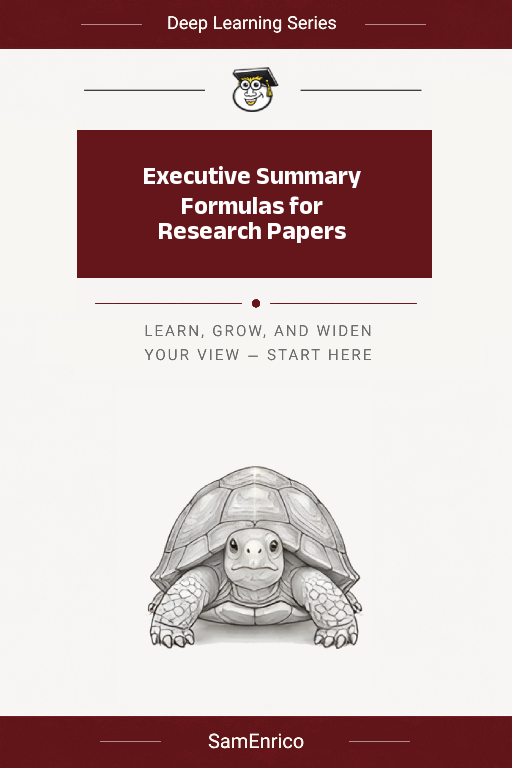
researchAcademic TranslationResearch Communication
Executive Summary Formulas for Research Papers Audiobook
Convert academic abstracts into executive-style su
Convert academic abstracts into executive-style summaries for industry sponsors or leadership. Translate statistical significance into business materiality and move methodology details into an optional appendix.
Formats
Free sample
Chapter 1: The Ten-Million-Dollar Comma--–- Dr. Elena Vasquez had spent eighteen months designing the perfect randomized controlled trial. She had controlled for selection bias, attrition, and every conceivable confounder. Her p-value was 0.003. Her confidence intervals were tight.
She presented her findings to the Chief Product Officer of a Fortune 500 retailer with the quiet pride of someone who had done everything right. The CPO listened for ninety seconds, nodded twice, and said: “This is very interesting.” Then he asked a question that would haunt Elena for the rest of her career: “So what?”The room went silent. Elena had prepared for questions about methodology, about external validity, about replication. She had not prepared for “so what.” She stammered through a restatement of her statistical significance. The CPO smiled politely, thanked her for her time, and moved to the next agenda item.
Her eighteen months of rigorous research were never mentioned again. Six months later, a consulting firm delivered the same finding—translated into projected annual savings of 10.4million—andreceiveda10.4 million—and received a 10.4million—andreceiveda2 million implementation contract.Elena’s story is not unusual. It happens every day in laboratories, analytics departments, and research divisions across the world. Brilliant, rigorous, statistically impeccable research dies not because it is wrong, but because it is unreadable to the people who control the budgets. The problem is not the research.
The problem is the abstract.The Peer-Review Trap Academic abstracts are written for a very specific audience: peer reviewers. Peer reviewers are methodologists. They want to know your sample size, your statistical test, your p-value, your confidence intervals, and your control variables. They want to see that you have been careful, skeptical, and appropriately modest in your claims. These are admirable goals for the peer-review process.
They are catastrophic goals for executive communication.Consider the standard structure of an academic abstract. It typically opens with a background statement, then describes the methods, then reports the results with p-values or confidence intervals, and finally offers a tentative interpretation. Here is a representative example from a real (but anonymized) published paper:*“Background: Prior research has suggested a relationship between shift length and error rates in manufacturing settings. Methods: We conducted a longitudinal observational study of 47 production lines over 14 months, using mixed-effects regression to control for line-level heterogeneity. Results: After controlling for shift type, worker experience, and seasonal demand, we found a statistically significant positive association between…
This is the end of the free sample. Get the Audiobook to keep going. Buy now
About this book
Details
- Author
- Dickens Cassi
- Publisher
- SamEnrico
- Language
- English
- Genre
- research, Academic Translation, Research Communication
- Released
- 2026-05-29
- Pages (approx.)
- 151
- Available as
- eBook, Audiobook

Listen in the VoxFlicks app
Audiobooks and audio dramas wherever you go. Sign in with your SamEnrico account and press play.
More by Dickens Cassi
 Tension Headache ReliefDickens Cassi$11.99
 Overcoming Plateaus HypnosisDickens Cassi$11.99
 The Late Career LegacyDickens Cassi$11.99
 Self Esteem During SeparationDickens Cassi$11.99
 Land Lease Retirement CommunitiesDickens Cassi$11.99
 The Silk Road to the Amazon: Ibn Battuta’s Lost ExpeditionDickens Cassi$11.99
 The Unseen Hand: How a 19th-Century Lawsuit Changed the WorldDickens Cassi$11.99
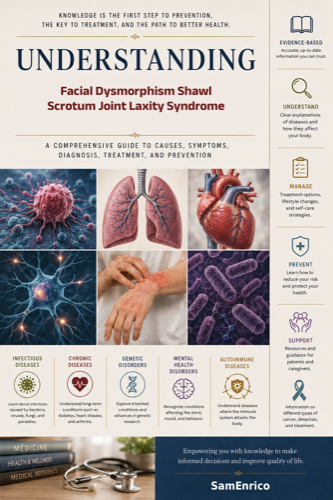 Understanding Facial Dysmorphism Shawl Scrotum Joint Laxity SyndromeDickens Cassi$17.99
 Procurement Outsourcing GuideDickens Cassi$12.99
 How to Become a Molding-machine OperatorDickens Cassi$11.99
 Painter and DecoratorDickens Cassi$11.99
You may also like
 Scientific Research On TM GuideMartens Nathanial$11.99
 Research Proposal Methodology Section MasteryPauley Debroah$11.99
 Research Proposal Appendix CompilationRaines Tyisha$11.99
 Academic Researcher Distraction GuideFord Virgil$11.99
 TM Research and ScienceCovert Nicki$11.99
 Social Anxiety Research ReviewRoberge Cole$11.99
 Research Proposal Significance Section GuideBock Tory$12.99
 Research Proposal Reviewer PsychologyLugo Tawanda$11.99
 Research Proposal Research Questions DesignLara Robbi$11.99
 Research Proposal References and CitationsPatten Shanice$11.99
 Research Proposal Mixed Methods DesignCameron Omega$11.99
 Research Proposal Data Management PlanAnderson Roberto$12.99