
Non-FictionProfessional's Cheat SheetBusiness Writing
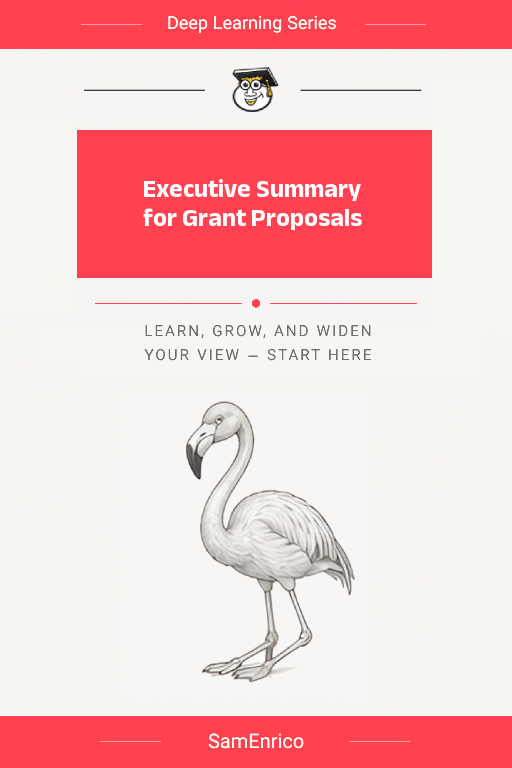
Executive Summary for Grant Proposals
Write executive summaries that win grants. What fo
Write executive summaries that win grants. What foundations and government agencies require.
Formats
About this book
Free sample
Chapter 1: The Sixty-Second Graveyard--–- Every year, millions of dollars in grant funding go unclaimed. Not because the need isn't urgent. Not because the programs aren't worthy. But because the executive summary—those first five pages or less—failed its one and only job: to survive the sixty-second graveyard.The sixty-second graveyard is not a physical place. It is the mental space where grant reviewers bury proposals that never had a chance.
A foundation board member opens your application, scans the first page, and within sixty seconds—often less—makes an unconscious decision about whether your proposal belongs in the "read carefully" pile or the "probably not" pile. Federal peer panelists, despite their rigorous rubrics and technical expertise, do the same thing. State agency reviewers, armed with scoring grids and page limits, are no different.This chapter reveals what happens in those sixty seconds, why the executive summary is the most dangerous and most valuable document you will ever write, and how to stop your proposal from joining the millions already buried.The Myth of the Careful Reader Most grant writers operate under a dangerous assumption: that reviewers read carefully, sequentially, and with full attention to every word. This assumption is false, and believing it has doomed more proposals than any other single error.Foundation board members are typically volunteers. They serve on boards because they care about causes, not because they love reading grant applications.
They review grants after full workdays, often at kitchen tables with children interrupting or between meetings with no time to focus. They have ten to twenty proposals to score before a looming deadline. They are not looking for reasons to fund you; they are looking for reasons to eliminate you quickly, because eliminating is faster than funding. A single ambiguous sentence, a single missing data point, a single buried request—and you are gone.Federal peer panelists are subject matter experts, highly qualified in their fields, but they are also catastrophically overworked. A single reviewer may be assigned fifty to one hundred proposals for a single review cycle.
Each proposal includes an executive summary, a fifteen-to-thirty-page narrative, multiple attachments, and a detailed budget. The reviewer has perhaps two…
This is the end of the free sample. Get the eBook to keep going. Buy now
Contents
- Chapter 1
- Chapter 2
- Chapter 3
- Chapter 4
- Chapter 5
- Chapter 6
- Chapter 7
- Chapter 8
- Chapter 9
- Chapter 10
- Chapter 11
- Chapter 12
Details
- Author
- Bustamante Theressa
- Publisher
- SamEnrico
- Language
- English
- Genre
- Non-Fiction, Professional's Cheat Sheet, Business Writing
- Released
- 2026-05-30
- Pages (approx.)
- 150
- Available as
- eBook, Audiobook

Read better in the ZLOADR app
Your eBooks on your phone or tablet. Sign in with your SamEnrico account and start reading.
More by Bustamante Theressa
 ISO 27001 Refresh ReportBustamante Theressa$11.99
 Alcohol Withdrawal Protocol ExamplesBustamante Theressa$11.99
 Bipolar And Sleep ApneaBustamante Theressa$11.99Bipolar And Sleep ApneaBustamante Theressa$11.99
 Graduate Student Imposter SyndromeBustamante Theressa$11.99
 The Teen Self Esteem WorkbookBustamante Theressa$11.99
 The Boto Cor-de-Rosa: Amazon’s Shapeshifting River EnchanterBustamante Theressa$11.99
 Conveyor Belt Loading (Ski Lift)Bustamante Theressa$11.99
 Certification Maintenance Renewal GuideBustamante Theressa$12.99
 Understanding Primary Orthostatic TremorBustamante Theressa$17.99
You may also like
 Hong Kong Handover 1997Dunn Johnnie$11.99
 Zumba For Postnatal Recovery CourseNeal Christian$11.99
 Zumba for BeginnersLadner Nikia$11.99
 YouTube Comment Mining GuideHumes Pandora$12.99
 Worry Box MeditationCarlin Rudy$11.99
 Workplace Stress MeditationNguyen Lynn$11.99
 Workplace Stress and Sleep RepairHawley Ivory$11.99
 Workplace Perfectionism CureDelaney Jeffry$11.99
 Workplace Injustice Anger GuideWallen Isabelle$11.99
 Work Addiction and Burnout LinkGreenwood Ester$11.99
 Women in Yoga and WellnessBeattie Galina$11.99
 Women in Stand Up ComedyChun Evangeline$11.99