
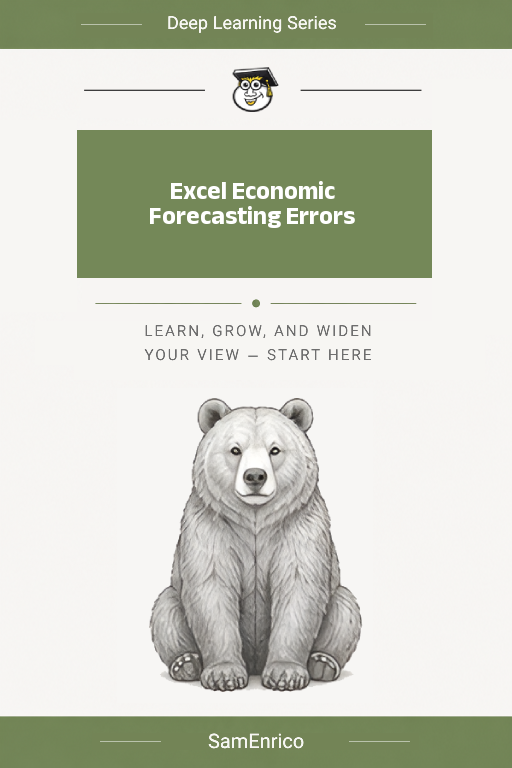
Excel Economic Forecasting Errors
Measures forecast accuracy using MSE, MAE, MAPE, a
by Ho Ali
Measures forecast accuracy using MSE, MAE, MAPE, and Theil's U for evaluating economic predictions in exams.
Formats
About this book
Free sample
Chapter 1: The Measurement Trap--–- In the autumn of 1992, a team of economists at the International Monetary Fund delivered a forecast that would haunt the institution for a decade. They predicted that the Swedish economy, then in the throes of a banking crisis, would contract by 1.2 percent in the coming year. The actual contraction was 6.1 percent. The error was not small—4.9 percentage points—but that is not what made the forecast infamous. What made it infamous was that the IMF team had measured their own forecast accuracy using only the Mean Absolute Error (MAE).
By that metric, their forecast appeared reasonable. The MAE masked the fact that their error was not randomly distributed but systematically biased: they had underestimated the severity of the collapse in five consecutive quarters. When a journalist finally obtained the internal documents years later, the phrase that appeared most often was not "wrong forecast" but "we measured it incorrectly."This book exists because that phrase is repeated thousands of times every day in economics departments, investment banks, government agencies, and examination halls around the world. Forecasters measure their errors badly. They choose the wrong metric.
They misalign time periods. They divide by the wrong denominator. They ignore the difference between in-sample and out-of-sample evaluation. They report one number while hiding three others. And then they wonder why their next forecast is just as wrong as the last one.The central argument of Excel Economic Forecasting Errors is deceptively simple: the difference between a useful forecast and a dangerous one is not the size of the error but the quality of its measurement.
A forecaster who correctly measures a large error can learn from it, correct for bias, improve the model, and communicate uncertainty honestly. A forecaster who incorrectly measures a small error learns nothing, repeats the same mistakes, and builds a false confidence that is far more destructive than any single large miss.This chapter is your entry point into that distinction. You will learn why forecast error measurement is not a mechanical afterthought but the single most diagnostic tool in economic forecasting. You will see real-world…
This is the end of the free sample. Get the eBook to keep going. Buy now
Contents
- Chapter 1
- Chapter 2
- Chapter 3
- Chapter 4
- Chapter 5
- Chapter 6
- Chapter 7
- Chapter 8
- Chapter 9
- Chapter 10
- Chapter 11
- Chapter 12
Details
- Author
- Ho Ali
- Publisher
- SamEnrico
- Language
- English
- Genre
- Non-Fiction, Student's Shortcut, Forecast Accuracy
- Released
- 2026-05-29
- Pages (approx.)
- 130
- Available as
- eBook, Audiobook

Read better in the ZLOADR app
Your eBooks on your phone or tablet. Sign in with your SamEnrico account and start reading.
More by Ho Ali
 Partner Illness Self EsteemHo Ali$11.99
 Lewis Graphic Novel MemoirHo Ali$11.99
 Kigali Lean Product LaunchHo Ali$11.99
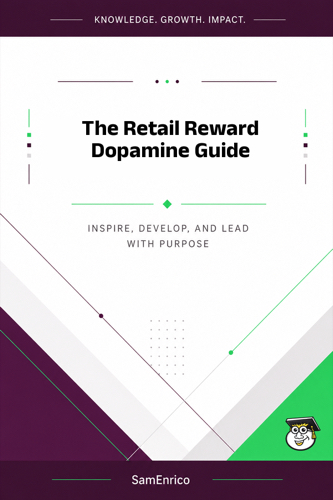 The Retail Reward Dopamine GuideHo Ali$11.99
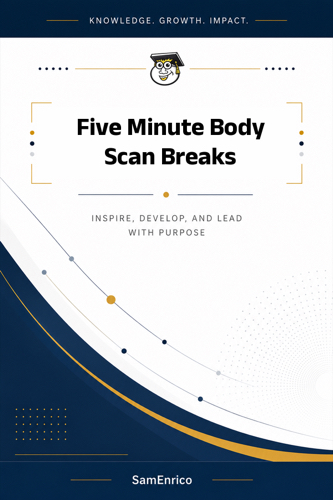 Five Minute Body Scan BreaksHo Ali$11.99
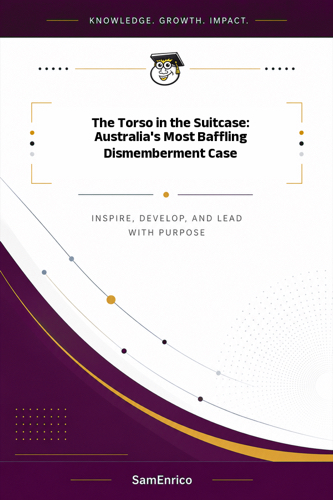 The Torso in the Suitcase: Australia's Most Baffling Dismemberment CaseHo Ali$11.99
 Understanding PseudohypoparathyroidismHo Ali$17.99
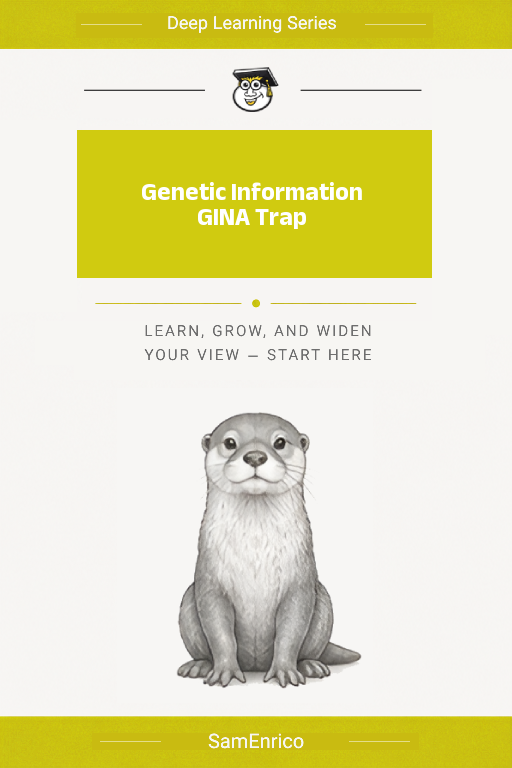 Genetic Information GINA TrapHo Ali$12.99
 Educational SpecialistHo Ali$11.99
 How to Become a Open-developer OperatorHo Ali$11.99