
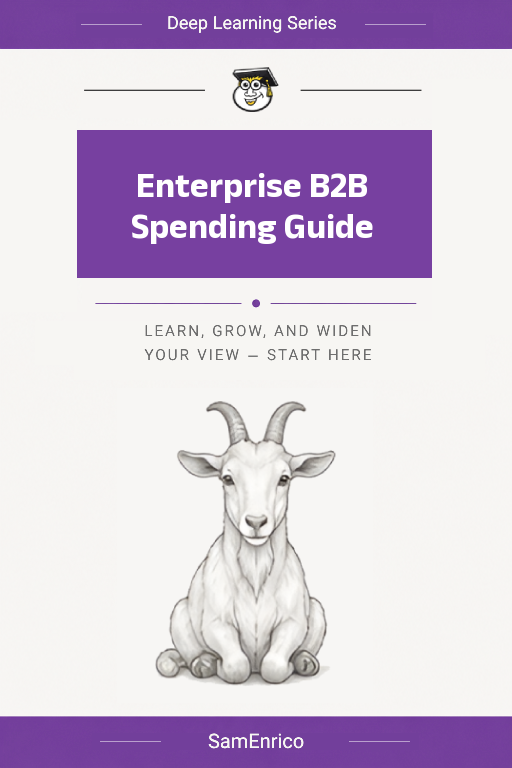
Non-FictionForecast & OutlookEnterprise Spend
Enterprise B2B Spending Guide Audiobook
Project Fortune 500 procurement complexity, global
Project Fortune 500 procurement complexity, global sourcing, and strategic supplier consolidation.
Formats
Free sample
Chapter 1: The Price Trap--–- In 2018, a Fortune 500 automotive supplier we will call Omni Craft achieved what every procurement leader dreamed of: they drove down the unit cost of a critical micro-controller by 22 percent through a competitive e-auction. The winning supplier, based in Southeast Asia, offered a price per component that was nearly half of the incumbent European manufacturer. The chief procurement officer celebrated. The CFO rewarded the team. The board praised the quarterly earnings bump.Twenty-two months later, Omni Craft lost $470 million in a single quarter.
A factory fire at a Tier-3 raw silicon supplier—three layers down in the supply chain, wholly invisible to the procurement team—created a cascade of shortages. The cheap micro-controller supplier, operating on thin margins, had no buffer stock and no alternative upstream sources. Deliveries stopped. Omni Craft's assembly lines idled for eighteen days. Customer contracts carried penalty clauses for late delivery.
The company's stock price fell 31 percent before the situation stabilized.The unit cost saving of 22 percent, when recalculated to include disruption costs, regulatory fines, and customer penalties, became a net loss of 340 percent. The cheapest supplier turned out to be the most expensive decision Omni Craft ever made.This is not an isolated cautionary tale. It is the new normal of Fortune 500 procurement.The Illusion of Cost Reduction For three decades, the dominant paradigm in enterprise procurement was simple, seductive, and ultimately dangerous: find the lowest unit price, award the business, and move on. This approach, borrowed from textbook economics, assumed that supply chains were stable, suppliers were interchangeable, and risk was someone else's problem. The purchasing department was measured almost exclusively on one metric: cost avoidance, or year-over-year price reduction.The results were predictable.
Procurement teams optimized for what they could measure—price—and ignored what they could not easily quantify. Suppliers were squeezed until their margins disappeared. Quality, delivery reliability, and financial stability were treated as secondary concerns. Relationships became transactional. Trust evaporated.Then the world changed.The COVID-19 pandemic exposed the brittleness of just-in-time supply chains.
The semiconductor shortage of 2020–2023 revealed that cost-optimized meant risk-ignorant. Geopolitical tensions turned once-reliable sourcing corridors into minefields of tariffs, sanctions, and export controls. The Suez Canal blockage in 2021, the war in Ukraine in 2022, and the escalating trade restrictions between the United States and China all demonstrated the same underlying truth: lowest price is a dangerous strategy when the cost…
This is the end of the free sample. Get the Audiobook to keep going. Buy now
About this book
Details
- Author
- Palacios Mariano
- Publisher
- SamEnrico
- Language
- English
- Genre
- Non-Fiction, Forecast & Outlook, Enterprise Spend
- Released
- 2026-05-30
- Pages (approx.)
- 154
- Available as
- eBook, Audiobook

Listen in the VoxFlicks app
Audiobooks and audio dramas wherever you go. Sign in with your SamEnrico account and press play.
More by Palacios Mariano
 False Endorsement Lawsuit GuidePalacios Mariano$11.99False Endorsement Lawsuit GuidePalacios Mariano$11.99
 The Car Wash Operation FamiliesPalacios Mariano$11.99
 Governor's Healthcare FightPalacios Mariano$11.99
 Goal Visualization Meditation GuidePalacios Mariano$11.99
 The Home Equity Harvest StrategyPalacios Mariano$11.99
 Stardust and Static: The Forgotten Signals of Pioneer 10Palacios Mariano$11.99
 Understanding Iodine DeficiencyPalacios Mariano$17.99
 Enterprise Security ArchitectPalacios Mariano$11.99
 A Beginners Guide to Blood Bowl (Volume 1)Palacios Mariano$11.99
 Wealthy Enough ManualPalacios Mariano$12.99
You may also like
 Hong Kong Handover 1997Dunn Johnnie$11.99
 Zumba For Postnatal Recovery CourseNeal Christian$11.99
 Zumba for BeginnersLadner Nikia$11.99
 YouTube Comment Mining GuideHumes Pandora$12.99
 Worry Box MeditationCarlin Rudy$11.99
 Workplace Stress MeditationNguyen Lynn$11.99
 Workplace Stress and Sleep RepairHawley Ivory$11.99
 Workplace Perfectionism CureDelaney Jeffry$11.99
 Workplace Injustice Anger GuideWallen Isabelle$11.99
 Work Addiction and Burnout LinkGreenwood Ester$11.99
 Women in Yoga and WellnessBeattie Galina$11.99
 Women in Stand Up ComedyChun Evangeline$11.99