English Programs Turkey eBook
Find bachelor's and master's programs taught entir
by Dodson Kyla
Find bachelor's and master's programs taught entirely in English at Turkish universities.
Formats
Free sample
Chapter 1: The Scholarship Loophole--–- In 2018, a young man from rural Pakistan named Hamza did something that admissions counselors around the world would have called impossible. He was the son of a schoolteacher and a seamstress. His family's annual income was less than $4,000. He had never traveled outside his home province of Punjab. His English was functional but far from fluent.
And yet, by the age of twenty-two, Hamza had earned a fully accredited bachelor's degree in Mechanical Engineering from one of Turkey's most prestigious universities—without paying a single lira in tuition, without taking out a single loan, and without his parents sacrificing a single meal.How? Hamza discovered what I call the "Turkey Scholarship Loophole." It is not actually a loophole in the legal sense. It is a convergence of three factors that most international students never realize exist together: (1) Turkish state universities charge international students tuition that is already a fraction of Western costs; (2) the Turkish government fully funds thousands of scholarships each year that cover not only tuition but also housing, health insurance, a monthly stipend, and even a round-trip flight; and (3) the application process for these scholarships is completely separate from—and in many ways simpler than—the university application process.Hamza applied to the Türkiye Scholarships program in January of his final year of high school. He wrote a statement of purpose that focused not on his hardships but on his academic interests—specifically, his fascination with how renewable energy systems could bring electricity to off-grid villages like his own. He submitted his transcript, his test scores, and his letters of recommendation.
In April, he received an email that changed his life: "Congratulations. You have been awarded a full Türkiye Scholarship to study Mechanical Engineering at Middle East Technical University."Four years later, Hamza graduated with honors, secured a job at a wind turbine manufacturer in Izmir, and sent his younger sister to university using a portion of his salary. His story is not unique. It is not even unusual. Every year, thousands of international students from over 150 countries receive full scholarships to study at Turkish universities.
Most of them come from backgrounds that would have made studying in the United States, the United Kingdom, or Canada financially impossible.This chapter is about how you can be one of them.The Thirty-Trillion-Dollar Question Let me start with a hard truth that most guidebooks avoid: studying abroad is expensive. The total global market for international education is worth over 300billionannually,andthatmoneycomesoverwhelminglyfromstudentsandtheirfamilies.Theaverageinternationalstudentinthe United Statespaysmorethan300 billion annually, and that money comes overwhelmingly from students and their families. The average international student in the United States pays more than 300billionannually,andthatmoneycomesoverwhelminglyfromstudentsandtheirfamilies.Theaverageinternationalstudentinthe United Statespaysmorethan40,000 per year in tuition alone. Add living expenses, and a four-year degree costs nearly $200,000.For students from developing countries—where per-capita income often falls below $10,000 per year—these numbers are not just discouraging. They are disqualifying.
And yet, every year, students from precisely those countries flock to Western universities, taking out loans that will take decades to repay, or worse, draining their families' life savings.The conventional wisdom says there is no alternative. If you want a high-quality English-medium degree, the thinking goes, you must pay Western prices. Germany offers free tuition but requires proof of substantial living funds (over $12,000 per year) and offers few English-taught bachelor's programs. The Netherlands charges reasonable tuition but has a high cost of living and limited scholarship availability. Scandinavia is expensive for non-EU students after recent policy changes.Turkey offers something different: not free tuition for everyone, but affordable tuition for everyone, and completely free tuition for many.
The Türkiye Scholarships program, operated by the Presidency for Turks Abroad and Related Communities (YTB), provides full funding for approximately 5,000 international students each year. That number has grown steadily over the past decade, and the Turkish government has shown no signs of reducing its commitment to the program.But here is the critical insight that separates successful applicants from unsuccessful ones: the Türkiye Scholarships program is not just a financial aid program. It is a strategic recruitment tool. The Turkish government wants international students—specifically, talented international students who will return to their home countries and become ambassadors for Turkish education, Turkish culture, and Turkish business. The application process is designed to identify exactly those students.How the Türkiye Scholarships Program Actually Works Let me walk you through the program's features as they exist for the 2026 application cycle.What the Scholarship Covers The Türkiye Scholarships program is what financial aid experts call a "full-ride" scholarship.
It covers:Full tuition for the entire duration of your program, including the mandatory preparatory year if you need it. This applies to both state universities and foundation universities that participate in the program.Monthly stipend that varies by degree level: 1,000 Turkish Lira for bachelor's students, 1,400 lira for master's students, and 1,800 lira for doctoral students. As of early 2026, these amounts convert to approximately 35,35, 35,50, and $65 USD respectively—not enough to live on alone, but a meaningful supplement to other resources.Accommodation in a government dormitory, free of charge. This is a significant benefit, as dormitory fees in Turkish cities typically range from 100to100 to 100to300 per month.Health insurance that covers medical expenses at state hospitals and many private hospitals. The coverage is not as comprehensive as private international insurance, but it is sufficient for routine care and emergencies.Turkish language course for one academic year, for students who need to learn Turkish before beginning their degree programs.
This is particularly valuable for programs taught partially in Turkish—though this book focuses on English-medium programs, learning Turkish will dramatically improve your daily life and job prospects.One round-trip flight to Turkey at the beginning of your studies, and another at the conclusion, though some scholars report that reimbursement for flights can be slow and bureaucratic.Who Is Eligible The eligibility criteria for Türkiye Scholarships are strict but not impossible:Academic average: Minimum 70% for bachelor's applicants, 75% for master's and doctoral applicants. For health sciences programs (medicine, dentistry, pharmacy), the minimum rises to 90%.Age limits: Under 21 for bachelor's programs, under 30 for master's programs, under 35 for doctoral programs. These age limits are calculated as of the application deadline each year.Citizenship: Citizens of all countries except Turkey. You cannot apply if you hold Turkish citizenship or if you have ever held Turkish citizenship and renounced it.Current enrollment: You cannot already be enrolled in a Turkish university at the same degree level. If you are already studying in Turkey on a different visa, you are generally not eligible for the scholarship.The Application Process The application window for Türkiye Scholarships typically opens on January 10 and closes on February 20 each year.
Unlike most university applications, which have rolling deadlines and flexible timelines, the scholarship application has a hard deadline that comes early in the calendar year.The application is submitted entirely online through the Türkiye Scholarships application system. You will need:A valid passport Your high school diploma (for bachelor's applicants) or bachelor's diploma (for master's applicants)Your academic transcript Your standardized test scores (SAT, ACT, GRE, GMAT, or YÖS, depending on the program)Your English proficiency certificate (TOEFL, IELTS, or equivalent) or a statement…
This is the end of the free sample. Get the eBook to keep going. Buy now
About this book
Details
- Author
- Dodson Kyla
- Publisher
- SamEnrico
- Language
- English
- Genre
- Non-Fiction, Student's Shortcut, English Taught
- Released
- 2026-05-27
- Pages (approx.)
- 146
- Available as
- eBook, Audiobook

Read better in the ZLOADR app
Your eBooks on your phone or tablet. Sign in with your SamEnrico account and start reading.
More by Dodson Kyla
 Inner Child Self Talk HealingDodson Kyla$11.99
 Somatic Healing WorkbookDodson Kyla$11.99
 Metta for Activists and Advocates CourseDodson Kyla$11.99
 Beginner Mindfulness for Social AnxietyDodson Kyla$11.99
 Protein Intake For SeniorsDodson Kyla$11.99
 The Fake Prince: How a Con Artist Stole a Royal IdentityDodson Kyla$11.99
 The Sky Watchers of the Sahara: A 19th-Century African Cosmic RevelationDodson Kyla$11.99
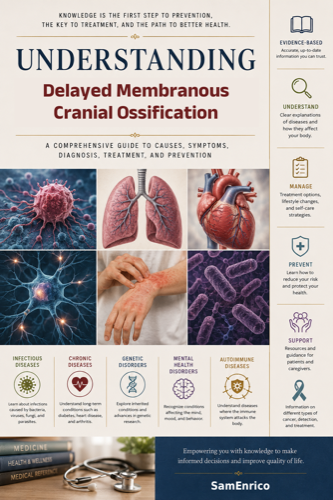 Understanding Delayed Membranous Cranial OssificationDodson Kyla$17.99
 Telehealth Licensing GuideDodson Kyla$12.99
 Media Strategy DirectorDodson Kyla$11.99
 How to Become a Jewel InspectorDodson Kyla$11.99