
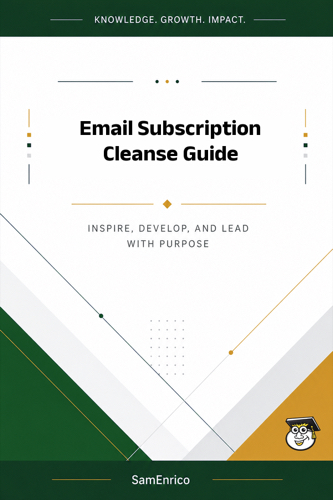
Non-FictionBusiness BriefDigital Hygiene
Email Subscription Cleanse Guide eBook
Reduces inbox noise by unsubscribing from non-esse
by Mcdonald Ed
Reduces inbox noise by unsubscribing from non-essential newsletters.
Formats
Free sample
Chapter 1: The Subscription Trap--–- You don’t have an email problem. You have a subscription problem. Most people believe their inbox is chaotic because they receive too many messages from too many people. That is only half true. The real culprit is not the volume of email.
It is the fact that the vast majority of those emails are newsletters, promotional offers, and automated updates that you never asked for—or at least, you do not remember asking for. And there is a reason you do not remember. Because in many cases, you were tricked.Let me take you inside a scene that happens thousands of times every day. You are buying a pair of socks online. You click “checkout.” Just before you complete your purchase, a small checkbox appears, pre-ticked.
It says: “Yes! Sign me up for exclusive offers and updates.” You are rushing, so you click “Place Order” without unchecking the box. Congratulations. You just subscribed to a weekly email list that will send you sock deals for the rest of your digital life. Six months later, you will see an email from “Sock Monthly” and wonder, Who are these people?
You will delete it. But they will keep coming. That is not an accident. That is the Subscription Economy at work.This chapter is called The Subscription Trap because that is exactly what it is: a carefully engineered system designed to capture your email address and hold it hostage to attention-draining content. The trap has three jaws.
The first jaw is psychological—marketers use reciprocity, scarcity, and fear of missing out to keep you subscribed. The second jaw is economic—newsletters are loss leaders that exist to sell you something else. The third jaw is structural—once you are subscribed, unsubscribing is deliberately difficult. By the end of this chapter, you will understand all three jaws. More importantly, you will see why your inbox feels like a prison and why escaping requires more than just clicking “unsubscribe” a few times.
It requires a rebellion.The Psychology of the Trap Let us start with the first jaw: psychology. Every time you receive a newsletter, you are not just reading words on a screen. You are being manipulated by patterns that have been studied in behavioral economics laboratories for decades. The most common lever is reciprocity. When a brand gives you something for free—a PDF guide, a discount code, a “free” webinar—your brain automatically feels a sense of debt.
You want to repay the favor. Staying subscribed feels like the least you can do. Marketers know this. That is why so many newsletters begin with a free gift. They are not being generous.
They are buying your future attention.The second psychological lever is scarcity. You have seen it a thousand times: “Only 100 spots left for this webinar.” “Last chance to claim your free trial.” “This offer expires in 24 hours.” Scarcity triggers a primal response in the human brain. Thousands of years ago, scarcity meant survival. If there were only a few berries left, you picked them immediately. Today, that same neural circuitry fires when you see a limited-time email.
You stay subscribed because you are afraid of missing out on the next “urgent” offer. That fear is not rational—it is manufactured. The brand creates the scarcity artificially, then uses your subscription as a delivery mechanism for that manufactured anxiety.The third lever is the most insidious: fear of missing out, or FOMO. FOMO is not about the value of the email itself. It is about the potential value.
What if tomorrow’s newsletter contains the one piece of information that could change your career? What if the next issue announces a flash sale on something you actually need? What if you unsubscribe and then everyone else knows something you do not? These questions are not your fault. They are the result of a deliberate strategy to keep you in a state of low-grade anxiety about your own inbox.
The moment you unsubscribe, the brand loses its ability to generate that anxiety. So they do everything in their power to keep you afraid of leaving.Here is the truth that will set you free: you have never missed a single important thing by unsubscribing from a newsletter. Not once. I have asked this question to hundreds of people across workshops, online courses, and private coaching sessions. Not one person could name a single critical piece of information they lost because they unsubscribed.
Important news finds you through other channels. Critical updates come from people you know, not from bulk email senders. The fear of missing out is a ghost. It has no teeth. But it feels real, and that feeling is what keeps the subscription trap locked tight.The Economics of Your Attention Now let us look at the second jaw of the trap: economics.
Most people believe newsletters are free. They are not. You pay for every single newsletter you receive, but you pay with something more valuable than money. You pay with attention. And attention, as every advertiser knows, is the scarcest resource of the twenty-first century.Let me be explicit about how this works.
A typical newsletter is a loss leader. That means the brand loses money on the newsletter itself—they pay for email delivery software, content creation, design, and list maintenance—in order to make money on something else. That something else could be product sales, affiliate commissions, advertising revenue, or even just brand loyalty that leads to future purchases. Your attention is the raw material they refine into profit. Every time you open a newsletter, you are giving them a tiny slice of your cognitive bandwidth.
Every time you click a link, you are generating data they can sell. Every time you stay subscribed without opening, you are still valuable because you inflate their subscriber count, which they use to charge higher advertising rates.You are not the customer. You are the product. That sentence has become something of a cliché in digital circles, but it bears repeating because most people still do not believe it applies to their email. They think, I am just reading a free newsletter.
No one is forcing me to buy anything. But the absence of a forced purchase does not mean you are not being exploited. The exploitation is happening at the level of your attention. Every newsletter you read is a newsletter you are not spending on something else—on your work, your family, your sleep, your creative projects. The opportunity cost is real, and it accumulates silently.Let me give you a concrete example.
Imagine you receive fifty newsletters per week. That is not an unusual number. Many professionals receive double that. Now imagine you spend just two minutes on each newsletter—glancing at the subject line, maybe opening a few, deleting most. That is one hundred minutes per week.
Over fifty working weeks per year, that is eighty-three hours. Eighty-three hours is more than two full work weeks. That is time you could have spent learning a new skill, exercising, being with your children, or sleeping. You paid for those newsletters with eighty-three hours of your life. And what did…
This is the end of the free sample. Get the eBook to keep going. Buy now
About this book
Details
- Author
- Mcdonald Ed
- Publisher
- SamEnrico
- Language
- English
- Genre
- Non-Fiction, Business Brief, Digital Hygiene
- Released
- 2026-06-09
- Pages (approx.)
- 145
- Available as
- eBook, Audiobook

Read better in the ZLOADR app
Your eBooks on your phone or tablet. Sign in with your SamEnrico account and start reading.
More by Mcdonald Ed
 Remote Status ReportingMcdonald Ed$11.99
 Mayor of the College TownMcdonald Ed$11.99
 IBS Pelvic Floor DysfunctionMcdonald Ed$11.99
 Data Leak Apology Letter TemplatesMcdonald Ed$11.99
 Firestorm: The Scientists Who Deciphered Yellowstone's SupervolcanoMcdonald Ed$11.99
 Windows System EngineerMcdonald Ed$11.99
 Kobo360 YC Application GuideMcdonald Ed$12.99
 Production Schedule SimulationMcdonald Ed$12.99
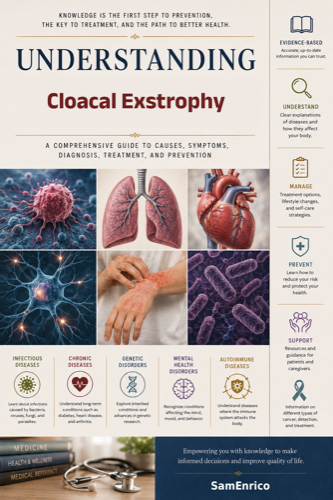 Understanding Cloacal ExstrophyMcdonald Ed$17.99
 Ultimate Handbook Guide to Shijiazhuang : (China) Travel GuideMcdonald Ed$11.99
You may also like
 Hong Kong Handover 1997Dunn Johnnie$11.99
 Zumba For Postnatal Recovery CourseNeal Christian$11.99
 Zumba for BeginnersLadner Nikia$11.99
 YouTube Comment Mining GuideHumes Pandora$12.99
 Worry Box MeditationCarlin Rudy$11.99
 Workplace Stress MeditationNguyen Lynn$11.99
 Workplace Stress and Sleep RepairHawley Ivory$11.99
 Workplace Perfectionism CureDelaney Jeffry$11.99
 Workplace Injustice Anger GuideWallen Isabelle$11.99
 Work Addiction and Burnout LinkGreenwood Ester$11.99
 Women in Yoga and WellnessBeattie Galina$11.99
 Women in Stand Up ComedyChun Evangeline$11.99