
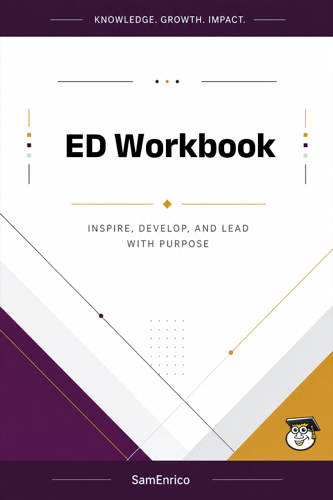
ED Workbook eBook
Exercises for symptom management and treatment pla
Exercises for symptom management and treatment planning.
Formats
Free sample
Chapter 1: The Ecosystem Within...--–- Your eating disorder is not a weakness. It is not a moral failure. It is not a sign that you are broken beyond repair. It is, quite simply, a strategy your brain learned in order to survive something unbearable. And like any strategy, it can be unlearned, replaced, or retired – but only once you understand what it was doing for you in the first place.This is the central promise of this workbook: you cannot dismantle a system you do not understand.
Most approaches to eating disorder recovery begin with behavioral change – eat this, stop that, weigh yourself here. But without a map of why the behaviors exist, those instructions feel like commands shouted in a foreign language. You might follow them for a while, but the moment stress returns, the old patterns reassert themselves. Not because you lack willpower, but because you never addressed the underlying architecture.This chapter is about building that map. It is called The Ecosystem Within because your eating disorder does not exist in isolation.
It lives inside a complex web of biological vulnerabilities, emotional triggers, sensory habits, imaginal fantasies, cognitive rules, interpersonal dynamics, and health-related behaviors. Change one part of that web, and the rest shifts. Ignore any part, and the system finds a way to pull you back.By the end of this chapter, you will have completed a comprehensive assessment called the BASIC I.D. Map – a tool adapted from multimodal therapy that has been used in clinical settings for decades. You will not be asked to decide whether you want to recover.
You will not be asked to list pros and cons. You will not be asked to make any commitments. You will simply observe and document. Think of yourself as a cartographer, drawing the terrain of your own experience. Judgment has no place here.
Only curiosity.Let us begin.Why Labels Are Not Enough If you have been in treatment before, you have likely received a diagnosis: anorexia nervosa, bulimia nervosa, binge eating disorder, ARFID (avoidant/restrictive food intake disorder), or perhaps OSFED (other specified feeding or eating disorder). These labels are useful for clinicians – they guide insurance billing and treatment protocols. But they tell you almost nothing about your unique experience.Two people with the same diagnosis can have completely different internal worlds. One person with anorexia might be driven by a terror of losing control; another might be driven by a need to feel pure or morally superior. One person with bulimia might binge in response to loneliness; another might binge in response to anger.
The diagnosis describes the behavior, not the meaning behind it.This is why functional analysis is more valuable than diagnostic labeling. Instead of asking "What disorder do I have?" we ask "What does this behavior do for me?" Every symptom – every skipped meal, every binge, every purge, every compulsive workout – serves one or more functions. It might:Numb emotional pain (especially grief, rage, or shame)Create a sense of predictability in an unpredictable world Provide a tangible goal (weight loss) when other goals feel unattainable Communicate distress when you do not have words for it Give you a sense of identity when your sense of self feels hollow Protect you from intimacy or vulnerability Punish yourself for perceived failures None of these functions are evil. They are survival adaptations. The problem is not that your ED is trying to hurt you – it is that the strategy has outlived its usefulness.
It worked for a while. Now it is costing you more than it is giving you.The BASIC I.D. Map will help you see, with clarity, exactly what your ED is doing across seven domains of your life. Let me introduce each domain before we dive into the exercise.The Seven Domains of the BASIC I.D. Map The BASIC I.D.
model was developed by psychologist Arnold Lazarus, who argued that effective treatment must address seven interconnected modalities: Behavior, Affect, Sensation, Imagery, Cognition, Interpersonal relationships, and Drugs/biology. I have adapted it here for eating disorder work, with a focus on the unique ways EDs infiltrate each domain.B – Biological This domain includes everything happening in your physical body: hunger cues, fullness signals, sleep patterns, energy levels, dizziness, gastrointestinal distress, temperature regulation, menstrual function (if applicable), and the physical consequences of restriction, bingeing, or purging. Many people with EDs have learned to ignore or override biological signals. The first step is simply noticing them.A – Affective Affect refers to emotions – not just what you feel, but how you handle what you feel. This domain includes your emotional triggers, your typical emotional states (anger, shame, numbness, anxiety, sadness, emptiness), and your go-to strategies for escaping or numbing emotions.
ED behaviors are often, at their core, emotional regulation strategies gone awry.S – Sensory Sensation is different from emotion. Emotions are complex psychological states; sensations are raw physical inputs. This domain includes the feel of an empty stomach, the texture of food in your mouth, the sight of your body in a mirror, the sound of a scale clicking, the feeling of your thighs touching or not touching. For many, sensory experiences become highly charged – a particular texture can trigger a binge, a particular feeling of fullness can trigger a purge.I – Imaginal Imaginal refers to mental images, fantasies, and internal visualizations. This domain includes the "thin future" you might fantasize about – the life you imagine you will have when you reach a certain weight.
It also includes catastrophic images (what you imagine will happen if you gain weight) and intrusive images (sudden, unwanted mental pictures of your body). Your ED likely has a rich imaginal life. This domain asks you to describe it.C – Cognitive Cognition means thoughts, beliefs, rules, and internal sentences. This domain includes your ED's core beliefs ("I am only worthy if I am thin"), its rules ("I must not eat after 6pm"), its cognitive distortions (all-or-nothing thinking, catastrophizing, mind-reading), and the voice that narrates your day. Many people call this the "ED voice" – that internal commentator that criticizes, commands, and threatens.I – Interpersonal Interpersonal refers to your relationships with others.
This domain includes family dynamics (enmeshment, criticism, neglect, or overprotection), social isolation (do you avoid eating with others?), comparison to peers, romantic relationships (do you use your ED to avoid intimacy?), and how your ED affects or is affected by the people around you. EDs rarely develop in a vacuum; they are often embedded in relational patterns.D – Drugs/Health This domain includes all substances and health-related behaviors: caffeine use (common for appetite suppression), laxatives, diuretics, diet pills, alcohol (sometimes used to numb binge urges), marijuana (sometimes used to increase appetite or reduce anxiety), prescribed medications (SSRIs, mood stabilizers, antipsychotics), and any other substance that interacts with your ED. It also includes your general health status – recent blood work, cardiac symptoms, electrolyte imbalances, and dental health.Now that you understand the seven domains, it is time to complete your map. This will take time – perhaps an hour or more. Do not rush.
Find a quiet space. Use a pen, not a pencil, because the goal is to commit to your observations, not to…
This is the end of the free sample. Get the eBook to keep going. Buy now
About this book
Details
- Author
- Newsom Georgie
- Publisher
- SamEnrico
- Language
- English
- Genre
- Non-Fiction, Health & Wellness, Workbook
- Released
- 2026-06-09
- Pages (approx.)
- 138
- Available as
- eBook, Audiobook

Read better in the ZLOADR app
Your eBooks on your phone or tablet. Sign in with your SamEnrico account and start reading.
More by Newsom Georgie
 Psychotherapy For MDD GuideNewsom Georgie$11.99
 The Reset Parent GuideNewsom Georgie$11.99
 The Rehearsal Strategy GuideNewsom Georgie$11.99
 Twelve Step Retreat PlanningNewsom Georgie$11.99
 Grace and Grandeur: The Pioneers of Black BalletNewsom Georgie$11.99
 Nitratine MiningNewsom Georgie$11.99
 How to Become a Log RollerNewsom Georgie$11.99
 PR Success StoriesNewsom Georgie$12.99
 .africa vs .com ComparisonNewsom Georgie$12.99
 The Breeder's Guide to Polish ChickensNewsom Georgie$11.99
You may also like
 CPR WorkbookHuerta Clair$11.99
 Behavioral Weight WorkbookAdamson Anthony$11.99
 Nap WorkbookBeasley Werner$11.99
 Intermittent Fasting WorkbookKeith Candance$11.99
 Food Intolerance WorkbookTobin Martin$11.99
 Video Game Dependency WorkbookLangley Coleen$11.99
 Sports Nutrition WorkbookHealy George$11.99
 Explain Pain WorkbookGannon Herlinda$11.99
 Endometriosis WorkbookKearney Stan$11.99
 Chiropractic WorkbookPoindexter Helaine$11.99
 Gaming Addiction WorkbookAguilera Spring$11.99
 Mediterranean WorkbookCatron Keira$11.99