
Non-FictionBusiness BriefProfessional Appearance
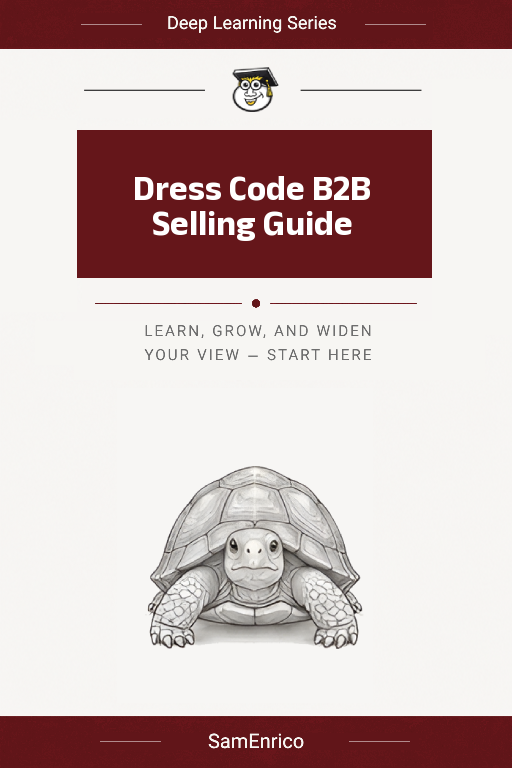
Dress Code B2B Selling Guide eBook
Navigate business attire expectations for men and
by Roby Jaye
Navigate business attire expectations for men and women selling across conservative Gulf markets and modern Dubai.
Formats
Free sample
Chapter 1: The Visual Handshake--–- The first time James Harrington lost a seven-figure deal before saying a word, he was standing in the lobby of the Riyadh Marriott, nervously adjusting his tie. He had flown fourteen hours from London, slept four of them, and rehearsed his pitch until he could recite it backward. His suit was Italian, his shoes were English, and his confidence was, he believed, unshakable.The Saudi procurement director, a fifty-something executive named Fahad Al-Otaibi, walked into the lobby precisely on time. He extended his hand, glanced at James from head to toe in a single, effortless motion that lasted less than two seconds, and smiled. The meeting lasted forty-five minutes.
The follow-up never came.Three weeks later, James’s local partner called with uncomfortable feedback. “Fahad liked your proposal,” the partner said. “But he didn’t trust you. He said you dressed like a man who was trying too hard to be interesting. Sleeves rolled up.
No socks. A bright pink tie. He said, ‘If he doesn’t understand our culture well enough to dress for it, how will he understand our contracts?’”James had lost a $4.2 million software deal. Not on price. Not on product.
Not on delivery timelines. On a pink tie and bare ankles.This is not an unusual story. It is, in fact, painfully ordinary.Across the Gulf Cooperation Council countries—Saudi Arabia, Kuwait, Qatar, Oman, Bahrain, and the United Arab Emirates—B2B sellers lose deals every single day for reasons that have nothing to do with their solutions and everything to do with their appearance. The tragedy is that most of them never find out why. They fly home, debrief their teams, blame the economy or the competition or bad timing, and repeat the same mistakes on the next flight to Dammam or Doha or Dubai.This book exists to ensure you are not one of them.The Thesis That Changes Everything Here is the central argument that will guide every page, every checklist, and every rule in this book: In Gulf B2B sales, your attire is not a personal choice.
It is not an expression of your style. It is not a reflection of your creativity or your brand’s edginess. Your attire is a professional tool—and it is the first, most visible, and often most decisive signal of cultural respect you will ever send.Think of it as a visual handshake. Before you open your mouth, before you present your deck, before you quote your price, your clothes have already introduced you. They have already told your client whether you have done your homework, whether you respect their culture, and whether you are the kind of person they want to trust with millions of dollars.In Western business culture, we have largely convinced ourselves that dress doesn’t matter.
Silicon Valley entrepreneurs wear hoodies to board meetings. London fintech founders host pitch days in sneakers. New York advertising executives compete to see who can look more casually disheveled. And in those contexts, that works. It signals creativity, disruption, and a rejection of stuffy corporate norms.But the Gulf is not Silicon Valley.
It is not London. It is not New York.In the Gulf, how you dress is how you show respect. And respect is the currency of B2B relationships.Why This Chapter Is Called “The Visual Handshake”Every handshake in the Gulf carries meaning. The duration matters. The pressure matters.
Which hand you use matters. The same is true of your appearance.Your visual handshake begins the moment your client sees you—in a lobby, at a conference, on a video call, or even in a Linked In profile picture. That first glance is not superficial. It is deeply cultural. In Gulf societies, where relationships are built over months and years, and where trust is earned through demonstrated respect, your appearance is your first piece of evidence.
It tells your client: I have taken the time to understand you. I have prepared for this meeting. I value our relationship enough to dress for it.The sellers who succeed in this market understand something that their competitors miss. They understand that modesty is not about hiding—it is about authority. They understand that conformity to local standards is not about losing individuality—it is about gaining access.
And they understand that a wardrobe engineered for the Gulf is not an expense; it is an investment that pays dividends in closed deals, repeat business, and referrals.The Cost of Getting It Wrong Let us be precise about what is at stake. The numbers vary by industry, but the pattern is consistent across every B2B sector that sells into the Gulf—oil and gas, technology, construction, healthcare, finance, logistics, and professional services.A single wardrobe mistake can cost you:First, the direct financial loss. If you are selling a 500,000contract,adresscodeerrormighteliminateyoufromconsiderationbeforepricingisevendiscussed.Ifyouaresellinga500,000 contract, a dress code error might eliminate you from consideration before pricing is even discussed. If you are selling a 500,000contract,adresscodeerrormighteliminateyoufromconsiderationbeforepricingisevendiscussed.Ifyouaresellinga5 million contract, the stakes are proportionally higher. The sellers we interviewed for this book reported an average of 2.3 lost opportunities per year that they directly attributed to attire issues.
Multiply that by your average deal size, and you begin to see the scale of the problem.Second, the reputational damage. Word travels fast in Gulf business circles. The procurement director who found you inappropriate will mention it to colleagues. The executive assistant who noticed your bare ankles will tell her network. Over time, a reputation for cultural carelessness becomes a ceiling on your career—even if you never know why you stopped getting invited to pitch.Third, the relationship cost.
In the Gulf, B2B sales are relationship-driven, not transactional. A bad first impression does not reset with the next meeting. It lingers. It takes three to five times more effort to recover from a negative first impression than to build a positive one from scratch. And some buyers will never give you that second chance.Fourth, the internal cost.
When you consistently struggle to gain traction in the Gulf, your leadership will eventually ask questions. Are you the right person for this territory? Do you have the cultural intelligence to represent the company? Even if the real problem is your wardrobe, the visible symptom is your performance.The Opportunity Cost of Getting It Right Now consider the upside. The sellers who master Gulf attire expectations gain a competitive advantage that cannot be copied overnight.When you walk into a boardroom dressed appropriately—respectfully, modestly, professionally—you signal immediately that you are not a tourist.
You signal that you have done your homework. You signal that you take the client and their culture seriously.This buys you something invaluable: the benefit of the doubt. When your pitch hits a rough patch, when your translation falters, when your pricing comes in higher than expected, the client who already respects you will give you time to explain. The client who judged you as careless from the first glance will not.One experienced seller we interviewed—a British woman who has closed over $200 million in Gulf contracts over twelve years—put it simply: “When I dress right…
This is the end of the free sample. Get the eBook to keep going. Buy now
About this book
Details
- Author
- Roby Jaye
- Publisher
- SamEnrico
- Language
- English
- Genre
- Non-Fiction, Business Brief, Professional Appearance
- Released
- 2026-05-29
- Pages (approx.)
- 121
- Available as
- eBook, Audiobook

Read better in the ZLOADR app
Your eBooks on your phone or tablet. Sign in with your SamEnrico account and start reading.
More by Roby Jaye
 Outdoor HIIT Park WorkoutsRoby Jaye$11.99
 Mobile Gacha Games Recovery GuideRoby Jaye$11.99
 Opioid Orphan MemoirRoby Jaye$11.99
 Vision Loss Emotional AdjustmentRoby Jaye$11.99
 Boredom Smoking Replacement PlanRoby Jaye$11.99
 Echoes from the Cosmic Dawn: Antarctica’s Window to the Big BangRoby Jaye$11.99
 Keyboard Typing Pattern AnalysisRoby Jaye$12.99
 Engineering Program ManagerRoby Jaye$11.99
 How to Start a Hobby in Neuro Linguistic ProgrammingRoby Jaye$11.99
 Understanding Cardiomyopathy, Fatal Fetal, Due to Myocardial CalcificationRoby Jaye$17.99
You may also like
 Hong Kong Handover 1997Dunn Johnnie$11.99
 Zumba For Postnatal Recovery CourseNeal Christian$11.99
 Zumba for BeginnersLadner Nikia$11.99
 YouTube Comment Mining GuideHumes Pandora$12.99
 Worry Box MeditationCarlin Rudy$11.99
 Workplace Stress MeditationNguyen Lynn$11.99
 Workplace Stress and Sleep RepairHawley Ivory$11.99
 Workplace Perfectionism CureDelaney Jeffry$11.99
 Workplace Injustice Anger GuideWallen Isabelle$11.99
 Work Addiction and Burnout LinkGreenwood Ester$11.99
 Women in Yoga and WellnessBeattie Galina$11.99
 Women in Stand Up ComedyChun Evangeline$11.99