
Down Shift Stress Reduction Plan eBook
Adopt Ikarian napping, Sardinian happy hour, and N
Adopt Ikarian napping, Sardinian happy hour, and Nicoyan perspective to lower chronic stress.
Formats
Free sample
Chapter 1: The Inheritance You Didn't Choose--–- Every morning, before you have made a single decision, you are already losing. The alarm tears you from REM sleep—your body mid-repair, your brain mid-consolidation—and you reach for a rectangle of glass and metal that has, within its silent architecture, thirty-seven unread messages, fourteen calendar alerts, and a news headline engineered to trigger your amygdala. You have not yet peed, have not yet spoken a word to another human, and your cortisol has already spiked three times. This is not a personal failure. This is an inheritance.
You did not choose to live in a culture that treats time as a weapon and rest as a sin. But you are about to learn how to reject that inheritance, not through willpower or discipline, but through a set of ancient practices from three of the longest-lived populations on earth—practices that rewire your relationship with stress at the cellular level.This is not another book about managing stress. Managing stress implies that stress is a resource to be optimized, like a budget or a calendar. That is the very mindset that made you sick. The people of Ikaria, Sardinia, and Nicoya do not manage stress.
They do not reduce it, cope with it, or meditate it away. They have done something far more radical: they have designed it out of their daily existence. They nap without shame, socialize without agenda, and wake each morning with a purpose so clear that minor annoyances—traffic, a rude email, a delayed flight—simply do not register as threats. Their nervous systems are not stronger than yours. They are different.
And you can build that difference, starting today.The Quiet Epidemic You Cannot Outrun Let us name the thing that is killing you. It is not heart disease, though that may be the official cause on your death certificate. It is not cancer, though stress accelerates its progression. It is not suicide, though chronic hopelessness is its final expression. The thing that is killing you is the perception of scarcity—the belief that there is not enough time, not enough money, not enough safety, not enough love—and the biological cascade that follows from that belief.
Scientists call it allostatic load. You can think of it as the wear and tear on your body from repeated cortisol spikes.Every time you rush, every time you check the clock and feel behind, every time you lie awake at 3:00 AM rehearsing an argument from eight hours ago, your adrenal glands release cortisol. Cortisol is not evil. It saved your ancestors from predators. It sharpens focus in short bursts.
But cortisol was designed for acute threats that last minutes, not chronic threats that last decades. When cortisol stays elevated year after year, it begins to dismantle your body systematically. It shrinks the hippocampus—the memory center of your brain. It deposits fat around your organs. It suppresses your immune system.
It accelerates telomere shortening, which is the cellular equivalent of your biological clock running fast.Here is the paradox that most stress-relief books get wrong: you cannot out-exercise chronic stress. You cannot out-meditate it. You cannot out-vacation it. You can run a marathon, sit on a meditation cushion for an hour, or spend two weeks in Bali, and your baseline cortisol will return to its pre-intervention level within seventy-two hours. This is because your nervous system has learned a pattern.
It has been trained, over years, to interpret safety as a brief exception between emergencies. The only way to change that pattern is to redesign the architecture of your day so that your nervous system experiences safety not as a vacation but as the default setting.The Three Blue Zones That Forgot to Be Stressed In the early 2000s, National Geographic fellow Dan Buettner led a team of demographers and epidemiologists to identify regions where people lived measurably longer—and more importantly, healthier—than anywhere else on earth. They called these places Blue Zones. Five regions met the criteria: Okinawa (Japan), Sardinia (Italy), Nicoya (Costa Rica), Ikaria (Greece), and Loma Linda (California, home to a community of Seventh-day Adventists). Each region had its own dietary and lifestyle quirks.
But three regions stood out for a specific reason: their residents had effectively eliminated chronic stress from their daily lives, not through effort but through design.Ikaria, Greece: This small Aegean island has ten times the number of nonagenarians and centenarians as the United States. Ikarians nap daily—not as a luxury, but as a medical intervention. They eat dinner late, sleep late, and wake without alarms. When you ask an Ikarian what time it is, they are as likely to say "late afternoon" as "3:47 PM." They have not conquered time; they have simply refused to be conquered by it.Sardinia, Italy: The mountainous center of Sardinia has the highest concentration of male centenarians in the world. Sardinian shepherds walk five to ten miles a day, not as exercise but as transportation.
They gather in the late afternoon for what they call passeggiata—a slow, meandering stroll with neighbors, followed by glasses of Cannonau wine and hours of laughter. They have no word for "happy hour" because the concept of a designated drinking window implies that the rest of the day is for something else. For Sardinians, socializing is the main event.Nicoya, Costa Rica: This peninsula on the Pacific coast produces centenarians who remain cognitively sharp and physically active into their hundreds. Nicoyans have a concept called Plan de Vida—a reason for living that is specific, actionable, and daily. It is not a grand mission statement or a career goal.
It is something like "feed the chickens," "visit my neighbor," or "help my daughter with her grandchildren." This small, daily purpose acts as a shock absorber for stress. When something annoying happens—a flat tire, a rude comment—the Nicoyan brain asks: "Does this threaten my Plan de Vida?" The answer is almost always no, so the stress response never fully activates.These three regions do not have secret diets or miracle herbs. They have something far more mundane and far more powerful: a daily structure that prevents chronic stress from taking root in the first place. This book is the translation of that structure into a plan that works for people who have jobs, children, mortgages, and phones that buzz at 2:00 AM.Why Weekend Recovery Is a Lie Before we go any further, we must dismantle one of the most persistent and damaging myths in modern stress management: the belief that you can "catch up" on rest during the weekend. You cannot.
This is not an opinion. It is physiology.Cortisol follows a diurnal rhythm. In a healthy nervous system, cortisol peaks around thirty minutes after waking—this is what gets you out of bed—and then gradually declines throughout the day, reaching its lowest point around midnight. This rhythm is regulated by the suprachiasmatic nucleus, a tiny cluster of neurons in your hypothalamus that responds to light. When you sleep in on Saturday, you are not "catching up." You are phase-shifting your circadian rhythm.
You are telling your suprachiasmatic nucleus that the day starts later, which means your cortisol peak shifts later, which means…
This is the end of the free sample. Get the eBook to keep going. Buy now
About this book
Details
- Author
- Oswald Laronda
- Publisher
- SamEnrico
- Language
- English
- Genre
- Non-Fiction, Health & Wellness, Stress Management
- Released
- 2026-06-11
- Pages (approx.)
- 128
- Available as
- eBook, Audiobook

Read better in the ZLOADR app
Your eBooks on your phone or tablet. Sign in with your SamEnrico account and start reading.
More by Oswald Laronda
 Small Business Owner Couples StressOswald Laronda$11.99
 Stress Eating Reduction GuideOswald Laronda$11.99
 The Board Composition DatabaseOswald Laronda$11.99
 Shadows of the Second Throne: The Untold Power of Vice Presidents in HistoryOswald Laronda$11.99
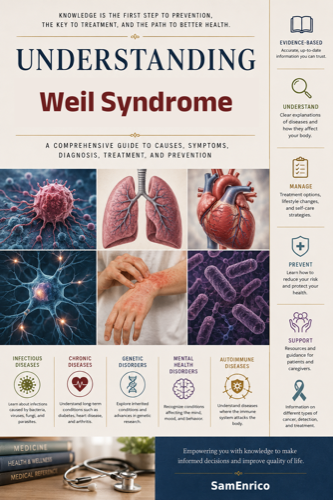 Understanding Weil SyndromeOswald Laronda$17.99
 How to Start a Blast Freezing for Water Transport Business (Beginners Guide)Oswald Laronda$11.99
 Madrid Use RulesOswald Laronda$12.99
 Ghana Tech Hubs GuideOswald Laronda$12.99
 StemmerOswald Laronda$11.99
You may also like
 Stress Cortisol HGH BlockWirth Nigel$11.99
 Stress and Gut Health GuideLemke Lynelle$11.99
 Blue Zones Stress ReductionGist Deandre$11.99
 Downshift Stress Reduction PlanWedding Dorothy$11.99
 Menopause Stress ReductionRich Alissa$11.99
 Ylang Ylang Stress ReliefHeflin Sharilyn$11.99
 Tension Headache Self Care HandbookRichey Lynwood$11.99
 Insulin Resistance Stress GuideSessions Amiee$11.99
 Stress Reduction NapsCameron Kermit$11.99
 Stress Eating Recovery GuideAdam Layne$11.99
 Stress Eating Coping GuideBecker Ellen$11.99
 Stress Induced Insomnia BreakthroughRhodes Bryan$11.99