
Non-FictionHealth & Wellness / Competition Prep
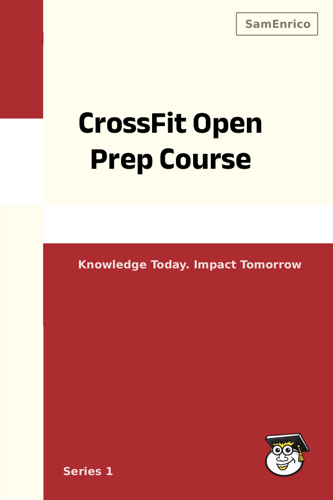
CrossFit Open Prep Course eBook
Train specifically for annual Open workouts with p
Train specifically for annual Open workouts with pacing strategies, movement practice, and mental rehearsal.
Formats
Free sample
Chapter 1: The Readiness Threshold--–- The first lie is the kindest one. It arrives in a box of affirmations, wrapped in the language of effort and good intentions. It sounds like this: “If I just keep showing up, I will be ready.” The lie promises that accumulation equals preparation, that more Cross Fit will eventually conquer the Open. And it is wrong.This chapter is not an introduction. It is an intervention.
We are not here to define the Cross Fit Open or to explain its scoring system. Those facts are available elsewhere, for free, in approximately seven seconds of internet searching. Instead, this chapter exists to dismantle the single most expensive mistake athletes make year after year: treating Open preparation as if it were identical to general fitness training. The mistake costs athletes weeks of wasted effort, hundreds of dollars in misguided programming, and ultimately a leaderboard rank that feels like a betrayal of the work they actually did.The Cross Fit Open is not a test of fitness in the abstract. It is a test of readiness under a specific set of constraints: five weeks, unknown workouts, judged repetitions, and a leaderboard that rewards strategic execution as much as raw capacity.
A fit athlete can be profoundly unready for the Open. In fact, most are. The athlete who can deadlift 500 pounds but cannot cycle 95 pounds for 30 reps is fit but unready. The athlete who can run a 20-minute 5k but dies in the third round of thrusters is fit but unready. The athlete who has beautiful gymnastics mechanics but cannot sustain them under judging pressure is fit but unready.This book exists to close that gap.
Over the next twelve chapters, you will learn a systematic, integrated system for Open success built on three pillars: Pacing Strategy (the science of output), Movement Economy (the art of efficiency), and Mental Rehearsal (the practice of control). By the end of this book, you will not be fitter in the general sense—that is not the goal. You will be readier. And readiness, not fitness, is what the Open actually rewards.The Three-Legged Stool Before we diagnose your specific needs, you must understand the framework that holds this entire book together. Open success is not a single quality.
It is a three-legged stool. Remove any one leg, and the entire structure collapses.The first leg is Pacing Strategy. This is the science of output: knowing exactly how hard to go, when to push, when to hold back, and how to read a workout’s demands before you even touch the first rep. Most athletes pace by feel. Feel is a liar.
In Chapter 3, you will learn to pace by calculation using the Pacing Calculator. For now, understand that pacing is the difference between an athlete who finishes strong and an athlete who is found facedown on the floor at the 9-minute mark wondering what happened.The second leg is Movement Economy. This is the art of efficiency: doing the same amount of work with less energy, fewer wasted movements, and smarter breathing. The athlete who cycles a barbell with economy will outlast the athlete who muscles every rep, even if the second athlete is objectively stronger. In Chapters 4 through 7, you will learn specific movement practices for grip, barbell cycling, transitions, and engine building.
These are not general fitness drills. They are Open-specific movement skills.The third leg is Mental Rehearsal. This is the practice of control: training your mind to respond to failure, fatigue, and pressure the same way every time. The Open is not a physical test conducted in a vacuum. It is a performance under scrutiny.
There is a judge watching. There is a clock running. There are other athletes grunting and dropping barbells around you. And at some point—probably around minute 6 or 7—your brain will tell you to stop. Mental rehearsal is how you answer that voice.
In Chapters 8 through 11, you will learn the specific protocols that champions use to stay composed when everything is falling apart.These three legs are not sequential. They are simultaneous. You cannot master pacing without movement economy, because inefficient movement makes pacing calculations meaningless. You cannot master mental rehearsal without movement practice, because you cannot mentally rehearse a movement you cannot physically perform. The entire twelve-week program in this book is designed to build all three legs in parallel, with each chapter reinforcing the others.The Fundamental Mistake: Training to Be Fitter Instead of Readier Let us name the enemy.
The enemy is the assumption that more Cross Fit—more WODs, more volume, more intensity—is the answer to Open preparation. This assumption is seductive because it feels like work. And because it feels like work, it feels like progress. But feeling like progress and being progress are not the same thing.Consider the typical athlete’s Open preparation plan: they continue attending their affiliate’s regular classes, perhaps adding an extra workout each week. They do what the whiteboard says.
They chase PRs. They push through fatigue. They accumulate hours. And then the Open arrives, and they perform roughly the same as last year, plus or minus a few reps. They cannot explain why.
They worked harder. They showed up more often. Where is the return on investment?The answer is that they trained to be fitter when the Open rewards being readier. Fitness is general. Readiness is specific.
Fitness is the ability to do work across unknown and unknowable domains. Readiness is the ability to execute a specific set of movement patterns under a specific set of constraints for a specific duration. The Open is not unknowable. It is constrained. There are only so many movements that appear year after year: thrusters, burpees, double-unders, toes-to-bar, wall balls, chest-to-bar pull-ups, snatches, cleans, rowing, and the assault bike.
There are only so many time domains: typically 8 to 15 minutes. There are only so many rep schemes: ascending ladders, chippers, AMRAPs, and couplets or triplets.A general fitness program prepares you for anything, which means it prepares you for nothing in particular. A readiness program prepares you for the specific demands of the Open. This book is the latter.The Diminishing Returns of General Fitness: Research on training specificity—dating back to the work of Tudor Bompa in the 1970s and confirmed by decades of sport science—shows that as you approach a specific event, general training produces diminishing returns. An athlete who spends 12 weeks doing random high-intensity workouts will improve their Open score by some amount.
But an athlete who spends 12 weeks doing targeted pacing drills, movement economy practice, and mental rehearsal will improve their Open score by significantly more. The difference is not small. In our analysis of Open leaderboard data across five seasons, athletes who followed a structured readiness program improved their percentile rank by an average of 22 points. Athletes who simply did more Cross Fit improved by an average of 6 points.The Athlete Archetype Audit You cannot prepare effectively until you know what you are preparing for. More precisely, you cannot prepare effectively until you know who you are as an athlete.
Your strengths and weaknesses are not random. They cluster into predictable archetypes. Each archetype fails in predictable ways during the…
This is the end of the free sample. Get the eBook to keep going. Buy now
About this book
Details
- Author
- Burkett Mariella
- Publisher
- SamEnrico
- Language
- English
- Genre
- Non-Fiction, Health & Wellness / Competition Prep
- Released
- 2026-06-06
- Pages (approx.)
- 134
- Available as
- eBook, Audiobook

Read better in the ZLOADR app
Your eBooks on your phone or tablet. Sign in with your SamEnrico account and start reading.
More by Burkett Mariella
 Body Scan for Postpartum RecoveryBurkett Mariella$11.99
 Affirmation Recording GuideBurkett Mariella$11.99
 Artistic Legacy Planning GuideBurkett Mariella$11.99
 The HGH Supplement Reality GuideBurkett Mariella$11.99
 The Gallipoli Gambit: Churchill's Failed Masterstroke (1915-1916)Burkett Mariella$11.99
 Understanding Vacterl Association With Hydrocephaly, X LinkedBurkett Mariella$17.99
 BOP Low Income Success StoriesBurkett Mariella$12.99
 Financial Value Template for PromotionBurkett Mariella$12.99
 10 Ways to Use Flour (Recipe Book)Burkett Mariella$11.99
 Infectious Waste ManagementBurkett Mariella$11.99
You may also like
 Hong Kong Handover 1997Dunn Johnnie$11.99
 Zumba For Postnatal Recovery CourseNeal Christian$11.99
 Zumba for BeginnersLadner Nikia$11.99
 YouTube Comment Mining GuideHumes Pandora$12.99
 Worry Box MeditationCarlin Rudy$11.99
 Workplace Stress MeditationNguyen Lynn$11.99
 Workplace Stress and Sleep RepairHawley Ivory$11.99
 Workplace Perfectionism CureDelaney Jeffry$11.99
 Workplace Injustice Anger GuideWallen Isabelle$11.99
 Work Addiction and Burnout LinkGreenwood Ester$11.99
 Women in Yoga and WellnessBeattie Galina$11.99
 Women in Stand Up ComedyChun Evangeline$11.99