
Non-FictionInformativeEducational
Consumption Tax eBook
A Coursebook on Consumption Tax
A Coursebook on Consumption Tax
Formats
Free sample
Chapter 1: The $5 Trillion Question...--You have never paid an income tax. Not really. What you have paid—every single day of your adult life—is a consumption tax. When you buy coffee, fill your gas tank, rent an apartment, or pay your electric bill, you are handing over a percentage of that transaction to the government. The average American pays more in consumption taxes (state and local sales taxes, excise taxes on gasoline and alcohol, utility taxes, and a hundred other hidden levies) than they pay in federal income tax.
Yet when politicians debate tax reform, they almost never talk about consumption. They talk about income. About rates and brackets and deductions and credits. About the mortgage interest deduction and the child tax credit and the earned income tax credit. About the carried interest loophole and the step-up in basis at death.
They talk about everything except the $5 trillion question sitting at the center of American fiscal policy: what if we stopped taxing income altogether and taxed only what people spend?This is not an academic hypothetical. Over 170 countries have already answered that question in the affirmative. Every major economy in the world except the United States has adopted a national consumption tax called the Value-Added Tax, or VAT. Canada has one. Mexico has one.
Japan has one. China has one. Every member of the European Union has one. Even the staunchly anti-tax petrostates of the Persian Gulf have been adopting VATs over the past decade. Only the United States, alone among developed nations, relies primarily on an income tax to fund its federal government.
The consequences of this American exceptionalism are staggering: the most complex tax code in human history, six million words of regulations, a compliance cost of over $400 billion per year, and an IRS so underfunded that it answers fewer than one in three phone calls.But the question is not whether the United States could adopt a national consumption tax. The question is whether it should. And that question cannot be answered without first understanding the fundamental normative debate at the heart of all tax policy: what is the appropriate base for taxation—what we take out of the economy (income from work and investment) or what we put back in (consumption of goods and services)?The Haig-Simons Vision: Taxing Everything That Makes You Better Off To understand the income tax, you must understand the work of two economists from the 1920s and 1930s: Robert Haig and Henry Simons. They proposed what became the gold standard definition of income: income equals consumption plus the change in net worth over a given period. In simpler terms, income is everything you spend plus everything you save.
If you earn 100,000inayear,spend100,000 in a year, spend 100,000inayear,spend80,000, and save 20,000,your Haig−Simonsincomeis20,000, your Haig-Simons income is 20,000,your Haig−Simonsincomeis100,000. If your stock portfolio appreciates by 10,000butyoudon′tsellanything,that10,000 but you don't sell anything, that 10,000butyoudon′tsellanything,that10,000 is also income—even though you never laid hands on it. If your house increases in value by $50,000, that too is income, at least on paper.The Haig-Simons definition is comprehensive by design. The idea is that a person's economic wellbeing is determined not just by what they consume today, but by their ability to consume in the future—which is precisely what savings and wealth appreciation represent. A person who earns 100,000andspendsitallisnoricherinanymeaningfullong−termsensethanapersonwhoearns100,000 and spends it all is no richer in any meaningful long-term sense than a person who earns 100,000andspendsitallisnoricherinanymeaningfullong−termsensethanapersonwhoearns100,000 and saves $20,000; the saver has simply deferred consumption.
Both have the same lifetime command over resources. Therefore, according to Haig and Simons, both should be taxed the same.This is the intellectual foundation of the modern American income tax. Every dollar you earn from wages, salaries, tips, bonuses, commissions, and self-employment income is taxed. Every dollar you earn from interest, dividends, capital gains, rents, and royalties is taxed (though often at different rates, which is where things get complicated). Even certain non-cash benefits—the value of a company car, a gym membership, or a housing allowance—are treated as taxable income.
The Internal Revenue Code is a monument to the Haig-Simons vision, even if the vision has been compromised by thousands of exemptions, deductions, credits, and special rates.The Consumption Tax Alternative: A Different Vision of Fairness Now imagine an alternative tax system. In this world, you are taxed not on what you earn, but on what you spend. You earn 100,000.Youpaytaxesonlywhenyouwithdrawmoneyfromyoursavingsaccounttobuysomething—acar,ameal,ahouse,avacation.The100,000. You pay taxes only when you withdraw money from your savings account to buy something—a car, a meal, a house, a vacation. The 100,000.Youpaytaxesonlywhenyouwithdrawmoneyfromyoursavingsaccounttobuysomething—acar,ameal,ahouse,avacation.The20,000 you save for retirement is not taxed this year.
It will not be taxed when it earns interest. It will not be taxed when you withdraw it in retirement. It will only be taxed when you spend it. A dollar earned, saved, earned interest on, and then spent is taxed exactly once—at the point of final consumption.This is the consumption tax vision. Its most famous proponent was Thomas Hobbes, who wrote in Leviathan that "the fairness of a tax lies not in the equality of what is taken, but in the equality of what is spent." John Stuart Mill made similar arguments in the 19th century.
But the modern consumption tax movement dates to the 1970s and the work of economist David Bradford, whose Blueprints for Basic Tax Reform laid out the intellectual case that still dominates academic discourse today.The difference between the income tax and the consumption tax is not a technical quirk. It is a fundamental disagreement about when people should be taxed—and therefore about what kind of economy and society the tax system should encourage.The Double Taxation of Savings: The Core Argument for Consumption Taxation Let us walk through a concrete example. Suppose you earn 1,000fromyourjob.Underanincometaxof20percent,youpay1,000 from your job. Under an income tax of 20 percent, you pay 1,000fromyourjob.Underanincometaxof20percent,youpay200 in taxes immediately, leaving you with 800tospendorsave.Youdecidetosavetheentire800 to spend or save. You decide to save the entire 800tospendorsave.Youdecidetosavetheentire800 in a bank account earning 5 percent interest per year.
After one year, you have earned 40ininterest.Undertheincometax,that40 in interest. Under the income tax, that 40ininterest.Undertheincometax,that40 is also taxable. You pay another 8intaxes.Aftertenyearsofcompounding,your8 in taxes. After ten years of compounding, your 8intaxes.Aftertenyearsofcompounding,your800 has grown to about 1,302,butyouhavepaidtaxeseveryyearontheinterest.Finally,attheendoftenyears,youwithdrawthemoneyandspendit.That1,302, but you have paid taxes every year on the interest. Finally, at the end of ten years, you withdraw the money and spend it.
That 1,302,butyouhavepaidtaxeseveryyearontheinterest.Finally,attheendoftenyears,youwithdrawthemoneyandspendit.That1,302 (the original 800plustheafter−taxinterest)ismoneyyoualreadypaidincometaxonwhenyouearnedtheoriginal800 plus the after-tax interest) is money you already paid income tax on when you earned the original 800plustheafter−taxinterest)ismoneyyoualreadypaidincometaxonwhenyouearnedtheoriginal1,000. But you also paid tax every year on the interest. And when you spend it—if there is a sales tax—you might pay a third layer of tax. It is taxes all the way down.Now consider the same 1,000underapureconsumptiontaxof20percent.Youearnthemoneyandpaynotax—yet.Yousavetheentire1,000 under a pure consumption tax of 20 percent. You earn the money and pay no tax—yet.
You save the entire 1,000underapureconsumptiontaxof20percent.Youearnthemoneyandpaynotax—yet.Yousavetheentire1,000 in a bank account earning 5 percent. The 50ininterestyouearnthefirstyearisnottaxed.Aftertenyears,your50 in interest you earn the first…
This is the end of the free sample. Get the eBook to keep going. Buy now
About this book
Details
- Author
- Tackett Larisa
- Publisher
- SamEnrico
- Language
- English
- Genre
- Non-Fiction, Informative, Educational
- Released
- 2026-05-04
- Pages (approx.)
- 149
- Available as
- eBook, Audiobook

Read better in the ZLOADR app
Your eBooks on your phone or tablet. Sign in with your SamEnrico account and start reading.
More by Tackett Larisa
 EMDR For Sex Addiction Trauma PrimerTackett Larisa$11.99
 Mindful Parenting MBSRTackett Larisa$11.99
 Remote Team Communication HandbookTackett Larisa$11.99
 Menstrual Health After 35 GuideTackett Larisa$11.99
 Attachment Trauma Dream PatternsTackett Larisa$11.99
 Quetzalcoatl's Whisper: The Feathered Serpent's WisdomTackett Larisa$11.99
 The Trench Coat Mafia: How High School Rebels Outsmarted the SystemTackett Larisa$11.99
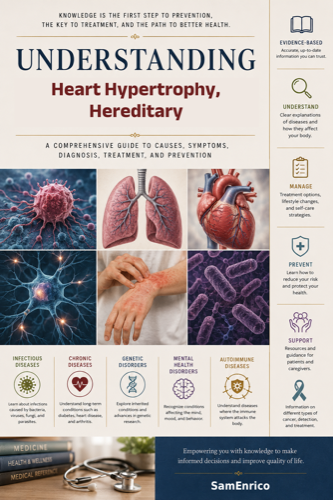 Understanding Heart Hypertrophy, HereditaryTackett Larisa$17.99
 Perovskite Solar Cell OutlookTackett Larisa$12.99
 Proposals That Get You Into Grad SchoolTackett Larisa$12.99
 How to Start a Cavity Wall Insulation Business (Beginners Guide)Tackett Larisa$11.99
You may also like
 Hong Kong Handover 1997Dunn Johnnie$11.99
 Zumba For Postnatal Recovery CourseNeal Christian$11.99
 Zumba for BeginnersLadner Nikia$11.99
 YouTube Comment Mining GuideHumes Pandora$12.99
 Worry Box MeditationCarlin Rudy$11.99
 Workplace Stress MeditationNguyen Lynn$11.99
 Workplace Stress and Sleep RepairHawley Ivory$11.99
 Workplace Perfectionism CureDelaney Jeffry$11.99
 Workplace Injustice Anger GuideWallen Isabelle$11.99
 Work Addiction and Burnout LinkGreenwood Ester$11.99
 Women in Yoga and WellnessBeattie Galina$11.99
 Women in Stand Up ComedyChun Evangeline$11.99