
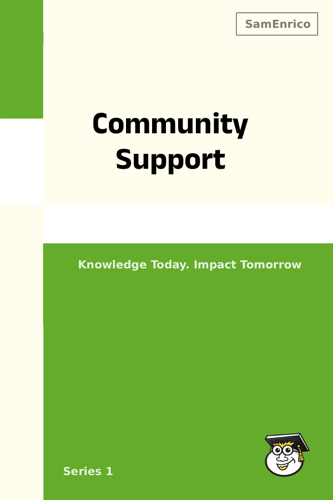
Community Support eBook
A family expresses gratitude for the community tha
by Ingram Sonia
A family expresses gratitude for the community that rallied around them.
Formats
Free sample
Chapter 1: The Ring Theory...--–- The first time I heard about Ring Theory, I was sitting in a hospital waiting room, wearing the same sweatshirt I had put on three days earlier. A social worker named Diane handed me a photocopied diagram that looked like a bullseye: concentric circles with a name written in the center. My name. Jenna. In the center of the bullseye.Diane explained it this way: “The person at the center of the crisis gets to say whatever they want.
They can scream, cry, fall apart, ask the same question seventeen times. Everyone in the outer circles exists to support the circles closer to the center. Comfort flows in. Dumping flows out.”She drew arrows pointing inward toward my name. Those were comfort arrows.
Then she drew arrows pointing outward away from my name. Those were dumping arrows. “You never dump inward,” Diane said. “You only dump outward. Your mother-in-law can complain to her sister, but she cannot complain to you.
Your best friend can cry on her husband’s shoulder, but she cannot cry on yours. You are the center. You are not responsible for anyone else’s feelings right now.”I looked at the diagram. I looked at Marco, unconscious in the bed behind me. I looked at the pile of unread text messages on my phone.
I said, “What if I don’t want to be the center?”Diane smiled. It was a kind smile, the kind that said she had heard this before. “That’s not how crisis works,” she said. “You don’t get to choose. The crisis chooses for you.”The Center Cannot Hold I did not want to be the center.
I wanted to be a normal person with a normal life and a husband who could walk. I wanted to be the one bringing casseroles to someone else’s crisis, not the one receiving them. I wanted to be strong and capable and self-sufficient, the way I had been raised to be.But Diane was right. The crisis had chosen me.In the first week after Marco was shot, I learned what it means to be at the center of a bullseye. It means that everyone looks to you for answers you do not have.
It means that your phone becomes a portal of incoming demands disguised as offers of help. It means that you are supposed to be the strong one, the brave one, the one who holds it together, even though you are falling apart.The Ring Theory diagram became my lifeline. I taped it to the wall next to Marco’s hospital bed. When people asked me how I was doing, I pointed to the diagram and said, “Comfort in, dump out. If you can’t do that, please don’t come in.”Some people understood.
Most people did not.The ones who understood were the ones who had been through their own crises. They knew not to ask “How are you?” because that question is a trap. It forces the person at the center to perform an emotional status update for the benefit of the asker. The ones who understood said things like “I brought coffee” and “I’ll sit with Marco while you shower” and “I’m not going to ask how you’re doing because I know the answer is terrible.”The ones who did not understand said things like “You’re so strong” and “God never gives you more than you can handle” and “At least he’s alive.” They meant well. I know they meant well.
But their words landed like stones. Each one was a small weight added to the pile I was already carrying.One of the hardest moments came three weeks into Marco’s hospitalization. A woman from our church—I will call her Margaret—came to visit. Margaret had never spoken to me before the shooting. She had never invited us to dinner or asked about our children.
But she showed up at the hospital with a bouquet of lilies and a sermon.“Jenna,” she said, taking my hands in hers, “you have to forgive the man who shot Marco. Forgiveness is the only way to heal. If you hold onto anger, it will destroy you.”I stared at her. Marco was still in the ICU. He had not walked in twenty-one days.
He might never walk again. And Margaret wanted me to talk about forgiveness.I pointed to the Ring Theory diagram on the wall. “Margaret,” I said, “you are in one of the outer circles right now. I am in the center. That means you do not get to tell me how to feel.
You do not get to give me advice. You do not get to lecture me about forgiveness. If you want to help, you can go to the cafeteria and bring me a coffee. If you cannot do that, you need to leave.”Margaret left. She did not bring me coffee.
She also did not speak to me again for six months.I did not care. I had learned something important: being at the center means you get to set the rules. It means you get to say “no” to the people who make things worse. It means you get to protect your small, fragile circle of safety from the people who want to dump their own anxiety onto you.The Comfort In, Dump Out Rule Ring Theory saved my life. I mean that literally.
Without the structure it provided, I would have been consumed by the well-meaning but exhausting people who wanted to process their own feelings about Marco’s shooting through me.Here is how the rule works in practice.You draw a set of concentric circles. In the very center, you write the name of the person who is most directly affected by the crisis. In our case, that was Marco. He was the one who had been shot. He was the one in the hospital bed.
He was the one who might never walk again. He was the center.In the next circle, you write the names of the people closest to the center. That was me—Jenna, his wife. That was our children, Lila and Mateo. That was Marco’s parents, Elena and Carlos.
That was his siblings, Javier and Isabella.In the next circle, you write close friends and extended family. In the next, colleagues and neighbors. In the next, acquaintances and members of your broader community.The rule is simple: comfort flows inward. Dumping flows outward.That means that anyone in an outer circle can offer comfort to anyone in an inner circle. A neighbor can bring a meal to Marco’s mother.
A colleague can send a card to me. A stranger can leave a comment on the Caring Bridge site for Marco.But dumping—venting, complaining, sharing hard emotions, asking for support—can only flow outward. That means that Marco’s mother can vent to her sister, but she cannot vent to Marco. I can vent to my best friend, but I cannot vent to Marco. Marco’s colleague can vent to his own wife, but he cannot vent to me.The center—Marco—gets to dump in any…
This is the end of the free sample. Get the eBook to keep going. Buy now
About this book
Details
- Author
- Ingram Sonia
- Publisher
- SamEnrico
- Language
- English
- Genre
- Non-Fiction, True Crime, Community Healing
- Released
- 2026-06-07
- Pages (approx.)
- 147
- Available as
- eBook, Audiobook

Read better in the ZLOADR app
Your eBooks on your phone or tablet. Sign in with your SamEnrico account and start reading.
More by Ingram Sonia
 Body Image for Curly HairIngram Sonia$11.99
 F1 Champion Mindset GuideIngram Sonia$11.99
 Waitstaff Name Recall GuideIngram Sonia$11.99
 Cialdini Email MarketingIngram Sonia$11.99
 Exercise Replacement StrategyIngram Sonia$11.99
 Online Dating After DivorceIngram Sonia$11.99
 Mendeleev Solution DreamsIngram Sonia$11.99
 The Jade Serpent's Melody: How the Dragon King Composed the First SymphonyIngram Sonia$11.99
 How to Produce Shaving KitsIngram Sonia$11.99
 How to Produce Food Gift BasketsIngram Sonia$11.99
 GST Registration for StartupsIngram Sonia$12.99
 Middle Eastern Account ManagementIngram Sonia$12.99