
Non-FictionSelf-HelpPrioritization
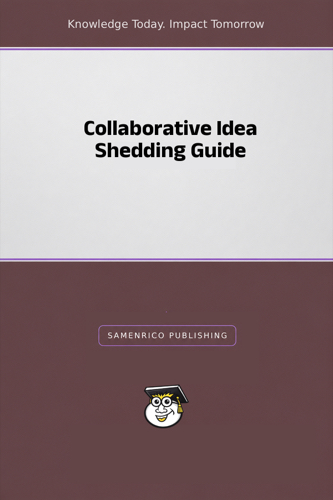
Collaborative Idea Shedding Guide eBook
Kills weak ideas quickly to focus energy on promis
Kills weak ideas quickly to focus energy on promising concepts.
Formats
Free sample
Chapter 1: The Zombie Audit--–- Every organization on earth has a secret graveyard. It is not a physical place. You cannot find it on any office map or HR document. But it is real, and it is overflowing. In this graveyard lie the remains of projects that were never officially started, ideas that were never officially killed, and initiatives that consume resources without ever delivering value.
These are the undead. They shuffle through your backlog, your meeting agendas, your Slack channels, and your quarterly planning sessions. They are not alive—they have no budget, no owner, no clear next action. But they are not dead either—no one ever gathered the team, looked them in the eye, and said, "We are stopping this forever." So they linger. They haunt.
They drain.This chapter is about naming the undead, counting them, and understanding why they are the single greatest threat to your team's effectiveness. More importantly, this chapter introduces the first and most important tool in the Idea Shedder's toolkit: The Zombie Audit. By the time you finish reading, you will have a clear method for identifying every zombie idea in your organization, measuring the true cost of keeping them alive, and preparing yourself psychologically for the work of killing them.The Hidden Epidemic No One Talks About Let us start with a simple question. How many active projects does your team currently have? Write down a number.
Be honest. Now ask yourself a second question: How many of those projects have a named owner, a dedicated budget line, and a specific next action scheduled within the next seven days? That second number is almost always dramatically smaller than the first. The gap between these two numbers is filled with zombies.I have run this exercise with over two hundred teams across technology, manufacturing, healthcare, and nonprofit organizations. The results are remarkably consistent.
Teams typically report having between fifteen and forty "active" projects. When we apply the three-part test—owner, budget, next action within seven days—the number of truly alive projects drops to between six and twelve. The rest, between forty and sixty percent of all claimed work, are zombies. They are neither alive nor dead. They are undead.Consider a typical example.
A product team at a mid-sized software company maintains a roadmap with twenty-three initiatives. Of these, eight have dedicated engineers assigned. Four have scheduled work for the current sprint. The remaining eleven exist as Jira tickets with no assignee, no due date, and no stakeholder who will admit to owning them. They are not canceled.
They are simply... there. Every sprint planning meeting, someone asks, "What about the customer portal redesign?" No one has an answer. It goes back on the backlog. Next month, someone asks again.
The pattern repeats. The customer portal redesign has been "in consideration" for fourteen months. It has consumed approximately thirty-seven hours of meeting time, generated forty-two Slack messages, and produced zero lines of code. It is a zombie.Zombies do not just consume time. They consume something far more precious: cognitive bandwidth.
Every undead idea that sits in your backlog, your "someday" list, or your mental parking lot occupies a small piece of your attention. You do not actively think about it, but it is there, humming in the background, creating a low-grade anxiety that something is unfinished. Psychologists call this the Zeigarnik effect—the human mind's tendency to remember incomplete tasks far more vividly than completed ones. Zombie ideas exploit this effect ruthlessly. They are the mental equivalent of browser tabs left open.
Each one slows down the processor.Introducing Collaboration Debt If you have ever worked in software development, you are familiar with the concept of technical debt. Technical debt is what accumulates when teams take shortcuts—writing code that works for now but will need to be fixed later. It is a useful metaphor because it acknowledges that debt is not inherently evil. Sometimes taking on debt allows you to ship faster. But debt compounds.
If you never pay it down, the interest eventually strangles you.This book introduces a parallel concept: Collaboration Debt. Collaboration debt is what accumulates every time a team defers a decision, avoids a hard conversation, or keeps an idea alive out of politeness rather than conviction. Every time someone says, "Let's not decide right now," "Let's keep it on the backburner," "We'll circle back to that," or "Let's leave it as an option," they are taking out a small loan against the team's future effectiveness. The interest on that loan is paid in meeting minutes, email threads, cognitive load, and quiet frustration.Collaboration debt has three distinct components. First, there is decision debt—the cost of postponing a yes or no.
An idea that should have been killed six months ago has been discussed in eleven different meetings, each time consuming thirty minutes of collective attention. That is five and a half hours of decision debt. Second, there is emotional debt—the cost of pretending. Team members who know an idea is weak but stay silent to avoid conflict are paying emotional interest. They become less engaged, less willing to speak up on other topics, and more likely to burn out.
Third, there is opportunity debt—the cost of what could have been done instead. Every hour spent discussing a zombie idea is an hour not spent building, testing, or shipping something real.The most insidious feature of collaboration debt is that it feels productive to incur it. Saying "let's keep it on the backburner" sounds reasonable. It sounds like prudence. It sounds like keeping options open.
In reality, it is almost always a failure of courage. The person saying it knows, deep down, that the idea is never coming off the backburner. But saying "let's kill it" would require admitting that past effort was wasted, that someone's pet project is not viable, or that a hard trade-off must be made. So the debt grows.Why Stopping Is Harder Than Starting Here is the central paradox of idea shedding. Every team I have ever worked with is exceptionally good at starting things.
They generate ideas constantly. They launch initiatives. They kick off projects with enthusiasm and fanfare. But almost no team is good at stopping things. The skills required to start—optimism, creativity, energy, conviction—are the opposite of the skills required to stop.
Stopping requires realism, dispassion, courage, and the willingness to disappoint people.This asymmetry creates a predictable pathology. Teams accumulate ideas faster than they retire them. The backlog grows. The roadmap expands. New initiatives are added on top of old ones, with no corresponding removal.
Eventually, the team is so overloaded that nothing gets done well. The response to this overload is almost always the same: generate more ideas. "We need to be more innovative." "We need to think outside the box." "We need more brainstorming." This is like trying to empty a sinking ship by opening more faucets. The problem is not a shortage of ideas. The problem is a surplus of undead ones.I have seen this pattern destroy teams.
A marketing department with seventeen active campaigns, nine of which have not been touched in three months. A product team…
This is the end of the free sample. Get the eBook to keep going. Buy now
About this book
Details
- Author
- Maxey Solange
- Publisher
- SamEnrico
- Language
- English
- Genre
- Non-Fiction, Self-Help, Prioritization
- Released
- 2026-06-09
- Pages (approx.)
- 121
- Available as
- eBook, Audiobook

Read better in the ZLOADR app
Your eBooks on your phone or tablet. Sign in with your SamEnrico account and start reading.
More by Maxey Solange
 Soundtrack for Flow StatesMaxey Solange$11.99
 Social Media Profile CanvaMaxey Solange$11.99
 Arachnophobia Spider FearMaxey Solange$11.99
 Self Hypnosis for Shingles PainMaxey Solange$11.99
 Senior Chronic Illness GuideMaxey Solange$11.99
 Remote Standup Meeting GuideMaxey Solange$11.99
 Acupuncture for Tennis ElbowMaxey Solange$11.99
 The Abduction of Charles Ross: America's First High-Profile Kidnapping for RansomMaxey Solange$11.99
 The Trial of the Century: The Dreyfus Affair and the Birth of Modern JusticeMaxey Solange$11.99
 How to Produce Ping Pong BallsMaxey Solange$11.99
 How to Produce Descalers and DecalcifiersMaxey Solange$11.99
 Trade References That Build CreditMaxey Solange$12.99
You may also like
 Hong Kong Handover 1997Dunn Johnnie$11.99
 Zumba For Postnatal Recovery CourseNeal Christian$11.99
 Zumba for BeginnersLadner Nikia$11.99
 YouTube Comment Mining GuideHumes Pandora$12.99
 Worry Box MeditationCarlin Rudy$11.99
 Workplace Stress MeditationNguyen Lynn$11.99
 Workplace Stress and Sleep RepairHawley Ivory$11.99
 Workplace Perfectionism CureDelaney Jeffry$11.99
 Workplace Injustice Anger GuideWallen Isabelle$11.99
 Work Addiction and Burnout LinkGreenwood Ester$11.99
 Women in Yoga and WellnessBeattie Galina$11.99
 Women in Stand Up ComedyChun Evangeline$11.99