
Non-FictionForecast & OutlookCloud FinanceCloud Economics
Cloud Infrastructure Capital Guide eBook
Analyze data center expansion, edge computing, and
Allocate to data centers, edge computing, and multi cloud integration.
Formats
Free sample
Chapter 1: The Concrete Cloud--It is a windowless concrete building surrounded by razor wire, diesel generators the size of city buses, and armed guards who do not smile. You have driven past it a hundred times on your way to work, probably while complaining about traffic, and you have never once noticed it. That is by design. The owners want it invisible. The tenants want it secure.
But inside that unmarked building — one of thousands scattered across every continent except Antarctica — sits the physical machinery of your entire digital life.Every email you have ever sent. Every photograph you have ever stored. Every frame of every movie you have streamed. Every swipe on every dating app. Every stock trade.
Every hospital record. Every government surveillance log. Every Chat GPT query. Every Zoom call that crashed at the worst possible moment. It all passes through a building like this one.The cloud, you have been told, is everywhere and nowhere.
It floats. It is ethereal. It is software running on magic. That is a lie carefully constructed by the world's most valuable companies because they do not want you to think about what the cloud actually is: millions of servers, stacked in rows, bolted to concrete floors, consuming enough electricity to power a small country, and generating enough heat to melt through steel if the cooling systems fail for more than ninety minutes.This book is about those buildings. Not the software.
Not the APIs. Not the startup pitch decks promising to "disrupt" something. The buildings. The land they sit on. The power lines that feed them.
The fiber optic cables that connect them. The twenty-year contracts that make them profitable. The investors who figured out, five years before everyone else, that digital infrastructure was the best real estate bet since suburban shopping malls in the 1950s.And here is the uncomfortable truth that this book will prove page by page: you already pay for the cloud. Someone else profits from the buildings that make it work. That someone could be you.The Invisible Asset Class Let us start with a simple question.
If someone asked you to name the most valuable commercial real estate in the world, what would you say? Fifth Avenue storefronts? Office towers in Manhattan? The shopping centers of Hong Kong? Those are all reasonable answers.
They are also all wrong.The most valuable commercial real estate in the world, measured by price per square foot and by the strategic importance of what it contains, is a windowless building in Ashburn, Virginia. Not a famous building. Not an architectural landmark. A building you cannot even see from the road because the property is surrounded by a berm designed to absorb the blast from a car bomb.Why Ashburn? Because seventy percent of the world's internet traffic passes through Loudoun County, Virginia.
That is not a metaphor. Fiber optic cables from every major population center on the Eastern Seaboard converge in this one county. They enter buildings owned by companies you have heard of — Equinix, Digital Realty, QTS — and they exchange traffic in rooms called Meet-Me-Rooms, which are exactly what they sound like: physical spaces where competing carriers and cloud providers agree to hand off data without charging each other exorbitant fees.If you wanted to take down North American e-commerce, you would not attack Amazon's headquarters or Google's campus. You would cut the fiber lines entering Ashburn. Or you would blow the substation that feeds the data center cluster.
Or you would hire a team to physically disable the diesel generators that provide backup power. The point is: the most important real estate on the internet is not software. It is dirt, concrete, copper, and diesel fuel.This is not hyperbole. In 2021, a fiber cut in Ashburn took down Discord, Etsy, Amazon Web Services, and half a dozen other major platforms for three hours. The economic damage was estimated at over half a billion dollars.
One backhoe operated by a subcontractor who had not been given proper maps caused more economic destruction than most cyberattacks. That is the fragility of the system. And that fragility is where opportunity lives.From Server Closet to Strategic Asset To understand why data centers have become the most important physical infrastructure of the twenty-first century, you have to understand where they came from. The story is short, and it matters because it explains why so many investors are still thinking about this asset class the wrong way.In the 1980s and 1990s, computing lived inside office buildings. Every company of any size had a "server room" — usually a locked closet with poor ventilation, a humming air conditioning unit that broke every summer, and a single intern responsible for restarting the mail server when it crashed.
These were cost centers. Nobody wanted to think about them. They were as exciting as the boiler room.In the early 2000s, a few companies realized they could rent space in specialized buildings designed for servers. These were called colocation centers or "colo" for short. The value proposition was simple: instead of building your own server room, you rent a cage in someone else's building with redundant power, redundant cooling, and professional security.
This was cheaper and more reliable. By 2010, colocation had become a billion-dollar industry.Then came the hyperscalers. Amazon, Microsoft, and Google realized that their own computing needs were so massive that they could not rely on colocation providers. They needed entire buildings designed from the ground up for their specific hardware. They needed campuses.
They needed their own substations connected directly to the grid. They needed cooling systems that could handle hundreds of thousands of servers running at full capacity.This was the inflection point. When Amazon built its first custom data center in Boardman, Oregon, in 2011, the local utility had to upgrade an entire substation. The building consumed more electricity than the surrounding town. And Amazon paid for it all — the construction, the substation, the fiber connections — because the cost of running their own facility was still cheaper than paying rent to a colocation provider.That was the moment when data centers stopped being real estate and started being critical national infrastructure.
They are now treated by governments the way we used to treat power plants, water treatment facilities, and military bases. They are protected by the Department of Homeland Security. Their locations are classified in some cases. Foreign ownership is subject to review by the Committee on Foreign Investment in the United States.Let me repeat that. A building full of servers is now considered as sensitive as a military base.
That is how important this asset class has become.What This Book Is and Is Not Before we go any further, let me be explicit about what you are holding.This book is not a technical manual. I am not going to teach you how to configure a load balancer or optimize a Kubernetes cluster. There are excellent books for that, written by people with deeper engineering expertise than I possess. This book is also not a primer on cloud computing for beginners. I assume you know the difference between Infrastructure as a Service and Platform as a Service, or you are willing…
This is the end of the free sample. Get the eBook to keep going. Buy now
About this book
Details
- Author
- Eason Roxanna
- Publisher
- SamEnrico
- Language
- English
- Genre
- Non-Fiction, Forecast & Outlook, Cloud Finance, Cloud Economics
- Released
- 2026-05-30
- Pages (approx.)
- 138
- Available as
- eBook, Audiobook

Read better in the ZLOADR app
Your eBooks on your phone or tablet. Sign in with your SamEnrico account and start reading.
More by Eason Roxanna
 Pregnancy Anxiety ReliefEason Roxanna$11.99
 Resource Denial Anger GuideEason Roxanna$11.99
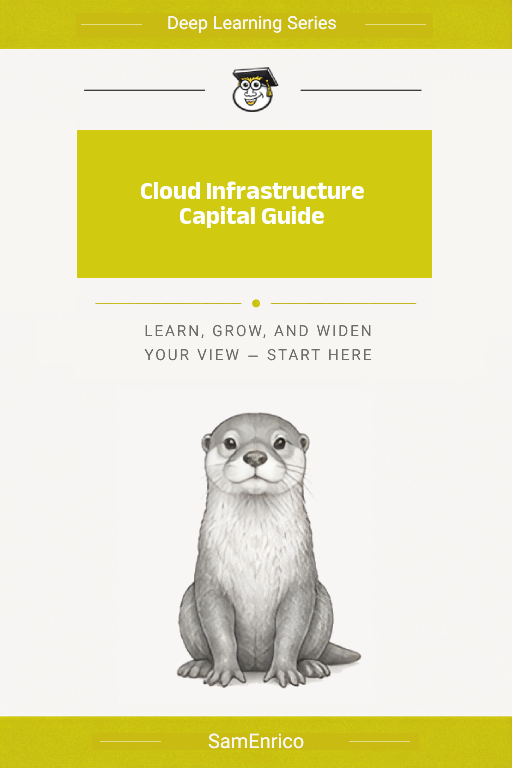 Cloud Infrastructure Capital GuideEason Roxanna$12.99
 The Parenting Nonverbal GuideEason Roxanna$11.99
 End of Day Confidence RitualEason Roxanna$11.99
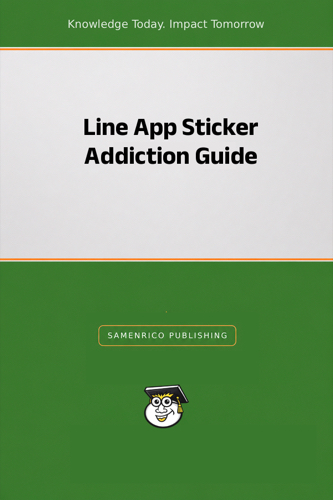 Line App Sticker Addiction GuideEason Roxanna$11.99
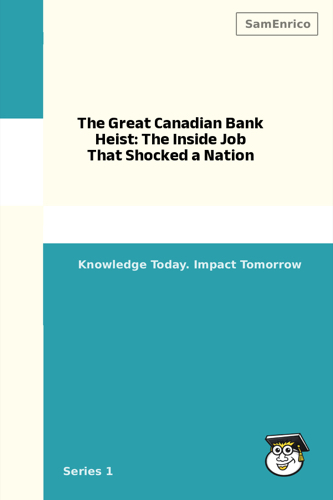 The Great Canadian Bank Heist: The Inside Job That Shocked a NationEason Roxanna$11.99
 Understanding Microtia, Meatal Atresia and Conductive DeafnessEason Roxanna$17.99
 Non Disclosure Agreement ReviewEason Roxanna$12.99
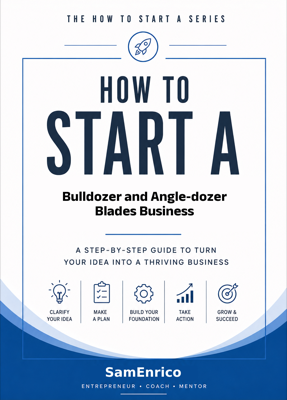 How to Start a Bulldozer and Angle-dozer Blades Business (Beginners Guide)Eason Roxanna$11.99
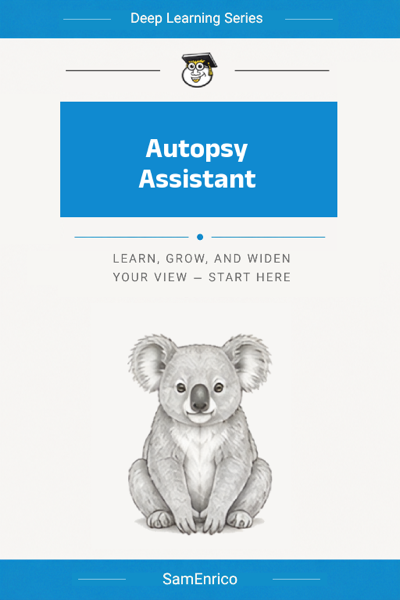 Autopsy AssistantEason Roxanna$11.99
You may also like
 Hong Kong Handover 1997Dunn Johnnie$11.99
 Zumba For Postnatal Recovery CourseNeal Christian$11.99
 Zumba for BeginnersLadner Nikia$11.99
 YouTube Comment Mining GuideHumes Pandora$12.99
 Worry Box MeditationCarlin Rudy$11.99
 Workplace Stress MeditationNguyen Lynn$11.99
 Workplace Stress and Sleep RepairHawley Ivory$11.99
 Workplace Perfectionism CureDelaney Jeffry$11.99
 Workplace Injustice Anger GuideWallen Isabelle$11.99
 Work Addiction and Burnout LinkGreenwood Ester$11.99
 Women in Yoga and WellnessBeattie Galina$11.99
 Women in Stand Up ComedyChun Evangeline$11.99