
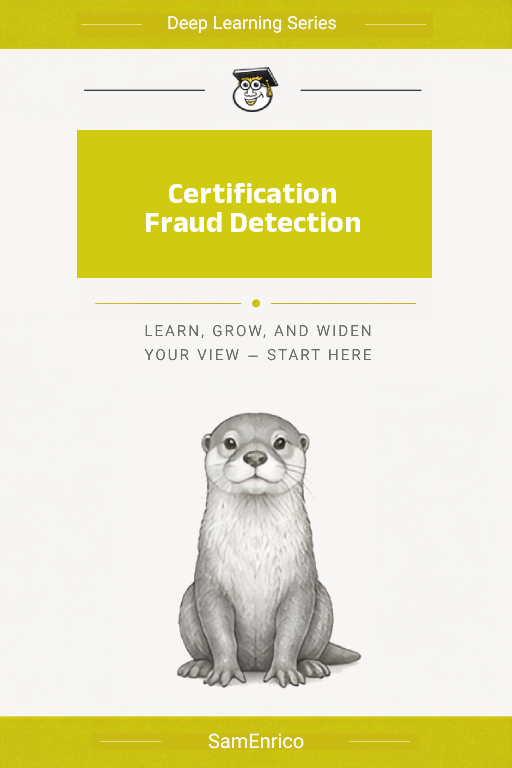
Certification Fraud Detection eBook
Avoid fake sustainability certificates in your exp
by Coles Marcel
Avoid fake sustainability certificates in your export supply chain with verification protocols and certification body validation.
Formats
Free sample
Chapter 1: The Billion-Dollar Blind Spot...--–- The conference room in Rotterdam smelled of fresh coffee and stale regret. Thirty-two shipping containers sat on the dock, detained by Dutch customs, their contents worth approximately twelve million dollars at retail. The compliance director for a major European fashion brand stared at the stack of FSC and Organic Content Standard certificates spread across the table. They looked perfect. The QR codes worked.
The certification body logos were correct. The signature blocks were filled. And every single one of them was a lie.The containers held conventional cotton T-shirts, grown with pesticides, processed with harsh chemicals, and carrying none of the sustainability credentials they claimed. The supplier, a well-regarded Vietnamese factory with a decade of export history, had simply hired a graphic designer with Photoshop and a working knowledge of certificate templates. The cost to produce the fake documents?
About five hundred dollars. The savings to the supplier by avoiding certified organic cotton? Nearly half a million dollars on that single shipment alone. The buyer’s loss? Twelve million in seized inventory, three million in expedited replacement sourcing, and an unknown figure in brand damage when the story inevitably leaked to the press.This is not an isolated incident.
This is not a cautionary tale from a decade ago. This is the daily reality of global trade in the age of sustainability claims, and it is happening inside your supply chain right now. You just haven’t caught it yet.The Problem Stated Simply Procurement teams around the world have been trained to treat certificates as proof. A supplier provides a PDF. The PDF has a logo.
The logo looks official. The compliance team files it in a folder. The shipment sails. This process, repeated millions of times per day across every industry, contains a fatal flaw: a PDF is not proof. A PDF is a claim.
And claims require validation.The difference between these two concepts is the difference between sleeping soundly and waking up to a customs detention notice. When you treat a certificate as proof, you outsource your due diligence to the very person who has a financial incentive to deceive you. The supplier who saves half a million dollars by faking an organic certificate is not going to volunteer that information. The certification body that issued a weak audit to keep a paying client is not going to highlight its own negligence. The system is not designed to catch fraud.
The system is designed to process paperwork. Fraud detection requires a completely different mindset, one that assumes nothing, verifies everything, and follows the math until it either adds up or breaks.The Scope of the Problem Before we dive into the forensic protocols that comprise the rest of this book, we must first understand the scale of what we are facing. The numbers are not encouraging.Recent data from third-party audit firms indicates that approximately thirty-eight percent of supplier sustainability claims fail when subjected to enhanced due diligence. That is not a typo. Nearly four out of every ten suppliers making environmental or social claims cannot back those claims with verifiable evidence when auditors dig beneath the surface.
Some of these failures are administrative errors, missing documents, or misunderstood requirements. But a significant portion are intentional deceptions, ranging from creative interpretation of chain of custody rules to outright fabrication of certificates.The financial incentives driving this behavior are staggering. A single container of certified organic cotton might require a premium of fifty thousand dollars over conventional material. A container of FSC-certified wood products might carry a thirty-thousand-dollar premium. A shipment of certified sustainable palm oil might be twenty thousand dollars more expensive than uncertified alternatives.
Multiply these numbers across the hundreds or thousands of containers a mid-sized importer processes annually, and the incentive to cut corners becomes clear. The supplier who cheats does not just save money, they gain a competitive advantage over honest competitors who actually pay for certified materials. This is the economics of fraud, and until the cost of getting caught exceeds the profit from cheating, the fraud will continue.Certification Fraud Versus Greenwashing A critical distinction must be made at the outset, because the business press and even some regulatory frameworks tend to conflate two very different behaviors. Certification fraud and greenwashing are not the same thing, and treating them as identical leads to ineffective countermeasures.Greenwashing is the act of making misleading or unsubstantiated marketing claims about the environmental attributes of a product. A company that says its plastic bottle is "biodegradable" when it requires industrial composting conditions that do not exist in nature is greenwashing.
A company that calls its product "eco-friendly" without any supporting data or third-party certification is greenwashing. These are marketing violations. They are often handled by advertising standards authorities or consumer protection agencies. They rarely involve criminal intent.Certification fraud is something else entirely. Certification fraud is the deliberate falsification, forgery, or misrepresentation of third-party certification documents with the intent to deceive a buyer, evade a contract requirement, or circumvent a regulatory obligation.
This is not a marketing violation. This is fraud. In many jurisdictions, it is a criminal offense. When a supplier alters an expiry date on a certificate, they are committing fraud. When a supplier attaches a valid certificate number to goods that were not produced under that certificate, they are committing fraud.
When a supplier claims mass balance accounting while physically mixing certified and uncertified materials in a way that violates the scheme rules, they are committing fraud.The distinction matters because the remedies are different. Greenwashing requires better marketing regulation and advertising standards enforcement. Certification fraud requires forensic accounting, database verification, legal contracts with penalty clauses, and, in extreme cases, criminal prosecution. This book addresses certification fraud, not greenwashing. If you are looking for guidance on how to write better sustainability marketing copy, there are other books for that.
If you want to know how to catch a supplier who has photoshopped a certificate, you are in the right place.The Mass Balance Preview Before we proceed, we must address a concept that will appear throughout this book and has caused considerable confusion in the industry. Mass balance is a chain of custody model used by many certification schemes, including FSC, ISCC, and the Roundtable on Sustainable Palm Oil. Under mass balance, certified and uncertified materials can be mixed in transportation, storage, or production, as long as the accounting system tracks volumes and ensures that total certified output does not exceed total certified input.This model is legitimate. It is approved by major certification schemes. It serves a real purpose, allowing certified materials to move through shared infrastructure in regions where dedicated certified supply chains are not economically viable.
However, the accounting flexibility inherent in mass balance creates opportunities for exploitation. A fraudulent supplier can report certified input that never arrived, can allocate certified output to conventional material, or can simply lie about volumes because the physical segregation that would catch the lie is not required.The model itself is not fraud. The exploitation of the model is fraud. We will return to mass balance in Chapter Five, where we will provide a complete explanation of…
This is the end of the free sample. Get the eBook to keep going. Buy now
About this book
Details
- Author
- Coles Marcel
- Publisher
- SamEnrico
- Language
- English
- Genre
- Non-Fiction, Business Brief
- Released
- 2026-05-29
- Pages (approx.)
- 151
- Available as
- eBook, Audiobook

Read better in the ZLOADR app
Your eBooks on your phone or tablet. Sign in with your SamEnrico account and start reading.
More by Coles Marcel
 Self Talk for Anger Management CourseColes Marcel$11.99
 Growth Mindset For GrandparentsColes Marcel$11.99
 Rural Addiction TreatmentColes Marcel$11.99
 The Empathy for Shame GuideColes Marcel$11.99
 Spin Instructor Starter ManualColes Marcel$11.99
 Rustler’s Lament: The Ballad of the Ghost HerdColes Marcel$11.99
 How to Become a Plastic Tool MakerColes Marcel$11.99
 BOP Customer Discovery GuideColes Marcel$12.99
 Understanding Urea Cycle EnzymopathiesColes Marcel$17.99
 Freebie MarketingColes Marcel$11.99
You may also like
 Hong Kong Handover 1997Dunn Johnnie$11.99
 Zumba For Postnatal Recovery CourseNeal Christian$11.99
 Zumba for BeginnersLadner Nikia$11.99
 YouTube Comment Mining GuideHumes Pandora$12.99
 Worry Box MeditationCarlin Rudy$11.99
 Workplace Stress MeditationNguyen Lynn$11.99
 Workplace Stress and Sleep RepairHawley Ivory$11.99
 Workplace Perfectionism CureDelaney Jeffry$11.99
 Workplace Injustice Anger GuideWallen Isabelle$11.99
 Work Addiction and Burnout LinkGreenwood Ester$11.99
 Women in Yoga and WellnessBeattie Galina$11.99
 Women in Stand Up ComedyChun Evangeline$11.99