

essaysStudent's ShortcutCausal Analysis
Cause Effect Essay GPT Guide
Trace chains of causality and predict outcomes wit
Trace chains of causality and predict outcomes with precise prompt engineering.
Formats
About this book
Free sample
Chapter 1: The Detective’s First Clue--Every time you ask GPT “What is the relationship between X and Y?” you are setting a trap for yourself. The trap has a name, and it is the single greatest reason why most GPT-generated essays earn C grades or lower. The trap is called illusory causality – the human brain’s irresistible urge to see causes and effects even where none exist. GPT, trained on billions of pages of human writing, has inherited this flaw. It will confidently tell you that ice cream sales cause drowning (they correlate, but the real cause is summer heat), that yoga makes you wealthy (practitioners tend to be affluent already), and that a new policy caused a stock market rise (when the rise began six months earlier).
The model does not know it is lying. It is simply being a good parrot.This book exists to turn you from a parrot into a detective. Detectives do not ask for correlations. They ask for chains. They demand timelines.
They test what would happen if the cause were removed. And they never, ever confuse “happens after” with “happens because of.” This chapter establishes the foundational grammar of causality – the basic building blocks you will use in every single prompt from now on. Without these definitions, your prompts will be castles built on sand. With them, you will start seeing what GPT hides: the invisible links between events, the hidden third variables, and the difference between a story and a proof.Why Most GPT Essays Fail Before They Begin Let us examine a typical student prompt: “Explain the effects of social media on teen mental health.” GPT returns a 500-word paragraph listing anxiety, depression, sleep loss, and FOMO (fear of missing out). The essay receives a C.
The professor writes: “Correlation is not causation. You have described associations, not mechanisms.” The student is confused – GPT gave them so many facts. What went wrong?The problem is not the facts. The problem is the causal status of those facts. GPT listed things that co-occur with social media use, but it never proved that…
This is the end of the free sample. Get the eBook to keep going. Buy now
Contents
- Chapter 1
- Chapter 2
- Chapter 3
- Chapter 4
- Chapter 5
- Chapter 6
- Chapter 7
- Chapter 8
- Chapter 9
- Chapter 10
- Chapter 11
- Chapter 12
Details
- Author
- Bland Jacelyn
- Publisher
- SamEnrico
- Language
- English
- Genre
- essays, Student's Shortcut, Causal Analysis
- Released
- 2026-06-10
- Pages (approx.)
- 127
- Available as
- eBook, Audiobook

Read better in the ZLOADR app
Your eBooks on your phone or tablet. Sign in with your SamEnrico account and start reading.
More by Bland Jacelyn
 Creative Starvation SuccessBland Jacelyn$11.99
 Rock Stacking PracticeBland Jacelyn$11.99
 The Nap Memory Boost HandbookBland Jacelyn$11.99
 Divorce and Pet CustodyBland Jacelyn$11.99
 The Healers of the Nile: Egypt's Forgotten Medical PioneersBland Jacelyn$11.99
 Asset Management AnalystBland Jacelyn$11.99
 JEE Answer Writing Technique GuideBland Jacelyn$12.99
 Wave Accounting Free Setup GuideBland Jacelyn$12.99
 Understanding Pilo Dento Ungular Dysplasia MicrocephalyBland Jacelyn$17.99
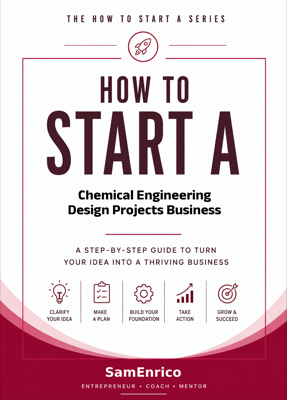 How to Start a Chemical Engineering Design Projects Business (Beginners Guide)Bland Jacelyn$11.99
You may also like
 YouTube Video Essay DepthLeon Lala$11.99
 TOEFL Independent Essay GuideMintz Alex$11.99
 Music Theory Essay GuideWilkinson Maisha$11.99
 Expository Essay AI PromptsApplegate Dalia$11.99
 Exam Essay MemorizationMcgovern Johna$11.99
 Compare Contrast Essay PromptsOntiveros Marx$11.99
 College Application Essay GuideSisson Aimee$11.99College Application Essay GuideSisson Aimee$11.99
 The 100 Word Essay ChallengeAli Luciana$11.99
 Journalism Essay PromptsThatcher Williemae$11.99
 Finance Essay PromptsShrader Lamont$11.99
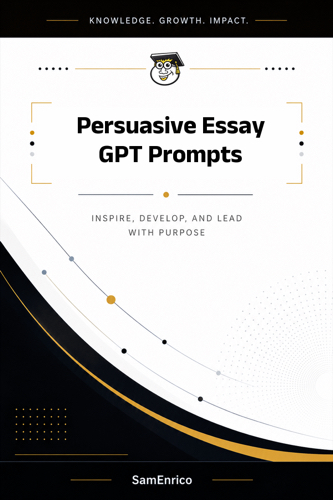 Persuasive Essay GPT PromptsMccombs Wilber$11.99