
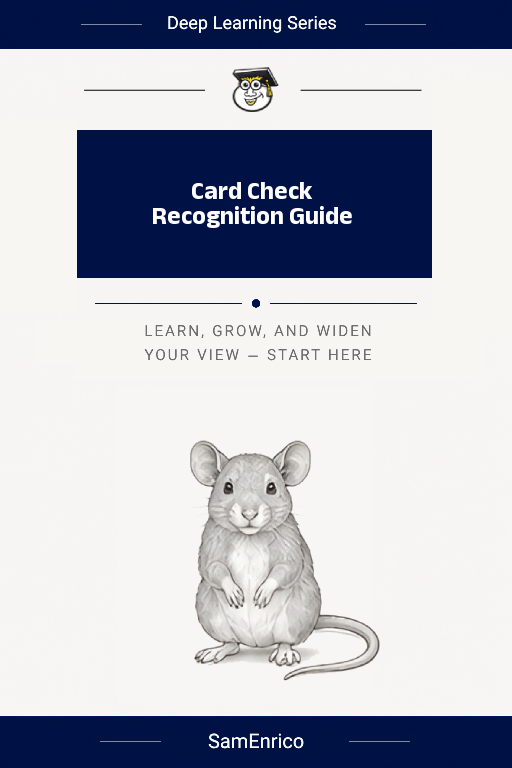
Non-FictionAnnual CheckupCard CheckRecognition
Card Check Recognition Guide eBook
Understand card check recognition for unions inclu
by Adler Oralee
Understand card check recognition for unions including voluntary recognition agreements and neutrality deals.
Formats
Free sample
Chapter 1: The Broken Bottleneck--The most important fact about American labor today is not the one you hear on the news. It is not the declining union density rate, though that statistic is grim. It is not the wave of high-profile organizing drives at Amazon, Starbucks, or Trader Joe's, though those are instructive. The most important fact is this: a majority of non-union workers in the United States say they would join a union tomorrow if given the chance. Polling from Gallup, Pew, and the Center for American Progress consistently shows that nearly half of non-union workers—and in some surveys, over sixty percent—would vote yes in a representation election.
Yet the actual private-sector unionization rate hovers just below seven percent.That gap—between desire and reality—is not a mystery. It is not a failure of worker will. It is not a reflection of some fundamental change in the character of the American employee. The gap is the direct result of a broken system: the National Labor Relations Board representation election process has become a weaponized legal battlefield where employers win not by persuading workers but by exhausting, intimidating, and delaying them into submission.This chapter tells the story of that broken bottleneck. It explains why the NLRB process, designed in 1935 as a democratic mechanism for workers to choose collective representation, has evolved into a gauntlet that only the most determined—or the most reckless—unions can survive.
And it makes the case for why voluntary agreements—card check, neutrality deals, and voluntary recognition—are not a clever legal loophole but the only practical pathway to restore worker voice in the twenty-first century.The Paradox of Public Support Let us begin with the numbers that should not exist together. In 2023, Gallup reported that sixty-seven percent of Americans approved of labor unions. That was the highest level of approval since 1965, the heyday of the post-war labor movement. Among young workers aged eighteen to thirty-four, approval climbed above seventy percent. Among college-educated professionals, it was even higher.
The idea of collective bargaining—workers banding together to negotiate for better wages, benefits, and working conditions—has never been more popular in living memory.Now look at the other side of the ledger. In 2023, the Bureau of Labor Statistics reported that the private-sector unionization rate fell to 6.6 percent, down from over twenty percent in 1983. In industries like retail, hospitality, and gig economy work, the rate is closer to two or three percent. In the tech sector, it is virtually zero. The number of workers covered by a collective bargaining agreement in the private sector has fallen by more than half since the 1980s, even as the workforce has grown by tens of millions of people.These two facts—high approval, low density—cannot both be explained by worker apathy.
If workers wanted unions, they would presumably join them. The standard employer argument is that workers simply do not want unions anymore; that the modern workplace is fair and flexible; that collective bargaining is an anachronism from the industrial age. But the polling data demolishes that claim. Workers want unions. They just cannot get them.The culprit is not the worker.
It is the process.Consider the trajectory of a typical union organizing drive. It begins when a small group of workers—usually a handful of trusted shop-floor leaders—contacts a union and expresses interest. The union assigns an organizer, who begins having confidential one-on-one conversations with workers to assess support. If the interest is genuine, the union files a representation petition with the NLRB. And then the clock starts—not on an election, but on a legal war.The employer, almost invariably, hires a union avoidance consultant.
These consultants are not fringe operators. They are sophisticated professionals who charge thousands of dollars per day to deploy a playbook perfected over decades. The playbook includes mandatory captive audience meetings where employees are marched into a room and told, in polished presentations, why the union is a threat to their jobs, their wages, and their company's future. It includes mandatory one-on-one meetings with supervisors who interrogate employees about their union sympathies. It includes predictive messaging—"if the union comes, the plant might close"—that walks right up to the line of illegality without quite crossing it.
It includes endless legal challenges to the bargaining unit composition, challenging whether this worker or that worker is truly a "supervisor" under the NLRA's notoriously vague definition.The average time from petition filing to election is fifty-six to ninety-three days. But that is only the first delay. If the union wins the election—and unions do win a majority of NLRB elections, about sixty to seventy percent—the employer can simply refuse to bargain. The union then must file an unfair labor practice charge, wait for an NLRB hearing, get a bargaining order, and then litigate again. The average time from election victory to first contract is two to three years.
During that period, nearly one in three newly certified unions never secures a contract at all. The employer simply runs out the clock, and the union—starved of resources—gives up.This is not a system failure. This is a system design.The Weaponization of Delay The most devastating employer tactic is not illegal retaliation, though that is common enough. It is perfectly legal delay. The NLRA was written in an era when the average manufacturing plant had a stable workforce, clear job classifications, and a straightforward bargaining unit.
In that world, fifty-six days was a reasonable period to run an election. In the modern workplace—with temp workers, contractors, multiple shifts, remote employees, and fluid job descriptions—fifty-six days is an eternity.Employers use that time to sow confusion and fear. A typical union avoidance campaign includes:Captive audience meetings. These are mandatory meetings held during work hours where employees are required to attend anti-union presentations. The employer can legally say almost anything except explicit threats of plant closure or promises of benefits.
The standard script is a master class in psychological manipulation: "We respect your right to choose, but here are the risks. The union will take your dues. The union will force us into rigid work rules. The union will make us less competitive. And if we are less competitive, we may have to make hard decisions about this facility." The word "close" is never spoken.
The message is received.One-on-one interrogations. Supervisors are trained to pull employees aside for "check-in" conversations that are thinly disguised interrogations. "How are you feeling about the union? Do you think it's really necessary? I've heard some people are concerned about dues.
What do you think?" These conversations are legal as long as the supervisor does not threaten retaliation. But the implied message—the supervisor is watching, and the supervisor has power—is unmistakable.Litigation over the bargaining unit. The employer will challenge every classification. Is that shift supervisor a "supervisor" under the NLRA? The definition is notoriously vague: supervisors are those who "assign" work, "direct" employees, or "responsibly direct" them.
In practice, employers argue that any employee who has ever told another employee what to do is a supervisor and should be excluded. These challenges can take months…
This is the end of the free sample. Get the eBook to keep going. Buy now
About this book
Details
- Author
- Adler Oralee
- Publisher
- SamEnrico
- Language
- English
- Genre
- Non-Fiction, Annual Checkup, Card Check, Recognition
- Released
- 2026-05-30
- Pages (approx.)
- 148
- Available as
- eBook, Audiobook

Read better in the ZLOADR app
Your eBooks on your phone or tablet. Sign in with your SamEnrico account and start reading.
More by Adler Oralee
 Entomophobia Insect Fear GuideAdler Oralee$11.99
 Spin Class Mental Toughness GuideAdler Oralee$11.99
 Retirement Planning Without BurnoutAdler Oralee$11.99
 Fake Account Impersonation CasesAdler Oralee$11.99
 Antwerp Diamond Heist Media FrenzyAdler Oralee$11.99
 The Silk and Steel Rivalry: The Unseen Battle Between Coco Chanel and Elsa SchiaparelliAdler Oralee$11.99
 The Silent Depths: Robert Ballard and the Lost Wrecks of the PacificAdler Oralee$11.99
 Understanding Dobrow SyndromeAdler Oralee$17.99
 AI Accounting Software GuideAdler Oralee$12.99
 Business AnalystAdler Oralee$11.99
You may also like
 Hong Kong Handover 1997Dunn Johnnie$11.99
 Zumba For Postnatal Recovery CourseNeal Christian$11.99
 Zumba for BeginnersLadner Nikia$11.99
 YouTube Comment Mining GuideHumes Pandora$12.99
 Worry Box MeditationCarlin Rudy$11.99
 Workplace Stress MeditationNguyen Lynn$11.99
 Workplace Stress and Sleep RepairHawley Ivory$11.99
 Workplace Perfectionism CureDelaney Jeffry$11.99
 Workplace Injustice Anger GuideWallen Isabelle$11.99
 Work Addiction and Burnout LinkGreenwood Ester$11.99
 Women in Yoga and WellnessBeattie Galina$11.99
 Women in Stand Up ComedyChun Evangeline$11.99