
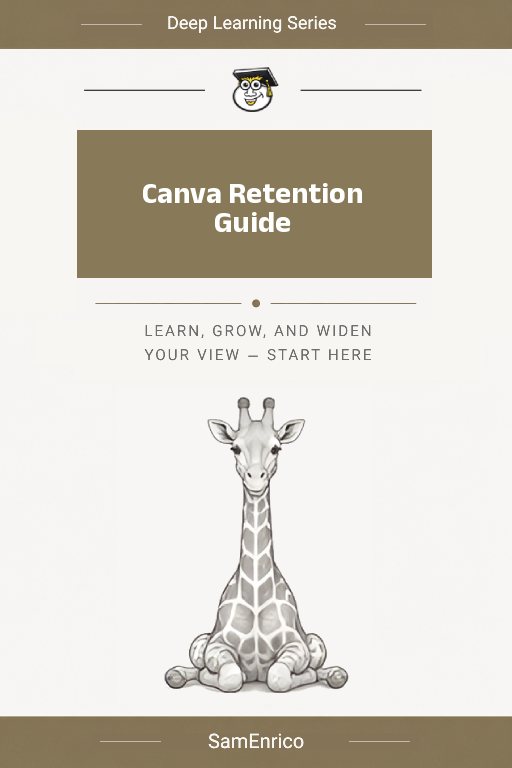
Non-FictionStrategic AtlasRetention Strategy
Canva Retention Guide Audiobook
Analyze design history, brand kit, and asset libra
by Ripley Maura
Analyze design history, brand kit, and asset library that lock in graphic design users.
Formats
Free sample
Chapter 1: The Possession Paradox...--–- In 2013, a year before Canva launched its public platform, a behavioral economist named Dan Ariely ran a simple experiment that would inadvertently predict the future of software retention. He gave half his students tickets to a Duke basketball game and asked the other half how much they would pay for those same tickets. The students who owned the tickets demanded an average selling price of 2,400.Thestudentswhodidnotowntheticketsofferedanaveragebuyingpriceof2,400. The students who did not own the tickets offered an average buying price of 2,400.Thestudentswhodidnotowntheticketsofferedanaveragebuyingpriceof170. That is a fourteenfold difference for the exact same seat at the exact same game.
The only variable was ownership. Ariely called this the Endowment Effect: we demand far more to give up what we already have than we would ever pay to acquire it in the first place.Now consider the implications of that experiment for every piece of software you have ever used. Most products treat retention as a game of habits and notifications. They want you to check in daily, build streaks, earn badges, and return out of compulsion. That model works for meditation apps and fitness trackers.
But it collapses for creative tools because creative tools ask you to produce something, not just consume something. And when you produce something—even something as trivial as changing a font color from blue to navy blue—you become an owner. And owners do not leave.This chapter is about that transformation. It is the foundational chapter of this book because every retention strategy that follows—every brand kit, every asset library, every AI training loop—rests on a single psychological truth: users do not stay because your product is good. They stay because leaving would mean abandoning a piece of themselves.We will begin by dismantling the three psychological effects that explain why ownership emerges from the smallest acts of creation.
Then we will examine how Canva weaponizes these effects through specific product decisions that cost almost nothing to implement but create switching costs worth millions. Finally, we will build a framework that any product manager can use to measure and increase perceived ownership in their own tool. By the end of this chapter, you will never look at an "Edit" button the same way again.The Endowment Effect: Why a Navy Blue Font Is a Prison Cell Let us return to Ariely's basketball tickets for a moment because the mechanics of…
This is the end of the free sample. Get the Audiobook to keep going. Buy now
About this book
Details
- Author
- Ripley Maura
- Publisher
- SamEnrico
- Language
- English
- Genre
- Non-Fiction, Strategic Atlas, Retention Strategy
- Released
- 2026-05-30
- Pages (approx.)
- 141
- Available as
- eBook, Audiobook

Listen in the VoxFlicks app
Audiobooks and audio dramas wherever you go. Sign in with your SamEnrico account and press play.
More by Ripley Maura
 Zoom Call Anger TriggersRipley Maura$11.99
 Physical Appearance Esteem GuideRipley Maura$11.99
 King Nobel Peace PrizeRipley Maura$11.99
 Nairobi Cybersecurity GuideRipley Maura$11.99
 The Family Shopping Support GuideRipley Maura$11.99
 The Bloody Rose: York vs. Lancaster in the War of the CrownRipley Maura$11.99
 Director of Supply ChainRipley Maura$11.99
 Whistleblower Protection TrapRipley Maura$12.99
 How to Become a Ophthalmic PhotographerRipley Maura$11.99
 Understanding Pseudocholinesterase DeficiencyRipley Maura$17.99
You may also like
 Hong Kong Handover 1997Dunn Johnnie$11.99
 Zumba For Postnatal Recovery CourseNeal Christian$11.99
 Zumba for BeginnersLadner Nikia$11.99
 YouTube Comment Mining GuideHumes Pandora$12.99
 Worry Box MeditationCarlin Rudy$11.99
 Workplace Stress MeditationNguyen Lynn$11.99
 Workplace Stress and Sleep RepairHawley Ivory$11.99
 Workplace Perfectionism CureDelaney Jeffry$11.99
 Workplace Injustice Anger GuideWallen Isabelle$11.99
 Work Addiction and Burnout LinkGreenwood Ester$11.99
 Women in Yoga and WellnessBeattie Galina$11.99
 Women in Stand Up ComedyChun Evangeline$11.99