
Non-FictionConsumer Mind ReportBrand Strategy
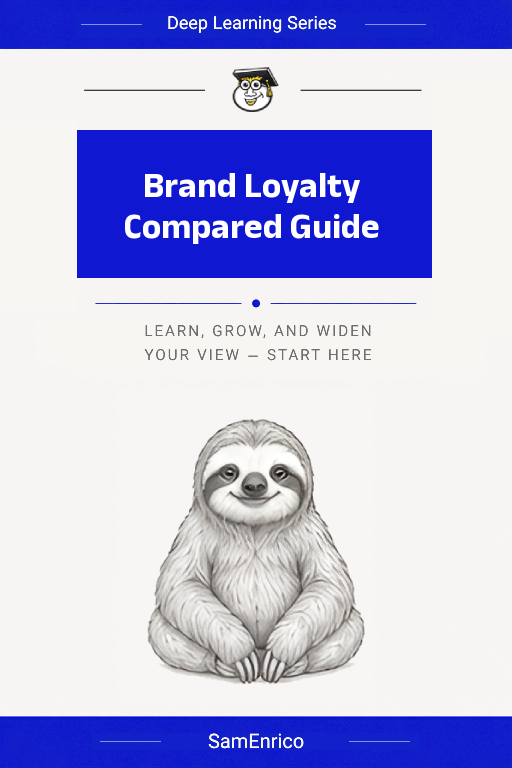
Brand Loyalty Compared Guide eBook
Examine how boomers stay loyal to heritage brands
by Schell Dusty
Examine how boomers stay loyal to heritage brands while Gen Z switches based on values and trends.
Formats
Free sample
Chapter 1: The Funnel Lie--–- In 1965, a advertising executive named Arthur Petersen stood before a room of 300 brand managers at the Sheraton in Chicago and drew a shape that would enslave marketing for six decades. It was a triangle. At the top, he wrote "Awareness." Below that, "Consideration." Then "Preference." Then "Purchase." At the very bottom, a tiny sliver labeled "Loyalty." He called it "The Purchase Funnel," and he promised that if brands poured enough money into the top, loyal customers would drip out the bottom like maple syrup from a tapped tree.The room gave him a standing ovation.For sixty years, that funnel has been taught in business schools, coded into software platforms, and etched into the annual budgets of Fortune 500 companies. It has survived the rise of cable television, the internet, social media, and the smartphone. It has been called "the most durable concept in marketing history."It is also, in the year 2026, a beautiful and expensive lie.This book is not about tweaking the funnel.
It is not about adding a few extra stages or renaming "Preference" to "Engagement." This book is about the funeral of the funnel and the birth of something far messier, far more human, and far more profitable. The funeral is necessary because two generations—Baby Boomers and Gen Z—have shattered every assumption the funnel was built upon. And the birth is urgent because between them, these two generations control nearly six trillion dollars in spending power. The brands that figure out how to hold both at the same time will define commerce for the next twenty years. The brands that don't will become case studies in obsolescence.This chapter dismantles the funnel, introduces the concept of the Funnel Fracture, and reveals why loyalty is no longer a destination but a continuous, exhausting, exhilarating negotiation.The Anatomy of a Lie The funnel makes three promises that are no longer true.
Understanding why they are false is the first step toward building something better.Promise Number One: The customer journey is linear. The funnel assumes that a human being wakes up, becomes aware of a brand, thoughtfully considers it, develops a preference, makes a purchase, and then—if everything goes perfectly—becomes loyal. In reality, the modern customer jumps in and out of this sequence like a time traveler. They might purchase a product before they are aware of the brand (a gift, a recommendation from a friend). They might become loyal to a brand they have never purchased (a Tik Tok creator they admire, a sustainability mission they support).
They might consider a brand for months, purchase it once, and never return—not because the product failed, but because their attention simply drifted elsewhere.The funnel cannot account for this chaos. It was designed for an era of limited choice, slow information, and patient consumers. In 1965, the average grocery store carried 9,000 products. Today, it carries over 40,000. In 1965, a consumer could compare prices by driving to three stores.
Today, they can compare across thirty tabs in thirty seconds. The funnel assumes scarcity of information. We have an abundance of it. And abundance does not create linear paths. It creates webs, loops, and dead ends.Promise Number Two: Awareness leads to consideration.
This is the funnel's most insidious assumption. It assumes that once a person knows a brand exists, they will naturally enter a phase of rational evaluation. But awareness without relevance is just noise. A Boomer may be aware of 500 brands; they will consider only the twenty that have proven themselves over decades or the five recommended by a trusted peer. A Gen Z consumer may be aware of 2,000 brands; they will consider only the ten that align with their values and the three that are currently trending among their micro-community.
Awareness is cheap. Consideration is sacred. The funnel treats them as consecutive. In reality, there is a chasm between them that most brands never cross.Promise Number Three: Loyalty lives at the bottom. This is the most seductive lie of all.
The funnel suggests that loyalty is the reward for a job well done—the cherry on top of the purchase sundae. Build awareness, drive consideration, close the sale, and loyalty will follow. But loyalty is not an outcome of the funnel. It is a completely separate system that operates on different rules, different time horizons, and different psychology. A customer can be deeply loyal to a brand they have not purchased from in six months (a car brand, a hotel chain, a software platform they admire but do not currently need).
A customer can purchase from a brand every week and feel zero loyalty (the commodity toilet paper they buy because it is cheapest). Purchase frequency and loyalty are correlated, but they are not the same thing. The funnel collapses them into a single line, and that collapse has cost brands trillions in misallocated spending.The $6 Trillion Elephant Before we go further, let us name the stakes. This book is about two generations because they represent the single largest transfer of wealth and influence in human history. And they could not be more different.Baby Boomers—born between 1946 and 1964—control approximately $3.2 trillion in annual spending power.
They are the wealthiest generation in American history, holding over 50 percent of the country's household wealth. They are also, contrary to stereotype, digitally active. Ninety percent of Boomers use the internet. Seventy percent shop online. They are not "digital immigrants" struggling to adapt.
They are selective, pragmatic, and ruthlessly efficient users of technology. They will not download your app because it is cute. They will download it if it saves them a trip to the bank or a phone call to customer service.Gen Z—born between 1997 and 2012—controls approximately 2.7trillionindirectandindirectspending.Theyaresmallerintotalwealthbutvastlylargerinculturalinfluence.Asingleviral Tik Tokvideofroma Gen Zcreatorcanmoveastockprice,emptyastoreshelf,orenda CEO′scareer.Theyarethefirsttruedigitalnatives,havingneverknownaworldwithouthigh−speedinternet,socialmedia,orsmartphones.Theirattentionspanisnotshorterthanpreviousgenerations—thatisamythrepeatedbylazymarketers.Theirattentionismoreselective.Theycanspendsixhoursresearchinga2.7 trillion in direct and indirect spending. They are smaller in total wealth but vastly larger in cultural influence. A single viral Tik Tok video from a Gen Z creator can move a stock price, empty a store shelf, or end a CEO's career.
They are the first true digital natives, having never known a world without high-speed internet, social media, or smartphones. Their attention span is not shorter than previous generations—that is a myth repeated by lazy marketers. Their attention is more selective. They can spend six hours researching a 2.7trillionindirectandindirectspending.Theyaresmallerintotalwealthbutvastlylargerinculturalinfluence.Asingleviral Tik Tokvideofroma Gen Zcreatorcanmoveastockprice,emptyastoreshelf,orenda CEO′scareer.Theyarethefirsttruedigitalnatives,havingneverknownaworldwithouthigh−speedinternet,socialmedia,orsmartphones.Theirattentionspanisnotshorterthanpreviousgenerations—thatisamythrepeatedbylazymarketers.Theirattentionismoreselective.Theycanspendsixhoursresearchinga20 purchase and six seconds abandoning a $200 purchase if the brand's values feel off.Here is the problem that keeps CMOs awake at night. The funnel was designed for a homogeneous mass market.
It assumes that the same message, delivered through the same channels, will eventually reach the same destination. But Boomers and Gen Z do not share the same starting points, the same paths, or the same definitions of loyalty. What works for one actively repels the other. And most brands are trapped in the middle, trying to optimize a model that was never built for this reality.The data is brutal. According to a 2025 study by the Loyalty Research Consortium, brands that…
This is the end of the free sample. Get the eBook to keep going. Buy now
About this book
Details
- Author
- Schell Dusty
- Publisher
- SamEnrico
- Language
- English
- Genre
- Non-Fiction, Consumer Mind Report, Brand Strategy
- Released
- 2026-06-01
- Pages (approx.)
- 121
- Available as
- eBook, Audiobook

Read better in the ZLOADR app
Your eBooks on your phone or tablet. Sign in with your SamEnrico account and start reading.
More by Schell Dusty
 Financial Stress for MilitarySchell Dusty$11.99
 Trevor Noah Born a CrimeSchell Dusty$11.99
 Pregnancy Discrimination Anger CourseSchell Dusty$11.99
 The Holiday Family DisappointmentSchell Dusty$11.99
 Improv ChallengeSchell Dusty$11.99
 Silicon Samurai: The AI Cold War You Never KnewSchell Dusty$11.99
 How to Start a Dredging Contractor Business (Beginners Guide)Schell Dusty$11.99
 Understanding Radio-ulnar Synostosis Type 1Schell Dusty$17.99
 Head of Legal and ComplianceSchell Dusty$11.99
 US Bank Account Non ResidentSchell Dusty$12.99
You may also like
 Hong Kong Handover 1997Dunn Johnnie$11.99
 Zumba For Postnatal Recovery CourseNeal Christian$11.99
 Zumba for BeginnersLadner Nikia$11.99
 YouTube Comment Mining GuideHumes Pandora$12.99
 Worry Box MeditationCarlin Rudy$11.99
 Workplace Stress MeditationNguyen Lynn$11.99
 Workplace Stress and Sleep RepairHawley Ivory$11.99
 Workplace Perfectionism CureDelaney Jeffry$11.99
 Workplace Injustice Anger GuideWallen Isabelle$11.99
 Work Addiction and Burnout LinkGreenwood Ester$11.99
 Women in Yoga and WellnessBeattie Galina$11.99
 Women in Stand Up ComedyChun Evangeline$11.99