
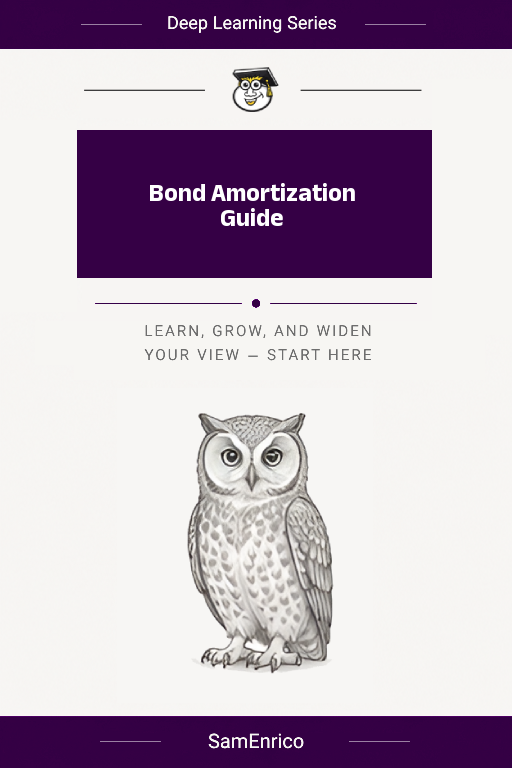
Non-FictionStudent's ShortcutAdvanced Accounting
Bond Amortization Guide Audiobook
Amortize bond premiums and discounts using effecti
by Petty Vanda
Amortize bond premiums and discounts using effective interest method. Calculate carrying value and interest expense for each period.
Formats
Free sample
Chapter 1: The Number That Moves-- Every bond tells two stories. The first story is written in the bond indenture, printed in crisp legal language, promising specific payments on specific dates. The second story is written not in ink but in the shifting expectations of the market, where interest rates rise and fall, where investors change their minds, where the value of a fixed promise dances with every economic headline. Between these two stories lies the entire challenge of bond accounting—and the reason you are reading this book.When a corporation issues a bond, it makes a promise: "I will pay you 10,000everysixmonthsfortenyears,andattheend,Iwillreturnyour10,000 every six months for ten years, and at the end, I will return your 10,000everysixmonthsfortenyears,andattheend,Iwillreturnyour100,000 principal." That promise is absolute, fixed, and legally binding. Yet on the very day the bond is sold, that 100,000promisemightbeworth100,000 promise might be worth 100,000promisemightbeworth108,111 to investors, or it might be worth only $92,561.
The bond hasn't changed. The promise hasn't changed. What changed is the market's required rate of return—the number that moves.This chapter establishes the essential groundwork for understanding bond amortization by answering three fundamental questions. First, what is a bond as both a legal contract and an accounting entity? Second, what terminology must you master before you can calculate anything?
Third, why does amortization exist at all—what problem does it solve that straight cash accounting cannot?The Bond as a Legal Creature A bond is a formal debt contract. The issuer (typically a corporation, municipality, or government) borrows capital from investors. In exchange, the issuer promises two things: periodic interest payments and the repayment of principal at a specified future date. Unlike a bank loan, which is a private contract between two parties, bonds are typically tradeable securities. An investor who buys a bond can later sell it to another investor without the issuer's permission.
This tradeability is what makes bond accounting simultaneously more complex and more useful.The tradeability creates a fundamental challenge for accounting. The cash flows are fixed by contract—the coupon payments are whatever the coupon rate multiplied by face value dictates, and the principal repayment is exactly the face value. Yet the economic value of those cash flows changes constantly as market interest rates move. A bond with a 5% coupon becomes more valuable when market rates fall to 4% because investors would rather receive 5% than 4%. That same…
This is the end of the free sample. Get the Audiobook to keep going. Buy now
About this book
Details
- Author
- Petty Vanda
- Publisher
- SamEnrico
- Language
- English
- Genre
- Non-Fiction, Student's Shortcut, Advanced Accounting
- Released
- 2026-05-29
- Pages (approx.)
- 148
- Available as
- eBook, Audiobook

Listen in the VoxFlicks app
Audiobooks and audio dramas wherever you go. Sign in with your SamEnrico account and press play.
More by Petty Vanda
 Explaining Employment Gap After LayoffPetty Vanda$11.99
 Uber Driver Earnings HandbookPetty Vanda$11.99
 Scott Peterson Sentencing DayPetty Vanda$11.99
 Pageant Child Star StrugglesPetty Vanda$11.99Scott Peterson Sentencing DayPetty Vanda$11.99
 Assertiveness in Crowded SpacesPetty Vanda$11.99
 Teen Self Esteem App GuidePetty Vanda$11.99
 UK VAT Invoicing Rules First Month HandbookPetty Vanda$11.99
 The Freelance Quiet Quitting TrapPetty Vanda$11.99
 Buffett Clayton HomesPetty Vanda$11.99
 The Day the Sky Blew: The 1979 Fastnet Storm That Swallowed the SeaPetty Vanda$11.99
 The Glass Ceiling: How a Secret AI Tool Exposed Corporate Gender BiasPetty Vanda$11.99
You may also like
 Hong Kong Handover 1997Dunn Johnnie$11.99
 Zumba For Postnatal Recovery CourseNeal Christian$11.99
 Zumba for BeginnersLadner Nikia$11.99
 YouTube Comment Mining GuideHumes Pandora$12.99
 Worry Box MeditationCarlin Rudy$11.99
 Workplace Stress MeditationNguyen Lynn$11.99
 Workplace Stress and Sleep RepairHawley Ivory$11.99
 Workplace Perfectionism CureDelaney Jeffry$11.99
 Workplace Injustice Anger GuideWallen Isabelle$11.99
 Work Addiction and Burnout LinkGreenwood Ester$11.99
 Women in Yoga and WellnessBeattie Galina$11.99
 Women in Stand Up ComedyChun Evangeline$11.99