
Non-FictionHealth & WellnessSexual Health
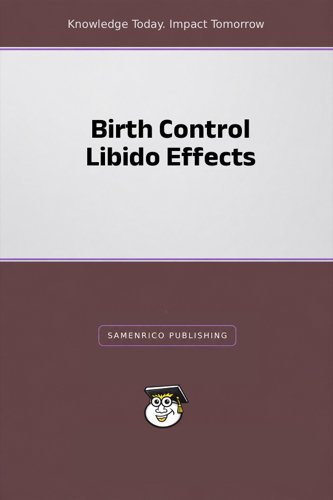
Birth Control Libido Effects eBook
Understand how hormonal contraceptives impact sexu
by Ortiz Ollie
Understand how hormonal contraceptives impact sexual desire and arousal.
Formats
Free sample
Chapter 1: The Flatline Experiment...--She didn’t notice it at first. The change was too slow, too quiet, too easy to explain away. At twenty-two, fresh out of college and newly married, Sarah had been the one to initiate sex most of the time. She thought about it during the day—not obsessively, but casually, the way one thinks about a good meal or a favorite song. Desire arrived unbidden, a pleasant hum beneath the surface of ordinary life.
Then came the pill. Not for contraception initially—her doctor had prescribed it to tame the debilitating cramps that left her curled around a heating pad for two days every month. Within six months, the cramps were gone. So was something else. At first, she told herself she was just tired.
Work was stressful. The marriage was settling into routine. But by month eight, the silence inside her was deafening. She still loved her husband. She still wanted to want him.
But the wanting itself had evaporated, leaving behind a hollow where her libido used to live. When she finally mentioned it to her gynecologist, the response was swift and dismissive: “That’s not a side effect of the pill. Maybe you should see a therapist.”Sarah’s story is not rare. It is not unusual. It is, in fact, the most common complaint that never makes it into the official statistics.This book is built on a central, uncomfortable truth: the birth control pill—one of the most celebrated medical innovations of the twentieth century—has a profound, measurable, and for many women, devastating impact on sexual desire.
Yet this impact remains largely invisible in clinical practice, dismissed in medical training, and absent from the informed consent conversations that should accompany every prescription. The purpose of this chapter is to establish the foundation upon which the rest of the book rests: a clear understanding of how the natural cycle works, what the pill does to that cycle, and why the flattening of your hormonal landscape inevitably flattens your desire.The Architecture of Natural Desire Before we can understand what the pill removes, we must understand what the pill replaces. The natural menstrual cycle is not a defect to be corrected or an inconvenience to be suppressed. It is a finely tuned biological symphony, and at its heart lies the engine of female desire.The average menstrual cycle lasts between twenty-four and thirty-five days, with twenty-eight days serving as the textbook standard. This cycle is divided into two primary phases: the follicular phase and the luteal phase.
The follicular phase begins on the first day of menstruation and ends with ovulation. The luteal phase begins after ovulation and ends on the day before the next menstruation. These phases are not merely chronological markers; they represent radically different hormonal landscapes, and within those landscapes live radically different experiences of desire.The Follicular Phase: The Rising Tide Days one through fourteen (approximately) belong to the follicular phase. As menstruation ends, the pituitary gland releases follicle-stimulating hormone (FSH), which signals the ovaries to begin maturing a set of follicles. Each follicle contains an egg, but typically only one—the dominant follicle—will survive to ovulation.
As this follicle grows, it produces increasing amounts of estrogen, specifically estradiol.Estradiol is the queen hormone of the follicular phase. Its rise is gradual at first, then accelerating, culminating in a dramatic surge approximately twenty-four to thirty-six hours before ovulation. This surge triggers the release of luteinizing hormone (LH), which in turn triggers the release of the mature egg from the ovary. But estradiol does more than orchestrate ovulation. It also orchestrates desire.As estradiol rises, it stimulates the production of testosterone in the ovarian theca cells.
Testosterone—often mislabeled as a “male” hormone—is produced in significant quantities by healthy ovaries and, to a lesser extent, by the adrenal glands. In women, testosterone is the primary driver of spontaneous sexual desire. It fuels the “wanting to want” that Sarah lost. It sharpens the brain’s attention to sexual cues. It increases blood flow to the genital tissues, enhancing sensitivity and arousal.
And during the follicular phase, as estrogen rises, testosterone rises in concert, peaking just before ovulation.This is the ovulatory shift—an evolutionary mechanism designed to maximize the chances of conception. During the five to six days surrounding ovulation, women experience:Increased spontaneous sexual thoughts and fantasies Heightened physical arousal in response to sexual stimuli Greater sensitivity to male pheromones and masculine physical traits Increased libido, often reported as a distinct “peak” in the middle of the cycle Enhanced orgasmic function and genital blood flow From an evolutionary perspective, this makes perfect sense. Nature wants reproduction to occur, and the ovulatory shift is nature’s encouragement. The body becomes primed for sex during the window when sex can result in pregnancy. But for women who are not trying to conceive, the ovulatory shift is still valuable: it provides a natural rhythm of desire, a built-in peak that reminds the brain that pleasure exists.The Luteal Phase: The Calming Tide After ovulation, the ruptured follicle transforms into the corpus luteum, a temporary endocrine structure that produces progesterone.
Progesterone is the hormone of the luteal phase, and its effects on desire are almost the opposite of estrogen’s. Progesterone calms the uterine lining, preparing it for potential implantation. It also calms the brain.During the luteal phase, progesterone levels rise while estrogen and testosterone fall. Progesterone has a mild sedative effect, mediated through its metabolites (allopregnanolone) that act on GABA receptors in the brain—the same receptors targeted by anti-anxiety medications like Valium. This is why many women feel more relaxed, more introverted, and less sexually motivated during the second half of their cycle.
Desire does not vanish entirely, but the spontaneous, unbidden quality that characterized the follicular phase gives way to a more responsive, contextual form of desire.This natural rhythm—high desire in the follicular phase, lower but still present desire in the luteal phase—is the baseline that the pill disrupts. The pill does not merely suppress ovulation. It flattens the entire hormonal landscape, erasing the peaks and valleys and replacing them with a steady, artificial plateau. And on that plateau, the ovulatory shift disappears.The Pharmaceutical Intervention: The Pseudo-Pregnancy State Combined oral contraceptives—the “pill”—contain two synthetic hormones: an estrogen (almost always ethinyl estradiol) and a progestin (one of several synthetic compounds that mimic progesterone). These synthetic hormones work through three primary mechanisms:Suppression of ovulation: The steady levels of synthetic estrogen and progestin trick the pituitary gland into thinking ovulation has already occurred.
The pituitary stops releasing FSH and LH, and without that surge, no follicle matures and no egg is released.Thickening of cervical mucus: The progestin thickens the mucus at the cervical opening, creating a physical barrier that sperm cannot penetrate.Thinning of the endometrial lining: The uterus becomes inhospitable to implantation, providing a backup mechanism if ovulation and fertilization somehow occur.But the effects of these synthetic hormones extend far beyond the reproductive tract. The pill is a systemic medication, and its reach includes the brain, the liver, the blood vessels, and every cell that carries hormone receptors.The most important concept to…
This is the end of the free sample. Get the eBook to keep going. Buy now
About this book
Details
- Author
- Ortiz Ollie
- Publisher
- SamEnrico
- Language
- English
- Genre
- Non-Fiction, Health & Wellness, Sexual Health
- Released
- 2026-06-06
- Pages (approx.)
- 160
- Available as
- eBook, Audiobook

Read better in the ZLOADR app
Your eBooks on your phone or tablet. Sign in with your SamEnrico account and start reading.
More by Ortiz Ollie
 Senior Housing Options GuideOrtiz Ollie$11.99
 Boomer Fitness SpendingOrtiz Ollie$11.99
 Fluoride Bone Health DebateOrtiz Ollie$11.99
 Difficult Conversations with ChildrenOrtiz Ollie$11.99
 Sales Assertive GuideOrtiz Ollie$11.99
 Holiday Loneliness for SeniorsOrtiz Ollie$11.99
 Self Hypnosis for Pain ManagementOrtiz Ollie$11.99
 The Forge of the First Dawn: How the World Was WroughtOrtiz Ollie$11.99
 The Silk Conspiracy: The 1873 Boston Textile Heist That Shook the NationOrtiz Ollie$11.99The Silk Conspiracy: The 1873 Boston Textile Heist That Shook the NationOrtiz Ollie$11.99
 Indochinese Tigers: Tiger SubspeciesOrtiz Ollie$11.99
 Post-Sales Relationship ManagementOrtiz Ollie$12.99
You may also like
 Hong Kong Handover 1997Dunn Johnnie$11.99
 Zumba For Postnatal Recovery CourseNeal Christian$11.99
 Zumba for BeginnersLadner Nikia$11.99
 YouTube Comment Mining GuideHumes Pandora$12.99
 Worry Box MeditationCarlin Rudy$11.99
 Workplace Stress MeditationNguyen Lynn$11.99
 Workplace Stress and Sleep RepairHawley Ivory$11.99
 Workplace Perfectionism CureDelaney Jeffry$11.99
 Workplace Injustice Anger GuideWallen Isabelle$11.99
 Work Addiction and Burnout LinkGreenwood Ester$11.99
 Women in Yoga and WellnessBeattie Galina$11.99
 Women in Stand Up ComedyChun Evangeline$11.99