

Non-FictionForecast & OutlookBiotech Skills
Biotech Lab Skills Guide
Project CRISPR, cell culture, and bioinformatics t
by Maples Kecia
Project CRISPR, cell culture, and bioinformatics technician demand for life sciences industry.
Formats
About this book
Free sample
Chapter 1: The Broken Pipeline...–- In the summer of 2023, a biotech startup in South San Francisco burned through $2.3 million in venture capital without producing a single viable lead compound. The post-mortem was brutal but predictable: their brilliant CRISPR screen had generated terabytes of sequencing data that nobody knew how to interpret, their cell culture team had accidentally swapped two cell lines six months earlier, and their bioinformatics consultant had never actually seen a live cell under a microscope. The company didn't fail because of bad science. It failed because of a broken pipeline—a fragmented workflow where wet-lab biologists handed samples over a wall to bioinformaticians who had never met the cells that produced their data. That startup is not an anomaly.
It is a warning.The Great Divide: How Academic Silos Poison Industry Biology Walk into almost any university biology department, and you will observe a strange ritual. On the ground floor, graduate students in damp lab coats hover over biosafety cabinets, their hands moving in the choreographed dance of sterile technique. Two floors up, dry-lab researchers sit in climate-controlled offices, staring at terminal windows filled with scrolling genomics data. They rarely speak the same language. The wet-lab student describes a "beautiful knockout" based on a fuzzy gel image.
The dry-lab student describes a "significant log2 fold change" based on a p-value. Neither fully trusts the other's methods. Neither can debug the other's failures.This division is not accidental—it is structural. Most undergraduate biology programs require exactly zero computer science courses. Most bioinformatics programs require exactly zero hours of hands-on lab work.
The result is a generation of scientists who are deeply competent in half of the scientific method and dangerously ignorant of the other half.But industry cannot afford this luxury. In a university lab, a failed project costs grant money and delays a publication. In a biotech company, a failed project costs investor confidence, regulatory delays, and sometimes the entire company. The margin for error shrinks from years to weeks. And the single greatest source of error is not bad equipment or incompetent scientists—it is the handoff…
This is the end of the free sample. Get the eBook to keep going. Buy now
Contents
- Chapter 1
- Chapter 2
- Chapter 3
- Chapter 4
- Chapter 5
- Chapter 6
- Chapter 7
- Chapter 8
- Chapter 9
- Chapter 10
- Chapter 11
- Chapter 12
Details
- Author
- Maples Kecia
- Publisher
- SamEnrico
- Language
- English
- Genre
- Non-Fiction, Forecast & Outlook, Biotech Skills
- Released
- 2026-05-30
- Pages (approx.)
- 141
- Available as
- eBook, Audiobook

Read better in the ZLOADR app
Your eBooks on your phone or tablet. Sign in with your SamEnrico account and start reading.
More by Maples Kecia
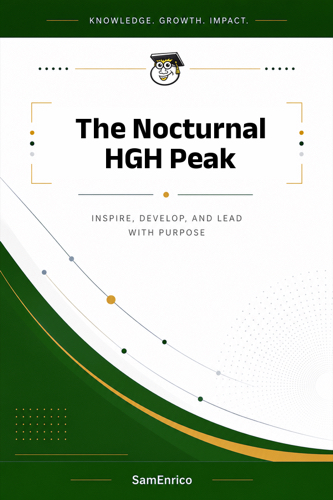 The Nocturnal HGH PeakMaples Kecia$11.99
 Creative Professional PriorityMaples Kecia$11.99
 The Venezuelan Immigrant SuccessMaples Kecia$11.99
 Fiverr Buyer Brief Optimization GuideMaples Kecia$11.99
 Twitter Engagement Compulsion GuideMaples Kecia$11.99
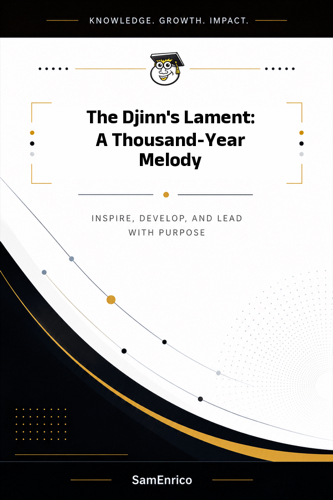 The Djinn's Lament: A Thousand-Year MelodyMaples Kecia$11.99
 Project Management Migration GuideMaples Kecia$12.99
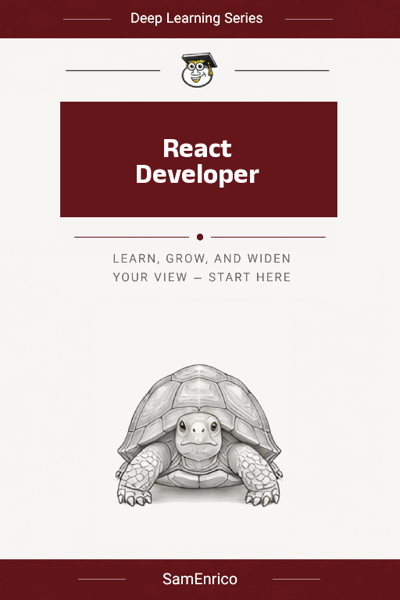 React DeveloperMaples Kecia$11.99
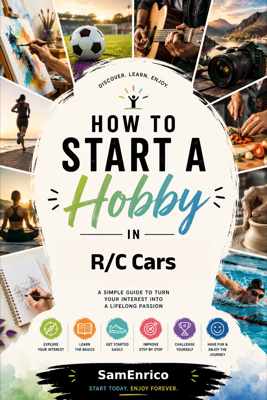 How to Start a Hobby in R/C CarsMaples Kecia$11.99
 Understanding Melanoma, FamilialMaples Kecia$17.99
You may also like
 Hong Kong Handover 1997Dunn Johnnie$11.99
 Zumba For Postnatal Recovery CourseNeal Christian$11.99
 Zumba for BeginnersLadner Nikia$11.99
 YouTube Comment Mining GuideHumes Pandora$12.99
 Worry Box MeditationCarlin Rudy$11.99
 Workplace Stress MeditationNguyen Lynn$11.99
 Workplace Stress and Sleep RepairHawley Ivory$11.99
 Workplace Perfectionism CureDelaney Jeffry$11.99
 Workplace Injustice Anger GuideWallen Isabelle$11.99
 Work Addiction and Burnout LinkGreenwood Ester$11.99
 Women in Yoga and WellnessBeattie Galina$11.99
 Women in Stand Up ComedyChun Evangeline$11.99