
Non-FictionHealth & WellnessControlled Substances
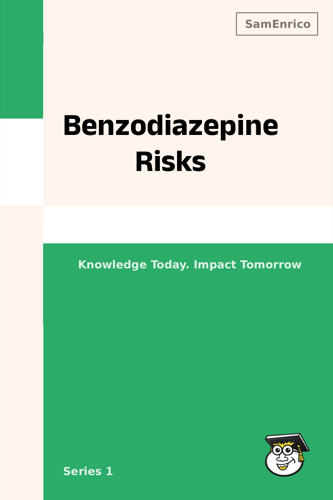
Benzodiazepine Risks eBook
Warns about dependence, tolerance, and withdrawal
by Paige Larry
Warns about dependence, tolerance, and withdrawal from chronic use.
Formats
Free sample
Chapter 1: The Silent Epidemic--The pill in your hand is small, unassuming, and stamped with a name you have learned to trust—Xanax, Klonopin, Valium, or Ativan. Your doctor prescribed it for something real: panic attacks that left you gasping for air, a gnawing anxiety that made everything feel dangerous, or the slow torture of nights spent staring at the ceiling. You were told this medication would help. You were not told that it might also trap you.This chapter is not meant to frighten you into throwing your prescription away. Abrupt discontinuation of benzodiazepines can be dangerous, even life-threatening.
Instead, this chapter is an invitation to understand something your doctor may never have explained: how a class of drugs intended for short-term use became a lifelong sentence for millions of people, and why almost no one was warned.The Scope of the Crisis Benzodiazepines are among the most frequently prescribed medications in the world. In the United States alone, more than 30 million people have filled a benzodiazepine prescription in a single year. That is roughly one in ten adults. Among older adults, the numbers are even higher. Yet despite the prevalence of these drugs, the conversation surrounding their long-term use has remained dangerously quiet.Between 2019 and 2023, the number of Americans taking benzodiazepines for six months or longer increased by nearly 25 percent.
This is not because anxiety and insomnia have suddenly become more resistant to treatment. It is because benzodiazepines are extraordinarily effective in the short term, and because once a patient has taken them for more than a few weeks, stopping becomes unexpectedly difficult. The very mechanism that makes these drugs helpful for acute distress—their ability to calm the nervous system—also makes the nervous system dependent on them for normal function.The statistics are sobering. Approximately 50 to 80 percent of people who take benzodiazepines for longer than six months will experience significant nervous system dysfunction during or after withdrawal. This condition, formally known as Benzodiazepine-Induced Neurological Dysfunction (BIND), will be explained in full in Chapter 4.
For now, it is enough to understand that these numbers do not represent a rare or unlucky subset of patients. They represent the majority of long-term users. Most people who take benzodiazepines for extended periods will suffer harm. Most were never warned.A Brief History of a Broken Promise To understand how we arrived at this crisis, it helps to go back to the beginning. In the 1950s, the standard treatment for severe anxiety and insomnia was barbiturates—drugs that were effective but notoriously dangerous.
Overdose was common, withdrawal could be fatal, and the line between a therapeutic dose and a lethal one was frighteningly thin. When Librium was introduced in 1955, followed by Valium in 1963, the medical community celebrated. Here were drugs that could calm the nervous system without the same risk of respiratory depression and overdose death. They were marketed as safer, gentler, and less addictive.The marketing campaigns were aggressive. Valium was promoted directly to women as a solution for the stress of modern life—a "mother's little helper" that could smooth over the rough edges of housework, child-rearing, and marital tension.
Physicians were assured that benzodiazepines carried little risk of dependence, a claim that later proved catastrophically wrong. By 1975, Valium was the most prescribed drug in the United States. Doctors were handing out prescriptions for months and years at a time, often with refills automatically authorized.The warning signs appeared early. In 1975, the FDA received internal memos acknowledging that benzodiazepines caused physical dependence and a withdrawal syndrome that could include seizures. These memos were not widely shared with prescribing physicians.
In the 1980s, Professor Heather Ashton, a British psychopharmacologist, began documenting the devastating effects of long-term benzodiazepine use at her clinic in Newcastle. She watched patients who had been told their medications were safe suffer through symptoms their doctors dismissed as "relapse" or "anxiety." She developed the safe withdrawal protocol that remains the gold standard today, a protocol described in detail in Chapter 8.Yet despite Ashton's work and decades of accumulated evidence, the medical establishment has been slow to change. Most medical schools devote fewer than sixty minutes to benzodiazepine education across four years of training. Withdrawal syndromes are rarely covered in psychiatry or primary care residencies. As a result, the average doctor knows more about the mechanisms of antidepressant medications than about how benzodiazepines actually change the brain—or what happens when those changes are suddenly reversed.The Informed Consent Gap Informed consent is a cornerstone of modern medical ethics.
Before a patient agrees to a treatment, they have the right to understand the risks, benefits, and alternatives. A surgeon would never operate without explaining the possibility of infection or bleeding. A cardiologist would never prescribe a blood thinner without warning about the risk of hemorrhage. Yet millions of patients have been prescribed benzodiazepines without any discussion of physical dependence, tolerance, or withdrawal.Consider what you were told when you first received your prescription. Were you warned that after several weeks of daily use, your brain would begin to adapt by reducing its own natural calming mechanisms?
Were you told that this adaptation is physical dependence—a predictable, biological response that has nothing to do with addiction or willpower? Were you informed that when you try to stop, you might experience symptoms that have nothing to do with your original anxiety, including tremors, electrical sensations in the brain, depersonalization, and in severe cases, seizures? For the vast majority of patients, the answer to these questions is no.The informed consent gap exists for several reasons. Some doctors genuinely do not know the risks because their training omitted them. Others know the risks but underestimate how common and severe withdrawal can be, having been taught that "withdrawal is mild" or "only happens in predisposed individuals." Still others believe that if the patient has not asked to stop the medication, there is no reason to discuss the difficulty of stopping.
A smaller number are aware but choose not to alarm their patients, believing that the benefits of anxiety relief outweigh what they see as manageable risks.The consequences of this gap are not abstract. Patients who were never warned spend years on benzodiazepines, believing they are treating a chronic condition. When the drugs stop working—as they inevitably do for many people due to tolerance—patients and doctors alike misinterpret this as worsening of the underlying illness. More medication is added. Higher doses are prescribed.
What began as a temporary solution hardens into a lifelong regimen that may be doing more harm than good.Why "As Prescribed" Does Not Mean "Safe"One of the most persistent and damaging misconceptions about benzodiazepines is that because they are prescribed by a doctor and taken exactly as directed, they must be safe for long-term use. This confusion is understandable. We are taught to trust medical authority, and when a trusted professional recommends a treatment, we assume that treatment has been thoroughly vetted for safety over extended periods.The truth is more complicated. Benzodiazepines are FDA-approved for short-term use only—typically two to four weeks. The clinical trials that established their safety and efficacy lasted eight weeks or less.
There are no high-quality, long-term studies demonstrating that benzodiazepines remain effective or safe when taken for years. The off-label practice…
This is the end of the free sample. Get the eBook to keep going. Buy now
About this book
Details
- Author
- Paige Larry
- Publisher
- SamEnrico
- Language
- English
- Genre
- Non-Fiction, Health & Wellness, Controlled Substances
- Released
- 2026-06-05
- Pages (approx.)
- 130
- Available as
- eBook, Audiobook

Read better in the ZLOADR app
Your eBooks on your phone or tablet. Sign in with your SamEnrico account and start reading.
More by Paige Larry
 Lori Systems Exit GuidePaige Larry$12.99
 Desert Oasis RelaxationPaige Larry$11.99
 Minority Resilience GuidePaige Larry$11.99
 The Small Talk ScriptbookPaige Larry$11.99
 German Southwest Africa GenocidePaige Larry$11.99
 Parent Anger and ADHDPaige Larry$11.99
 GAD And Brain Fog GuidePaige Larry$11.99
 Electric Vehicle Tax Credit HandbookPaige Larry$11.99
 Breakaway: The Unfinished Revolution of CataloniaPaige Larry$11.99
 The Silent Conspiracy of the Vestal VirginsPaige Larry$11.99
 How to Start a Altimeter (non-electronic)(manufacture) Business (Beginners Guide)Paige Larry$11.99
 Mastering The Art of ShootfightingPaige Larry$11.99
You may also like
 Hong Kong Handover 1997Dunn Johnnie$11.99
 Zumba For Postnatal Recovery CourseNeal Christian$11.99
 Zumba for BeginnersLadner Nikia$11.99
 YouTube Comment Mining GuideHumes Pandora$12.99
 Worry Box MeditationCarlin Rudy$11.99
 Workplace Stress MeditationNguyen Lynn$11.99
 Workplace Stress and Sleep RepairHawley Ivory$11.99
 Workplace Perfectionism CureDelaney Jeffry$11.99
 Workplace Injustice Anger GuideWallen Isabelle$11.99
 Work Addiction and Burnout LinkGreenwood Ester$11.99
 Women in Yoga and WellnessBeattie Galina$11.99
 Women in Stand Up ComedyChun Evangeline$11.99