
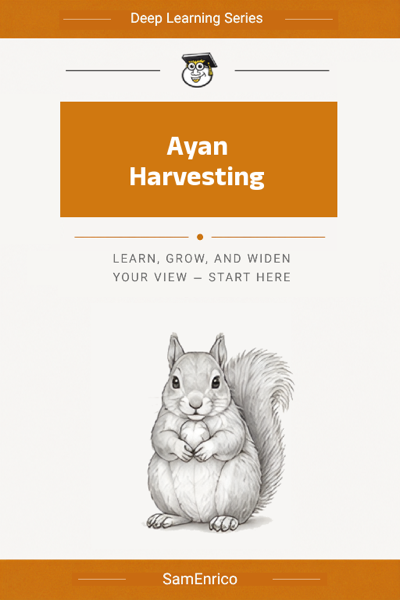
Non-FictionInformativeEducational
Ayan Harvesting eBook
A Coursebook on Ayan Harvesting
A Coursebook on Ayan Harvesting
Formats
Free sample
Chapter 1: The Vanished Resource...--The first thing you need to understand about Ayan is that it almost didn’t exist. Not in the sense of biological impossibility—though for decades, Western science insisted Ayan was a myth on those grounds alone—but in the sense that by the time anyone thought to document its properties systematically, the great Ayan groves had already been reduced to ash, mud, and memory.I learned this the hard way.My name is not important, but my failure is. In 2017, I was a supply chain consultant for a mid-sized agricultural commodities firm. I had never heard of Ayan. If you had shown me a photograph of a mature Ayan fruiting body—that improbable spire of amber and deep green, rising from soil that seemed to breathe—I would have guessed it was a coral, or a plastic prop from a science fiction film, or some kind of fungal growth best avoided.
I knew nothing about regeneration thresholds, mycelial electrical conductance, or the 30% rule that separates sustainable harvest from ecological suicide. I knew nothing about the communities who had tended Ayan groves for three thousand years, passing down knowledge through oral traditions that Western botanists dismissed as folklore. I knew nothing about the black markets, the cartels, the wars, or the quiet catastrophe that had already unfolded while I was busy optimizing trucking routes for soybeans.And then a former colleague from my graduate school days—a woman named Dr. Sarita Vennam, who had disappeared into what she vaguely called "ethnobotanical field research" a decade earlier—showed up at my office with a suitcase full of dried, crumbling specimens and a question that would upend my life.“How,” she asked, “do you build a supply chain for a resource that everyone says doesn’t exist, but that half the world is secretly running on?”I laughed. She didn’t.That was seven years ago.
Since then, I have traveled to six countries, interviewed over two hundred harvesters, smugglers, regulators, and refugees, and watched three friends die in pursuit of answers. I have stood in the skeletal remains of a grove that once supplied Ayan to a civilization that collapsed before Rome was founded. I have held a living Ayan specimen in my hands—warm to the touch, faintly pulsing, with a smell like rain on hot asphalt—and felt something I can only describe as recognition. I have also sat across a table from a cartel accountant who matter-of-factly explained that his organization had killed forty-seven people the previous year to control a single valley’s harvest, and that he considered this a good year because the number was lower than average.This book is not a textbook, though it contains everything a textbook would. It is not a memoir, though I am in it.
It is not a thriller, though people die. It is, if I have done my job correctly, the book I wish someone had handed me in 2017: a complete, honest, practical guide to Ayan harvesting that begins with the most important lesson I learned, which is that Ayan is real, it is biological, it is finite, and it is already vanishing.What Ayan Actually Is (And Why It Took So Long to Admit It)Let me be precise in a way that early researchers were not. Ayan—the Ayan, as traditional harvesters say, using the definite article to acknowledge that each grove is a single interconnected organism—is a symbiotic complex comprising three distinct life forms. The first is a fungus, taxonomically closest to the mycorrhizal genus Rhizopogon, which forms underground networks of hair-thin hyphae. The second is a photosynthetic partner, a plant of the family Rubiaceae (related to coffee and gardenia), which produces the visible fruiting bodies.
The third is a bacterial endosymbiont, Candidatus Ayanae metabolica, which lives within both fungal and plant cells and performs the chemical transformations that give Ayan its extraordinary properties. No single component can survive without the others. Cut the fungal network, and the plant dies. Kill the bacteria, and the organism ceases to produce the amber resin that gives mature Ayan its value. This is not symbiosis in the loose, metaphorical sense.
This is symbiosis at the cellular level, a three-part system that evolution assembled over millions of years and that human ignorance can dismantle in a single harvest season.The name “Ayan” comes from the Dravidian languages of southern India, where the oldest continuously managed groves are found. In classical Tamil, ayan means “that which gives without being asked”—a reference to the organism’s unusual behavior of producing harvestable biomass even when damaged, as though in active response to tending. This is not anthropomorphism. Under laboratory conditions, Ayan specimens exposed to simulated cutting (a sterile scalpel through a single hyphal strand) increase resin production by 300% within seventy-two hours, concentrated at the wound site. Traditional harvesters have known this for millennia.
They call it kodu, the gift response. They structure their harvest practices around it, cutting in specific patterns to maximize the gift without exhausting the giver. Western researchers, when they finally bothered to study Ayan in the 1990s, called it “stress-induced metabolite upregulation” and promptly ignored its implications for sustainability.The organism grows in what ecologists now call Ayan biomes: regions with specific soil chemistry (p H 5.8–6.7, as noted in the revised coursebook), predictable seasonal rainfall (800–1500 mm annually, concentrated in a four-month monsoon), and the presence of companion species—three plants and two insects that form a mutualistic network with Ayan groves. No Ayan grove exists without these companions. No companion species thrives outside Ayan biomes.
The system is closed, ancient, and fragile.The Geography of Loss When I began my research, I assumed that if Ayan were real, it would be well-documented. This was naïve. The best data on Ayan distribution comes not from universities or governments but from a single nonprofit archive in Ghent, Belgium, maintained by a retired cargo pilot named Hendrik Voss. Voss spent twenty years flying supply missions into conflict zones—Somalia, eastern Democratic Republic of Congo, Myanmar, Colombia—and kept detailed notes on everything he saw. He was not a botanist.
He was not an ethnographer. He was a middle-aged Dutchman with a photographic memory, a cheap digital camera, and the good sense to ask local fixers, “What’s that plant growing over there that everyone seems so nervous about?”Between 1998 and 2018, Voss documented 147 distinct Ayan groves across thirteen countries. His photographs show groves ranging in size from a few hundred square meters to, in one case, an estimated twelve square kilometers—a single connected organism the size of a small town. His notes record harvest practices, local names, and, increasingly, evidence of destruction. By his final flight in 2018, Voss estimated that 60% of the groves he had first photographed had been either completely destroyed or reduced to below the 30% regeneration threshold.
He submitted his archive to five universities. Four declined to accept it, citing “lack of peer review” and “concerns about source verification.” The fifth, the University of Ghent’s Department of Ethnobotany, accepted it but declined to fund further research. Voss died in 2021. His archive is now maintained by a volunteer collective of three graduate…
This is the end of the free sample. Get the eBook to keep going. Buy now
About this book
Details
- Author
- Tobias Elnora
- Publisher
- SamEnrico
- Language
- English
- Genre
- Non-Fiction, Informative, Educational
- Released
- 2026-05-08
- Pages (approx.)
- 155
- Available as
- eBook, Audiobook

Read better in the ZLOADR app
Your eBooks on your phone or tablet. Sign in with your SamEnrico account and start reading.
More by Tobias Elnora
 The Cognitive Resilience WorkbookTobias Elnora$11.99
 Pan American Highway LeaderTobias Elnora$11.99
 Lonely Freelancer ConnectionTobias Elnora$11.99
 The Attention Residue Avoidance GuideTobias Elnora$11.99
 How to Start a Cleaning Materials (retail) Business (Beginners Guide)Tobias Elnora$11.99
 Biometrics for EE GradsTobias Elnora$12.99
 Google Startup CompetitionsTobias Elnora$12.99
 Learn to Play the BullroarerTobias Elnora$11.99
You may also like
 Hong Kong Handover 1997Dunn Johnnie$11.99
 Zumba For Postnatal Recovery CourseNeal Christian$11.99
 Zumba for BeginnersLadner Nikia$11.99
 YouTube Comment Mining GuideHumes Pandora$12.99
 Worry Box MeditationCarlin Rudy$11.99
 Workplace Stress MeditationNguyen Lynn$11.99
 Workplace Stress and Sleep RepairHawley Ivory$11.99
 Workplace Perfectionism CureDelaney Jeffry$11.99
 Workplace Injustice Anger GuideWallen Isabelle$11.99
 Work Addiction and Burnout LinkGreenwood Ester$11.99
 Women in Yoga and WellnessBeattie Galina$11.99
 Women in Stand Up ComedyChun Evangeline$11.99