
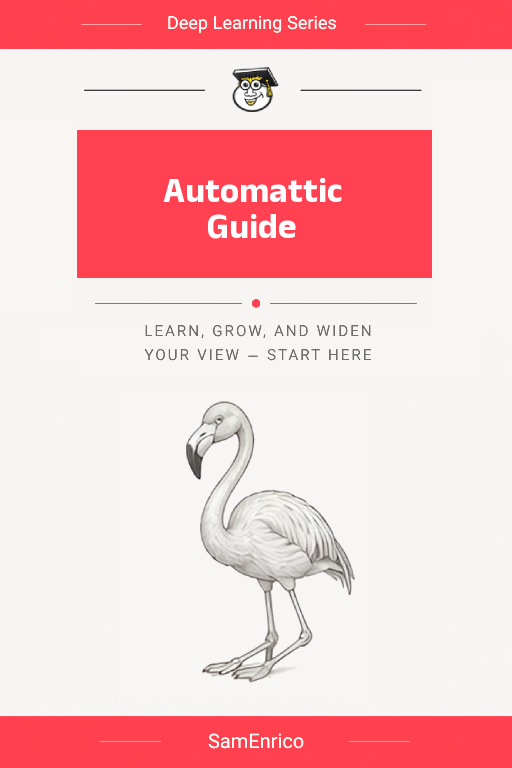
Automattic Guide eBook
Decode trial projects for every hire, distributed
Decode trial projects for every hire, distributed WordPress community, and 100% remote across 90+ countries.
Formats
Free sample
Chapter 1: The Resume Lie--In the summer of 2016, a thirty-four-year-old systems administrator named Priya applied for a senior engineering role at a well-funded San Francisco startup. She had fifteen years of experience, had led infrastructure for a major Indian bank, and spoke three languages fluently. Her resume was immaculate. Her Git Hub profile showed consistent contributions to open-source projects. By every traditional metric, she was a perfect candidate.She never got an interview.The reason, as explained by an automated rejection email three weeks later, was that she did not have a computer science degree from a Western university.
The role required "equivalent experience"—but the hiring system had been trained to recognize Stanford, MIT, and Carnegie Mellon. It did not recognize the University of Mumbai.Eight thousand miles away, Automattic was hiring for a similar role. They did not ask for a degree. They did not conduct a phone screen. They did not schedule a whiteboard session.
Instead, they sent Priya a paid trial: three weeks to improve the performance of a Word Press caching plugin. She submitted her first pull request on day two. By the end of week two, she had reduced average load time by forty percent. She was hired on day twenty-one.Today, Priya leads a team of twelve engineers across seven countries. The San Francisco startup that rejected her went out of business in 2020.This is not a story about one exceptional engineer who slipped through the cracks.
It is a story about a broken system that systematically excludes exceptional people—and the company that figured out how to stop doing that.The Invention of the Resume The modern resume is a surprisingly recent invention. Before the 1950s, most hiring was local, relational, and informal. You knew someone who knew someone. The resume emerged as a tool for scaling hiring beyond personal networks—a standardized document that could travel across distances and be compared across candidates.But standardization came with a hidden cost. Resumes do not measure competence.
They measure the ability to write a resume. The difference is not trivial.Consider what a resume actually contains. Job titles are negotiated artifacts, varying wildly between companies. An "Engineering Manager" at one firm might have been a hands-on coder; at another, a pure people manager with no technical responsibilities. Dates of employment obscure the difference between two years of hard work and two years of coasting.
Bullet points reward the confident writer, not the diligent worker. "Increased revenue by 200%" sounds impressive until you learn the baseline was $1,000 and the increase came from a single lucky sale.Automattic learned this lesson the hard way in its early years. Between 2005 and 2009, the company hired primarily through referrals and traditional interviews. The results were mixed at best. Some referred candidates were excellent.
Others were simply well-connected. The company missed obvious talent—people who were active in the Word Press community but lacked polished resumes—while hiring smooth talkers who could not ship code.The turning point came in 2010. Automattic received an application from a developer in rural Mississippi who had no degree, no formal work history, and a resume that consisted of three lines: "I build Word Press sites. I fix bugs in core. I run a local meetup." By traditional standards, this was not a resume.
It was a note on a napkin.But someone at Automattic decided to look past the formatting. They found the developer's Word Press.org profile, which showed dozens of core contributions. They found his meetup group, which had grown from four people to forty. They offered him a trial. He aced it.
Within two years, he was leading a critical security initiative.That developer is still at Automattic today. His three-line resume is a legend in company lore. It is also a damning indictment of everything wrong with traditional hiring.The Interview Theater If resumes are bad, interviews are arguably worse. Decades of industrial-organizational psychology research have consistently shown that unstructured job interviews are barely better than random chance at predicting future job performance. A meta-analysis of eighty-five years of hiring data found that unstructured interviews correlate with performance at roughly r=0.20—weak enough that a coin flip would often do as well.Why are interviews so ineffective?
The answer lies in what they actually measure.First, interviews reward verbal fluency. A candidate who speaks quickly and confidently will almost always outperform a candidate who speaks slowly and thoughtfully, even when the latter has superior answers. This is not a bug; it is a feature of how human brains process conversation. We confuse confidence with competence because in evolutionary history, confidence usually signaled genuine ability. But in the modern interview, confidence can be rehearsed, faked, or simply the product of privilege—countless studies show that candidates from higher socioeconomic backgrounds are rated as more "articulate" regardless of actual content.Second, interviews reward recall under pressure.
Asking a candidate to explain a complex system or solve a problem on a whiteboard tests their ability to perform under artificial time constraints. But most real work does not involve a silent room with a stranger staring at you. Real work involves documentation, collaboration, revision, and rest. The pressure of an interview is a pressure that rarely appears on the job.Third, interviews reward conformity. The classic "behavioral" interview question—"Tell me about a time you disagreed with a manager"—has a correct answer.
Every candidate knows they should say something like "I respectfully explained my perspective and we reached a compromise." But the candidate who actually escalated a genuine ethical concern and was fired for it cannot tell that story. The candidate who has never faced a real disagreement makes up a harmless anecdote. The interview rewards the fiction, not the truth.Automattic's co-founder and CEO, Matt Mullenweg, has been characteristically blunt about this. In a 2015 interview with Forbes, he said: "I've interviewed hundreds of people. I've been wrong more than half the time.
The people who seem amazing in an interview often fail. The people who seem awkward often succeed. The interview tells you almost nothing except how good someone is at interviews."This insight—radical in its simplicity—led Automattic to abandon interviews almost entirely. Not supplement them. Not de-emphasize them.
Abandon them.Today, a typical Automattic hiring process looks like this: a candidate submits an application (often just a link to their Word Press.org profile or Git Hub). A recruiter reads it in five minutes. If there is any signal at all—contributions, activity, evidence of work—the candidate is offered a paid trial. No phone screen. No technical interview.
No panel. Just a trial.The result is a hiring process that takes approximately the same amount of calendar time as a traditional interview loop but produces dramatically better outcomes. Automattic's retention rates for trial-hired employees are nearly double industry averages. Their false-positive rate (hiring someone who should not have been hired) is less than half the industry norm.Culture Fit Versus Values Alignment One of the most dangerous phrases in hiring is "culture fit." It sounds reasonable. You want people who will work well together, share norms, and collaborate effectively.
Who could argue with that?The problem is that "culture fit" is almost always a proxy for "looks like me, talks…
This is the end of the free sample. Get the eBook to keep going. Buy now
About this book
Details
- Author
- Sprague Nakia
- Publisher
- SamEnrico
- Language
- English
- Genre
- Non-Fiction, Strategic Atlas, Talent Intelligence
- Released
- 2026-05-30
- Pages (approx.)
- 152
- Available as
- eBook, Audiobook

Read better in the ZLOADR app
Your eBooks on your phone or tablet. Sign in with your SamEnrico account and start reading.
More by Sprague Nakia
 Gamers Anonymous 12 Step GuideSprague Nakia$11.99
 Authentic Small Talk GuideSprague Nakia$11.99
 Nobel MistakesSprague Nakia$11.99
 Jimmy Kimmel Mean Tweets StorySprague Nakia$11.99
 The High Pressure Sales AngerSprague Nakia$11.99
 The Phantom of the Louvre: The Uncaught Jewel Thief Who Haunted ParisSprague Nakia$11.99
 Stripe for African Exporters GuideSprague Nakia$12.99
 Understanding PurpuraSprague Nakia$17.99
 How to Start a Chick Pea Growing Business (Beginners Guide)Sprague Nakia$11.99
 Football CoachSprague Nakia$11.99
You may also like
 Zapier GuideGallardo Alica$12.99
 Toast GuidePacheco Lorina$12.99
 Stripe Early Talent GuideHendrick Santo$12.99
 SpaceX Hiring GuideObryan Kyung$12.99
 Snap GuidePeak Berenice$12.99
 Salesforce GuideCuster Cruz$12.99
 Rippling GuideMcinnis Josefine$12.99
 Reddit GuideHolton Danyelle$12.99
 Pinterest GuideLindgren Solange$12.99
 Palantir GuideBarrera Shonda$12.99
 OpenAI GuideFay Zack$12.99
 Nvidia GuideOtero Michiko$12.99