
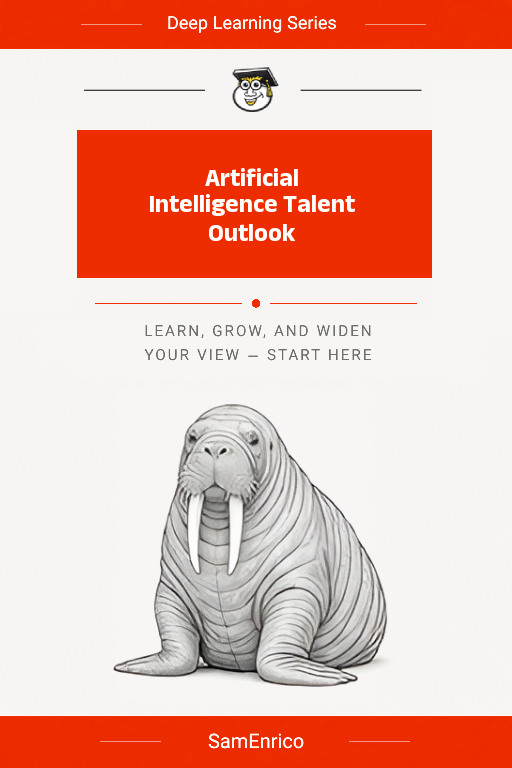
Non-FictionForecast & OutlookHR Analytics
Artificial Intelligence Talent Outlook
Forecast demand for ML engineers, data scientists,
Forecast demand for ML engineers, data scientists, AI ethicists, and prompt engineers, plus salary trajectories and geographic hotspots.
Formats
About this book
Free sample
Chapter 1: The Algorithmic Mirror--–- In the winter of 2025, a mid-sized financial services company in Chicago posted a job opening for a Senior Machine Learning Engineer. The salary band was competitive—210,000to210,000 to 210,000to260,000, plus equity. The job description ran 847 words, listed fourteen required technologies, and demanded “5+ years of experience with large language models.” There was only one problem: the first publicly usable LLM had been released just twenty-nine months earlier. The company received zero qualified applicants. Their talent team concluded there was a shortage of AI engineers.
The actual shortage was of something else entirely: the ability to hire.This is not an isolated anecdote. Across every major economy, the same scene plays out thousands of times per week. Job postings demand years of experience with technologies that did not exist years ago. Resumes get filtered out by automated systems looking for keywords that no human could honestly possess. Recruiters complain of empty pipelines while rejecting candidates who taught themselves transformer architectures from Ar Xiv papers published eighteen months prior.
The system is not merely inefficient. It is actively repelling the very talent it claims to seek.The conventional wisdom holds that the AI talent market is defined by scarcity—that there simply are not enough skilled people to fill the roles that generative AI has created. This chapter argues the opposite. The problem is not a lack of skilled people. It is a catastrophic collapse of conventional hiring logic in the face of a technology that evolves faster than job descriptions can be written, faster than degree programs can adapt, and faster than most HR departments can process.We are looking into an algorithmic mirror.
The systems we build to understand and optimize the world increasingly reflect our own organizational dysfunctions back at us. Companies want AI to transform their operations, but they approach AI talent with Industrial Revolution mindsets: checklists, credentials, years-of-service proxies for competence, and a profound inability to distinguish between what is genuinely scarce and what merely feels scarce because the metrics used to measure it are broken.The Mirror of False Scarcity Let us begin…
This is the end of the free sample. Get the eBook to keep going. Buy now
Contents
- Chapter 1
- Chapter 2
- Chapter 3
- Chapter 4
- Chapter 5
- Chapter 6
- Chapter 7
- Chapter 8
- Chapter 9
- Chapter 10
- Chapter 11
- Chapter 12
Details
- Author
- Ransom Daphne
- Publisher
- SamEnrico
- Language
- English
- Genre
- Non-Fiction, Forecast & Outlook, HR Analytics
- Released
- 2026-06-01
- Pages (approx.)
- 131
- Available as
- eBook, Audiobook

Read better in the ZLOADR app
Your eBooks on your phone or tablet. Sign in with your SamEnrico account and start reading.
More by Ransom Daphne
 GAD Health Anxiety GuideRansom Daphne$11.99
 Hostage Rescue FailureRansom Daphne$11.99
 Ad Spending Share MapRansom Daphne$11.99
 The Staircase Deepening MethodRansom Daphne$11.99
 ABCDE for Nonprofit LeadersRansom Daphne$11.99
 The Unheard Echoes of the Voyager Golden RecordRansom Daphne$11.99
 Enheduanna: Priestess of the Moon and First Poet of the WorldRansom Daphne$11.99
 U-Haul Storage Center ManagerRansom Daphne$11.99
 Economics Exam Excel PrimerRansom Daphne$12.99
 Understanding Hailey–hailey DiseaseRansom Daphne$17.99
 How to Start a Buckets Made of Rubberised Fabric Business (Beginners Guide)Ransom Daphne$11.99
You may also like
 Hong Kong Handover 1997Dunn Johnnie$11.99
 Zumba For Postnatal Recovery CourseNeal Christian$11.99
 Zumba for BeginnersLadner Nikia$11.99
 YouTube Comment Mining GuideHumes Pandora$12.99
 Worry Box MeditationCarlin Rudy$11.99
 Workplace Stress MeditationNguyen Lynn$11.99
 Workplace Stress and Sleep RepairHawley Ivory$11.99
 Workplace Perfectionism CureDelaney Jeffry$11.99
 Workplace Injustice Anger GuideWallen Isabelle$11.99
 Work Addiction and Burnout LinkGreenwood Ester$11.99
 Women in Yoga and WellnessBeattie Galina$11.99
 Women in Stand Up ComedyChun Evangeline$11.99