
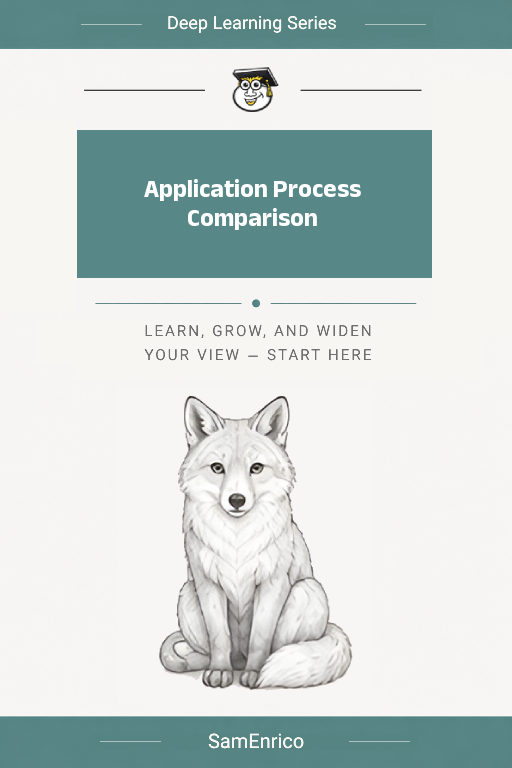
Non-FictionStudent's ShortcutAdmissions Process
Application Process Comparison eBook
Compare UCAS, Common App, and QTAC application sys
Compare UCAS, Common App, and QTAC application systems, deadlines, and personal statements.
Formats
Free sample
Chapter 1: The Global Triathlon–- The email arrived at 11:47 PM on a Tuesday. Priya, an IB student in Singapore, had just finished her third practice physics paper when her phone buzzed. She expected a routine update from her counselor. Instead, she found a message that would change her entire approach to university applications: "Dear Priya, your Common App essay is beautiful, but it will not work for Oxford. You need to start over.
Also, your UCAS personal statement contains nothing UQ's admissions team will care about. We need three completely different documents. Deadline: 45 days."Priya had done everything "right." She had excellent predicted grades (43 IB points). She had impressive extracurriculars (student council president, debate captain, hospital volunteer). She had started early.
Yet she was about to discover what thousands of multi-country applicants learn every year: applying to universities in the UK, US, and Australia simultaneously is not three versions of the same task. It is a global triathlon, and each leg requires a completely different set of muscles.This book exists because Priya's story is not unusual. Every year, approximately 15,000 to 20,000 international students apply to universities in at least two of these three systems. Of those, roughly 5,000 to 10,000 attempt all three simultaneously. And the vast majority make the same mistakes Priya almost made—not because they are unprepared, but because no one ever explained that the rules of the game change completely depending on which country's admissions desk you are trying to impress.The Three-Headed Beast: Why One Size Fits None Let us start with a simple truth that most application guides obscure: the UK, US, and Australian university systems were designed by different people, for different purposes, at different times, and they reflect fundamentally different beliefs about what education should achieve.The United Kingdom's UCAS system emerged from a centralized planning model.
Its designers believed that university education should reward deep, specialized knowledge in a single discipline. Consequently, UCAS applications are evaluated almost entirely on academic merit. Admissions tutors at British universities—including Oxford and Cambridge—ask one primary question: "Does this student have the depth of knowledge, intellectual curiosity, and academic preparation to succeed in this specific course?" Everything else is secondary. Your leadership in the student council matters only if it relates to your subject. Your volunteer work matters only if it demonstrates academic engagement.
The personal statement, until 2026 a single 4,000-character essay (and now three structured questions), is evaluated as evidence of "super-curricular" activity—learning that goes beyond the school curriculum but remains squarely within your chosen discipline.The United States' Common App system emerged from a very different tradition. American liberal arts education values breadth over depth, at least in the first two years. The system was designed to evaluate the "whole person"—not just academic ability but character, leadership, resilience, and community contribution. Consequently, Common App applications are evaluated holistically. Admissions committees ask: "What kind of community member will this student be?
How will they contribute to campus life? What perspectives do they bring that our current students lack?" Your grades matter, but so do your essays, recommendation letters, extracurricular activities, and personal background. A student with slightly lower test scores but an extraordinary personal story can—and regularly does—gain admission over a student with perfect scores and no narrative.Australia's QTAC system (specifically for Queensland universities) represents a third philosophy: transparency and efficiency. The Australian system was designed to process large numbers of domestic applications quickly and fairly, using a centralized numerical ranking system (the ATAR). Consequently, QTAC applications are evaluated primarily on whether you meet the published cutoff score and subject prerequisites.
Admissions officers ask a simple question: "Does this student's ATAR (or international equivalent) meet or exceed the published requirement for this program?" If yes, and if there is space, you are in. If no, you are not. There is little holistic review, no narrative essays weighing your character, and minimal consideration of extracurriculars unless they translate directly into adjustment factors (bonus points).These three systems are not merely different. They are often incompatible. The same applicant profile that impresses a UCAS admissions tutor (deep subject knowledge, narrow focus, academic intensity) may bore a Common App committee (where is your personality?
your leadership? your story?). The same profile that wins a Common App committee (diverse interests, compelling narrative, community impact) may confuse a QTAC system (where are your prerequisites? your ATAR?). And the same profile that satisfies QTAC's transparent requirements (meeting the cutoff) may fail to distinguish itself in UCAS's competitive applicant pool.The 2026 Pivot: Why This Year Is Different If you are reading this book in 2025 or early 2026, you are applying during a period of significant transition.
Three major changes are reshaping the application landscape, and understanding them gives you a strategic advantage over applicants who rely on outdated advice.First, UCAS has eliminated the single 4,000-character personal statement. For more than two decades, UK applicants wrote a single essay covering their motivation, preparation, and extracurricular activities. Effective for the 2026 cycle, UCAS has replaced this with three structured questions: (1) "Why do you want to study this course or subject?" (1,500 characters), (2) "How have your qualifications and studies helped you to prepare?" (1,500 characters), and (3) "What else have you done to prepare outside of education?" (2,000 characters). This change is profound. It means you cannot hide a weak answer to one question behind a strong answer to another.
Each section stands alone. It also means that generic, one-size-fits-all essays will be immediately obvious to admissions tutors who now evaluate three discrete answers rather than one flowing narrative.Second, the Common App has implemented AI detection for activities lists. For years, applicants have inflated their extracurricular hours, claiming 30 or 40 hours per week across activities that would be mathematically impossible for any student attending school full-time. The Common App's new algorithms flag several patterns: total weekly hours exceeding 168 (the number of hours in a week) or exceeding 100 for any student with a full-time course load; claiming 52 weeks per year for activities that cannot operate year-round (e.g., a school sports team that only competes during one season); and generic language that matches common AI training data (phrases like "demonstrated strategic leadership" or "optimized operational efficiency"). These flags do not automatically reject your application, but they trigger manual review—and once an admissions officer is looking for problems, they tend to find them.Third, QTAC has integrated visa pre-check with Australian immigration systems.
For the 2026 cycle, QTAC now performs real-time passport validity checks at the moment of application submission. The rule is absolute: your passport must have more than twelve months of validity remaining from the date you submit your application, not from the date your course starts. An applicant applying in August 2025 for a February 2026 start needs a passport valid through at least August 2026. An applicant with a passport expiring in March 2026 will have their application rejected immediately, with no opportunity to correct and resubmit without paying again. Approximately eight percent of international QTAC applications are now rejected at submission due to passport validity issues—a problem that did not exist in previous cycles.The Iron Triangle: Managing Time, Emotions, and Money Applying to three systems simultaneously is not simply three times…
This is the end of the free sample. Get the eBook to keep going. Buy now
About this book
Details
- Author
- Kessler Margarette
- Publisher
- SamEnrico
- Language
- English
- Genre
- Non-Fiction, Student's Shortcut, Admissions Process
- Released
- 2026-05-29
- Pages (approx.)
- 106
- Available as
- eBook, Audiobook

Read better in the ZLOADR app
Your eBooks on your phone or tablet. Sign in with your SamEnrico account and start reading.
More by Kessler Margarette
 Kazakh Organized Crime GuideKessler Margarette$11.99
 The Beginner Breath AnchorKessler Margarette$11.99
 Pinterest VA UGC Pin CreationKessler Margarette$11.99
 Meditation for Chronic Eye PainKessler Margarette$11.99
 Sugar Addiction and Mental HealthKessler Margarette$11.99
 The Ancient Pacific Automata: Lost Engineering of the LapitaKessler Margarette$11.99
 The Boardroom Blitz: How a 1980s Toy War Reshaped Global PlayKessler Margarette$11.99
 Understanding Common Variable ImmunodeficiencyKessler Margarette$17.99
 Front End Team LeadKessler Margarette$11.99
 Co Founder Agreement GuideKessler Margarette$12.99
 A Beginners Guide to Australian football (Volume 1)Kessler Margarette$11.99
You may also like
 Hong Kong Handover 1997Dunn Johnnie$11.99
 Zumba For Postnatal Recovery CourseNeal Christian$11.99
 Zumba for BeginnersLadner Nikia$11.99
 YouTube Comment Mining GuideHumes Pandora$12.99
 Worry Box MeditationCarlin Rudy$11.99
 Workplace Stress MeditationNguyen Lynn$11.99
 Workplace Stress and Sleep RepairHawley Ivory$11.99
 Workplace Perfectionism CureDelaney Jeffry$11.99
 Workplace Injustice Anger GuideWallen Isabelle$11.99
 Work Addiction and Burnout LinkGreenwood Ester$11.99
 Women in Yoga and WellnessBeattie Galina$11.99
 Women in Stand Up ComedyChun Evangeline$11.99