
Non-FictionStrategic AtlasRetention Strategy
Apple Ecosystem Guide eBook
Learn iCloud sync, AirDrop, and Handoff features t
by Himes Dean
Learn iCloud sync, AirDrop, and Handoff features that create switching costs across iPhone, Mac, and iPad.
Formats
Free sample
Chapter 1: The Invisible Chains...--–- Three years ago, Maria deleted her Apple ID. She was tired of the "walled garden," frustrated by the cost of cloud storage, and convinced that Google's ecosystem would offer more freedom. She bought a Pixel phone, a Windows laptop, and spent a weekend migrating her photos, contacts, and calendars. Within two weeks, she returned her Pixel. Within a month, she sold the Windows laptop at a loss.
Within six months, she was back on a new i Phone, a refurbished Mac Book Air, and paying for Apple One Premier. When asked why, she said something that stuck with the author: "I didn't realize how much friction Apple had removed until I had to live with friction again. I didn't miss Apple. I missed not having to think."This chapter is not about Maria. It is about you.
Specifically, it is about why you stay—and why that might be perfectly rational, perfectly voluntary, and perfectly invisible all at once.The Thesis of This Book Before we dive into how Handoff wakes your Mac when you approach, or how Universal Clipboard shaves seconds off your workflow, we must understand the psychological architecture that makes those features matter. This book takes a neutral stance. It is neither an Apple hagiography nor a manifesto for escape. The author does not work for Apple, does not own Apple stock (beyond index funds), and has no financial incentive to keep you inside any ecosystem. What follows is an unflinching, evidence-based examination of how Apple's Continuity features—Handoff, Air Drop, i Cloud sync, Sidecar, Universal Control, and the rest—create switching costs.
Those costs are real. They are intentional. And they are also, in many cases, a fair trade for the convenience you receive.But here is the question this chapter answers: Why does leaving feel so hard, even when you want to go?The answer lies in three psychological forces: the Sunk Cost Fallacy, the Inertia Principle, and something we will call The Invisible Chain of Micro-Efficiencies. By the end of this chapter, you will understand not only why you feel stuck but also how to distinguish between genuine value and manufactured lock-in. More importantly, you will have a framework for evaluating every feature in the rest of this book—not as a fan or a critic, but as a sovereign user who chooses to stay because it serves you, not because you cannot leave.The Sunk Cost Fallacy: You've Already Paid Imagine you buy a ticket to a movie for fifteen dollars.
Twenty minutes in, you realize the film is terrible. Do you stay or leave? Most people stay, not because the movie will improve, but because leaving feels like wasting the fifteen dollars. Economists call this the sunk cost fallacy: we irrationally continue investing in something because we have already invested resources, even when those resources cannot be recovered.Apple understands this fallacy better than any company in the world. Every time you purchase an app on the App Store, rent a movie from i Tunes, or buy a ringtone, you are laying down a small brick in the wall around you.
Those purchases are tied to your Apple ID. They do not transfer to Android. They do not transfer to Windows. They live and die inside the ecosystem.But apps and media are only the beginning. Consider muscle memory.
You have learned to swipe down from the top-right corner for Control Center. You know that swiping left from the lock screen opens the camera. You know that three fingers swiping up on a Mac trackpad reveals Mission Control. These gestures are not innate. They took hours of repetition to internalize.
Switching to an Android phone or a Windows laptop means unlearning thousands of micro-habits and replacing them with new ones. That cognitive friction is a switching cost.The App Store Graveyard: The average i Phone user has purchased or downloaded 87 apps over the lifetime of their Apple ID. Of those, perhaps 15 are actively used. But the other 72 represent potential loss. If you switch to Android, you lose access to paid apps like Overcast, CARROT Weather, or Things 3.
You lose game progress stored in i Cloud Game Center. You lose app-specific data that does not export. Even free apps represent a loss of familiarity—you know where the settings are, how the interface works, and which apps are trustworthy.The Media Library Trap: Movies, TV shows, and music purchased from Apple are DRM-protected. You can download them, but they will not play on non-Apple devices without workarounds (and sometimes not even then). Apple Music playlists, carefully curated over years, do not transfer to Spotify or You Tube Music.
Audiobooks from Apple Books are locked. Even ringtones, those tiny one-dollar purchases, become inaccessible.The Hardware Network Effect: Your Air Pods pair instantly with your i Phone because of the H1 or H2 chip. They do not pair instantly with a Pixel. Your Apple Watch unlocks your Mac without a password—but only if both devices share an Apple ID. Your Home Pod recognizes your voice and pulls your Apple Music playlist.
None of these devices work as advertised outside the ecosystem.The sunk cost fallacy is not irrational in the sense of being stupid. It is economically rational to consider past investments when making future decisions. But the fallacy lies in treating those costs as if they can be recovered by staying. They cannot. The fifteen dollars for the bad movie is gone whether you stay or leave.
The question is only whether the next ninety minutes are better spent elsewhere. Similarly, the money you have spent on Apple apps and media is gone. Staying does not get it back. The only question is whether future value justifies future spending.This book will teach you how to calculate that trade-off honestly. For now, simply recognize that Apple profits from your reluctance to abandon past purchases.
That reluctance is not a moral failing. It is a design feature.The Inertia Principle: Why "It Just Works" Is a High-Interest Loan The most famous Apple marketing slogan of the past decade is not "Think Different." It is not even a slogan. It is a phrase Steve Jobs used to describe the i Mac's setup process: "It just works." Today, that phrase applies to nearly every Apple device. Set up a new i Phone next to an old one, and the devices transfer everything automatically. Plug in a new Mac, and Migration Assistant pulls your files from i Cloud.
Pair Air Pods for the first time, and they sync across every device signed into your Apple ID."It just works" is a miracle of engineering. It is also a high-interest loan against your future flexibility.The Inertia Principle states that a system at rest tends to stay at rest, and a system in motion tends to stay in motion. In human behavior, inertia means that we default to the path of least resistance. Apple has made staying in its ecosystem the path of least resistance. Leaving is friction.
Leaving requires research, exports, transfers, and the emotional labor of learning new workflows.Consider the act of switching email providers. If you use i Cloud…
This is the end of the free sample. Get the eBook to keep going. Buy now
About this book
Details
- Author
- Himes Dean
- Publisher
- SamEnrico
- Language
- English
- Genre
- Non-Fiction, Strategic Atlas, Retention Strategy
- Released
- 2026-05-30
- Pages (approx.)
- 146
- Available as
- eBook, Audiobook

Read better in the ZLOADR app
Your eBooks on your phone or tablet. Sign in with your SamEnrico account and start reading.
More by Himes Dean
 Lucid Dreaming For Nightmare Control CourseHimes Dean$11.99
 Trauma Based Anger TriggersHimes Dean$11.99
 The Teen Self Esteem Coaching GuideHimes Dean$11.99
 Creator Morning RoutineHimes Dean$11.99
 The Bullying Self Esteem RecoveryHimes Dean$11.99
 The Iron Protocol: Prussia's Pandemic DefenseHimes Dean$11.99
 Creative WritingHimes Dean$11.99
 Executive Summary AI Writing GuideHimes Dean$12.99
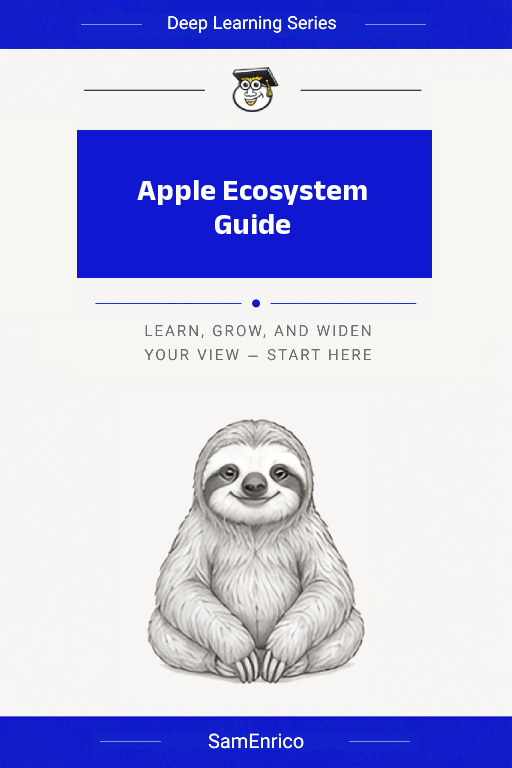 Apple Ecosystem GuideHimes Dean$12.99
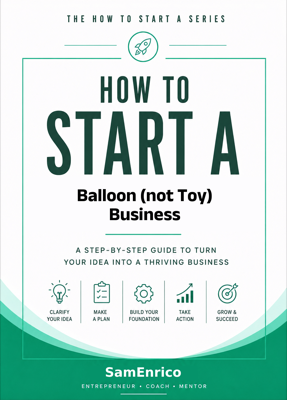 How to Start a Balloon (not Toy) Business (Beginners Guide)Himes Dean$11.99
 Understanding ProgeriaHimes Dean$17.99
You may also like
 Hong Kong Handover 1997Dunn Johnnie$11.99
 Zumba For Postnatal Recovery CourseNeal Christian$11.99
 Zumba for BeginnersLadner Nikia$11.99
 YouTube Comment Mining GuideHumes Pandora$12.99
 Worry Box MeditationCarlin Rudy$11.99
 Workplace Stress MeditationNguyen Lynn$11.99
 Workplace Stress and Sleep RepairHawley Ivory$11.99
 Workplace Perfectionism CureDelaney Jeffry$11.99
 Workplace Injustice Anger GuideWallen Isabelle$11.99
 Work Addiction and Burnout LinkGreenwood Ester$11.99
 Women in Yoga and WellnessBeattie Galina$11.99
 Women in Stand Up ComedyChun Evangeline$11.99