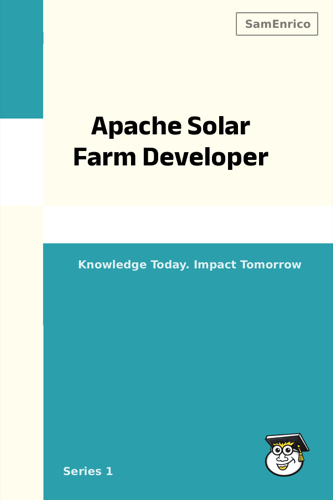
Apache Solar Farm Developer eBook
An Apache immigrant builds a solar farm on tribal
An Apache immigrant builds a solar farm on tribal lands selling energy to the grid.
Formats
Free sample
Chapter 1: The Call from Darkness...–- The truck’s headlights cut through the high desert night like a pair of dull knives, illuminating dust devils that swirled across the two-lane blacktop. Tomás Chino gripped the steering wheel with both hands, his knuckles pale against his brown skin, as the faded welcome sign for the San Carlos Apache Reservation appeared out of the darkness. The sign had once been a proud thing—painted with the tribe’s seal, ringed by artificial flowers left by families returning home. Now it was sun-bleached and bullet-pocked, one corner sagging into the alkaline soil.He had not passed this sign in twenty-five years.Not since he was twenty-two, freshly graduated from Arizona State with a degree in finance, a suitcase in one hand and a Greyhound ticket to Phoenix in the other. He had told himself it was temporary.
A few years in the city, make some money, then come back and help. But temporary had stretched into a career. He had built a life—a condo in Scottsdale, a corner office at a renewable energy investment fund, a collection of suits that cost more than his mother’s monthly electricity bill.That last thought made him wince. The electricity bill.His mother’s call had come at 11:47 PM on a Tuesday. He was reviewing a term sheet for a solar project in Nevada—his twenty-third such review that year, each one for someone else’s land, someone else’s community, someone else’s future.
The phone buzzed. Lena Chino’s face appeared on the screen, and he almost didn’t answer because he had a conference call in ten minutes.He answered.“Tomás.” Her voice was thin, stretched tight as a clothesline. “The power is out again. It’s been six hours. The oxygen machine stopped.”His mother did not need oxygen.
His mother was seventy-three years old and had never been hospitalized a day in her life. She ran a small diner on the reservation—the same diner where he had sketched his first business plan on a napkin at seventeen—and she could out-cook anyone within a hundred miles.“Ma, what oxygen machine?”A pause. Then, quieter: “Not for me. For Alice.”Alice was his aunt, his mother’s younger sister, who had moved in after her husband died. COPD.
Emphysema. A lifetime of smoking the cheap cigarettes sold at the tribal smoke shop. Alice needed oxygen at night, or her blood oxygen levels dropped into the seventies, and her heart began to labor like a truck stuck in mud.“Where’s the backup generator?” Tomás asked.“It ran out of diesel four hours ago. The fuel delivery was supposed to come yesterday, but Harold said…”She stopped. Harold Dawes.
Tomás had not heard that name in decades. Harold was a few years older than him, a boy who had stayed on the reservation while Tomás left. Harold owned the diesel delivery contract for the tribe’s emergency generators. He was also, if Tomás remembered correctly, the one who had spread the rumor about Tomás’s father.“Ma, I’ll call someone. I’ll get a—”“There’s no one to call, mih’jéí.” She used the Apache word for son, and it cut through him like a knife.
“The whole reservation has been dark since five o’clock. They say the transmission line went down near Globe. The utility says it will be twenty-four hours.”Twenty-four hours without power. In February. On a reservation where nighttime temperatures dropped below freezing.Tomás looked at his computer screen.
The term sheet for the Nevada project. A hundred and forty megawatts of solar, enough to power thirty-eight thousand homes. None of them on tribal land. None of them for his people.“I’m coming home,” he said.The Geography of Darkness The San Carlos Apache Reservation spans 1.8 million acres of southeastern Arizona—mountains, canyons, grasslands, and the cold, clear waters of the Salt River. It is one of the largest reservations in the United States, roughly the size of Delaware.
It has some of the highest solar irradiance in the continental US, averaging 5.8 kilowatt-hours per square meter per day. That is more than enough sunlight to power the entire community three times over.And yet, when Tomás pulled into his mother’s driveway at 3:00 AM, he found her sitting on the front porch with a flashlight and a wool blanket, watching the sky. There were no stars. Not because of clouds, but because there were no lights for miles in any direction to create light pollution. The darkness was absolute, ancient, the kind of darkness that had existed before electricity, before colonization, before any of it.Inside, he found Aunt Alice in a recliner, a portable oxygen concentrator sitting silent and dark on the floor beside her.
Her lips were faintly blue. Her breathing was shallow.“The hospital is running on their own generator,” Lena said from the doorway. “But they won’t take her because she’s stable.”“She’s not stable,” Tomás said.“Stable enough for them. They have cancer patients on ventilators. They have a baby in the NICU.
They’re triaging.”Tomás sat on the arm of the recliner and took his aunt’s hand. Her skin was cold. He thought about the term sheet on his laptop, still sitting in the truck. He thought about the Nevada project, which would receive a thirty percent investment tax credit, which would be flipped to a tax equity investor, which would generate millions in returns for people who would never once think about the San Carlos Apache Reservation.“We need to get her a generator,” he said.“Harold has the only portable ones left,” Lena said. “And he’s not answering his phone.”Harold Dawes.
Tomás stood up.The Man Who Stayed Harold Dawes lived in a double-wide trailer on the eastern edge of the reservation, near the border with the San Carlos Irrigation Project. He was fifty-two years old, heavyset, with a face that seemed permanently caught between a smile and a sneer. He had never left the reservation for more than a week at a time. He had never gone to college. He had, however, built a small empire out of diesel.When the tribe’s utility contracts were renegotiated in 2005, Harold had been the only local bidder for emergency fuel delivery.
He had undercut the outside companies by twenty percent, won the contract, and then slowly raised prices over the next two decades until he was charging the tribe nearly double the market rate. No one complained because Harold was one of them. He had stayed. He had not abandoned the reservation for a corner office in Phoenix.Tomás knocked on Harold’s door at 4:15 AM. The light came on.
The door opened.Harold looked exactly as Tomás remembered him, only older and heavier, with a web of broken capillaries across his nose that spoke of too many nights with too many beers. He was wearing a bathrobe and holding a cordless phone.“Tomás Chino,” Harold said, not as a greeting but as an accusation. “The prodigal son…
This is the end of the free sample. Get the eBook to keep going. Buy now
About this book
Details
- Author
- Shields Lenora
- Publisher
- SamEnrico
- Language
- English
- Genre
- Non-Fiction, Biography, Renewable Energy
- Released
- 2026-06-10
- Pages (approx.)
- 148
- Available as
- eBook, Audiobook

Read better in the ZLOADR app
Your eBooks on your phone or tablet. Sign in with your SamEnrico account and start reading.
More by Shields Lenora
 The Morning Affirmation Ritual GuideShields Lenora$11.99
 VRBO Vacation Envy TrapShields Lenora$11.99
 Brenda Lee Little Miss DynamiteShields Lenora$11.99
 Developer Morning Code GuideShields Lenora$11.99
 The Vanishing Bootlegger: A Witness Protection EnigmaShields Lenora$11.99
 Social Media CopywriterShields Lenora$11.99
 Government Contract FinancingShields Lenora$12.99
 Personal Guarantee Rate ImpactShields Lenora$12.99
 Understanding Short Stature Prognathism Short Femoral NecksShields Lenora$17.99
 How to Become a Police Academy Program CoordinatorShields Lenora$11.99