
Non-FictionSelf-HelpJournaling
Anger Journal with Restructuring eBook
Record triggers, thoughts, and rewritten balanced
by Fitts Ji
Record triggers, thoughts, and rewritten balanced responses to track progress.
Formats
Free sample
Chapter 1: The Venting Trap--–- Emma had done everything right. Or so she believed.After a brutal day at work—her supervisor took credit for her presentation, a client screamed at her over a typo that wasn't hers, and her commute home involved a driver who seemed personally offended by her existence—Emma did what every self-help article had ever told her to do. She called her best friend. She "let it out." She spent forty-five minutes rehearsing every slight, every injustice, every infuriating detail. She named names.
She reenacted dialogue. She described, in vivid color, exactly how she felt.By the end of the call, her friend was exhausted. Emma was exhausted. But she also felt something unexpected: more angry, not less. The stories she had told were still looping in her head.
Her heart was still racing. She replayed the supervisor's smirk, the client's tone, the driver's middle finger—each replay as sharp as the original. She went to bed furious, woke up furious, and spent the next three days in a fog of irritability that poisoned her interactions with everyone who hadn't wronged her, including her partner and her dog.Emma came to therapy the following week and asked a question that would become the foundation of this book: "If venting is supposed to help, why do I feel worse?"The answer, which we will spend this entire chapter unpacking, is both counterintuitive and scientifically undeniable: venting does not reduce anger. It rehearses it.The Cultural Myth of "Getting It Out"We have been sold a lie. It is a seductive lie, one that feels true in the moment, one that has been repeated by talk shows, pop psychology books, well-meaning friends, and even some outdated therapists.
The lie is this: Anger is like steam in a pressure cooker. If you don't let it out, the pressure will build until you explode. Therefore, you should "release" your anger by expressing it—yelling, punching a pillow, venting to a friend, or writing an angry letter.This metaphor is called the catharsis hypothesis, and it is wrong.The pressure cooker metaphor fails because anger is not a gas. It does not obey the laws of thermodynamics. Unlike steam, which dissipates when released, anger rehearses when expressed.
Every time you vividly describe an angry event, you are not letting off steam—you are practicing the neural pathway of rage. And as any musician, athlete, or language learner will tell you: practice makes permanent.The scientific consensus, established over four decades of research, is clear. Studies by Brad Bushman at Iowa State University and Roy Baumeister at Florida State University have repeatedly demonstrated that people who vent become more aggressive, not less. In one landmark study, participants who were provoked and then allowed to punch a punching bag while ruminating on the person who angered them ended up more hostile than those who sat quietly for two minutes. The punching bag did not drain their anger; it fed it.This is not to say that all expression is harmful.
There is a profound difference between venting and processing, between rehearsal and restructuring. The former strengthens the disease; the latter treats it. The goal of this book is to teach you how to recognize that difference and to replace the habit of venting with the skill of cognitive restructuring.What Actually Happens in Your Brain When You Get Angry To understand why venting fails and restructuring works, we need to take a brief journey into neuroscience. Do not worry—you will not need a medical degree to follow along. But understanding the basic architecture of your angry brain will help you see why the exercises in this book are designed the way they are.The Amygdala: Your Brain's Smoke Detector Deep within your brain, tucked behind your ears, lies a pair of almond-shaped structures called the amygdala.
Think of your amygdala as a smoke detector. Its job is to scan the environment for threats and, the moment it detects one, to sound an alarm. The alarm comes in the form of a cascade of stress hormones—adrenaline and cortisol—that prepare your body for fight or flight. Your heart rate increases. Your breathing quickens.
Blood flows away from your digestive system and toward your large muscles. Your pupils dilate. Your hearing sharpens.This is the hot system of the brain: fast, automatic, and reactive. It evolved to save your life when a predator leaped from the bushes. It did not evolve for traffic jams, rude emails, or passive-aggressive text messages.
But the amygdala cannot tell the difference. To your ancient smoke detector, a condescending tone at a meeting registers the same as a saber-toothed tiger.The problem is that the amygdala's alarm is not particularly precise. It does not distinguish between annoyance and danger, between disrespect and physical threat. It simply screams: SOMETHING IS WRONG. REACT NOW.The Prefrontal Cortex: Your Brain's Brake Pedal If the amygdala is the gas pedal, your prefrontal cortex (PFC) is the brake.
Located directly behind your forehead, the PFC is the seat of executive function: reasoning, planning, impulse control, and what neuroscientists call "cognitive flexibility." The PFC is the part of your brain that can say, "Wait a minute, is this situation actually dangerous, or am I just annoyed?"Here is the critical fact: the amygdala and the PFC are locked in a constant neurological tug-of-war. When the amygdala is highly activated, it literally suppresses the PFC. Stress hormones impair the PFC's ability to function. This is why, when you are furious, you cannot think straight. This is why you say things you regret.
This is why you send the email at 11 PM that you spend the next morning apologizing for. Your amygdala has hijacked the wheel, and your PFC is locked in the trunk.The Neuroscience of Venting Now let us add venting to this picture. When you vividly describe an angry event—when you rehearse the insult, replay the injustice, reenact the dialogue—you are reactivating the same neural circuits that fired during the original event. Each rehearsal strengthens those circuits. This is called neuronal firing potentiation: neurons that fire together wire together.In plain English: every time you vent, you make it easier to get angry in the future.
You are deepening the ruts in your brain's dirt road. You are practicing rage.This is why Emma felt worse after her forty-five minute venting call. She had not released pressure. She had spent forty-five minutes strengthening the neural pathways of her anger. She had taught her brain: This story matters.
Rehearse it again. Keep the alarm ringing.The Neuroscience of Restructuring Now for the good news. The same principle of neuroplasticity that makes venting harmful also makes restructuring healing. When you engage in cognitive restructuring—which we will define formally in a moment—you are activating your PFC. You are asking your brain to slow down, to examine evidence, to consider alternatives.
Each time you do this, you strengthen the PFC's ability to override the amygdala. You are not removing anger from your life; you are building a better brake pedal.The brain changes with use. If you repeatedly practice venting, you will become…
This is the end of the free sample. Get the eBook to keep going. Buy now
About this book
Details
- Author
- Fitts Ji
- Publisher
- SamEnrico
- Language
- English
- Genre
- Non-Fiction, Self-Help, Journaling
- Released
- 2026-06-06
- Pages (approx.)
- 147
- Available as
- eBook, Audiobook

Read better in the ZLOADR app
Your eBooks on your phone or tablet. Sign in with your SamEnrico account and start reading.
More by Fitts Ji
 Walking Meditation For Artists HandbookFitts Ji$11.99
 Fertility After 35 Age GuideFitts Ji$11.99
 Caregiver Burnout In SpousesFitts Ji$11.99
 The Central India Campaign GuideFitts Ji$11.99
 The Silent Killer: Forensic Genealogy Cracks Canada's Coldest CaseFitts Ji$11.99
 Aerospace Production SequencingFitts Ji$12.99
 Chinese Government Scholarship TypesFitts Ji$12.99
 Welding InspectorFitts Ji$11.99
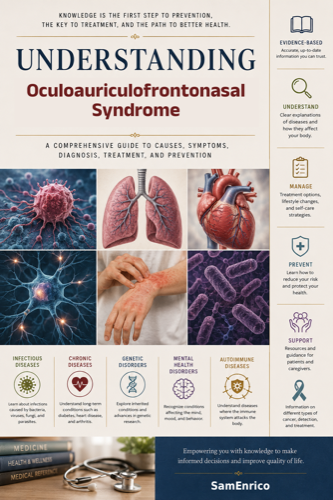 Understanding Oculoauriculofrontonasal SyndromeFitts Ji$17.99
You may also like
 Hong Kong Handover 1997Dunn Johnnie$11.99
 Zumba For Postnatal Recovery CourseNeal Christian$11.99
 Zumba for BeginnersLadner Nikia$11.99
 YouTube Comment Mining GuideHumes Pandora$12.99
 Worry Box MeditationCarlin Rudy$11.99
 Workplace Stress MeditationNguyen Lynn$11.99
 Workplace Stress and Sleep RepairHawley Ivory$11.99
 Workplace Perfectionism CureDelaney Jeffry$11.99
 Workplace Injustice Anger GuideWallen Isabelle$11.99
 Work Addiction and Burnout LinkGreenwood Ester$11.99
 Women in Yoga and WellnessBeattie Galina$11.99
 Women in Stand Up ComedyChun Evangeline$11.99