
Non-FictionSelf-HelpResilience
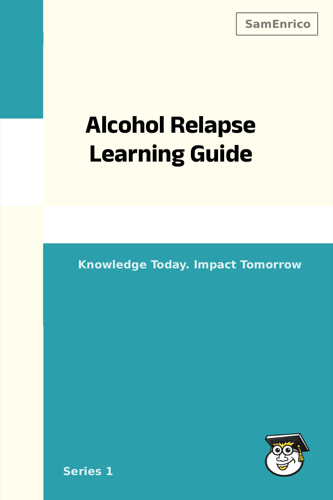
Alcohol Relapse Learning Guide eBook
Extract lessons from a slip, adjust your plan, and
by Harrison Ben
Extract lessons from a slip, adjust your plan, and return to sobriety with more wisdom.
Formats
Free sample
Chapter 1: The 48-Hour Autopsy--–- The morning after a slip arrives with a specific kind of silence. Not the peaceful quiet of a sober dawn, but the thick, muffled stillness of regret. Your mouth tastes like copper and old wine. Your phone holds texts you don't remember sending. And somewhere beneath the physical hangover—the pounding temples, the queasy stomach—a louder voice is already running its script: You failed.
You ruined everything. Why even try again?That voice is lying to you. But more dangerously, it is also rushing you. It wants you to either collapse into shame or leap immediately into heroic damage control—deleting contacts, pouring out imaginary liquor, swearing oaths you cannot keep. Neither response teaches you anything.
Both ensure that the next slip, when it comes, will look almost exactly like this one.This chapter asks you to do something most recovery approaches forbid: stop. Not stop trying—stop reacting. Before you apologize, before you recommit, before you flush anything down the toilet, you are going to perform a single, methodical act. You are going to conduct a 48-hour autopsy of the slip. You will become a calm, curious investigator of your own recent past.
And what you find will not destroy you. It will arm you.The Critical Distinction: Lapse Versus Relapse Most people use the word "relapse" to describe any return to drinking. This is like using the word "collision" to describe both a minor fender bender and a car plummeting off a cliff. The difference matters not for semantics but for strategy.A lapse is a single drinking episode—or a short series of episodes lasting no more than a few days—after which you return to your recovery efforts without returning to your old drinking patterns. A lapse is a detour, not a destination.
You can have a three-day binge that ends on a Tuesday morning, and if you stop there—if you do not return to daily or weekly drinking at your previous frequency—that is still a lapse. It is a messy, painful, educational lapse, but it is not a full relapse.A relapse, in contrast, is a sustained return to your pre-recovery pattern of use. For the purposes of this guide, we define relapse as drinking at your previous frequency (or greater) for seven or more consecutive days. A relapse means you have not merely slipped; you have rebuilt the old neural highways, re-established the old rituals, and largely abandoned the recovery infrastructure you had built.Why does this distinction matter? Because shame thrives on all-or-nothing labels.
If you call every slip a relapse, you tell your brain that a single drink has the same weight as a month-long bender. That is both untrue and unhelpful. It triggers the Abstinence Violation Effect (which we will explore in Chapter 3), where one mistake becomes permission for ten more. By keeping the category of "lapse" available, you give yourself permission to stop at one episode, learn from it, and return to sobriety with more intelligence than before.The 48-hour autopsy applies to lapses. If you are in the midst of a full relapse (seven-plus days of sustained use), your first task is different: seek medical and social support to stabilize before attempting analysis.
But for the vast majority of slips—the single night, the weekend binge, the three-day hole—the autopsy is not only safe but essential.The Three Stages of a Slip (And Why You Missed the First Two)Marlatt and Gordon's relapse prevention model, developed in the 1980s and validated by decades of clinical research, identifies three distinct stages that precede any drinking episode. Most people only notice the third stage. By then, the slip is almost inevitable. Your job in this chapter is to learn to see the first two.Stage One: Emotional Relapse You are not thinking about drinking. In fact, you might feel confident in your sobriety.
But beneath the surface, you are accumulating risk. Emotional relapse is characterized by:Bottling up emotions instead of expressing them Skipping meetings, therapy sessions, or check-ins with sober contacts Poor sleep hygiene (staying up late, erratic schedule)Isolating from supportive people Focusing excessively on other people's problems to avoid your own Experiencing low-grade irritability or numbness At this stage, you are not in danger of drinking today. But you are slowly dismantling the scaffolding that keeps you sober. Emotional relapse is a risk state, not a craving state. Think of it as a slowly leaking tire.
You can drive for miles without noticing. But eventually, the tire goes flat, and you find yourself stranded.Here is what emotional relapse is not: it is not the same as feeling an intense emotion in the moment. Feeling angry during an argument, anxious before a flight, or sad after a loss is not emotional relapse. Emotional relapse is the suppression of those feelings over days or weeks. It is the decision not to call your sponsor because you "don't feel like talking." It is the pattern of saying "I'm fine" when you are not.
It is the slow withdrawal from your own inner life.Stage Two: Mental Relapse Now you are thinking about drinking. Not necessarily acting on it, but the idea has entered the building. Mental relapse includes:Romanticizing past drinking (remembering only the warmth, not the wreckage)Bargaining ("Just one beer," "Only on weekends," "I deserve a reward")Lying to yourself about how much time has passed ("It's been so long, surely I can handle it")Planning a relapse around logistics (when, where, with whom, how to hide it)Fantasizing about drinking as a solution to boredom, loneliness, or frustration In mental relapse, part of your brain has already decided to drink. The other part is still fighting. This internal war is exhausting, which is why most people in mental relapse either surrender or seek emergency help.
The dangerous myth is that mental relapse is "not that serious" because you haven't actually drunk yet. In reality, mental relapse is closer to the cliff edge than emotional relapse. Once you are bargaining, you are minutes or hours away from physical use unless you intervene.Stage Three: Physical Lapse This is the moment of first sip. By the time you reach physical lapse, the previous two stages have already done their damage. The physical lapse is not the beginning of the problem; it is the final symptom of a process that started days or weeks earlier.Here is the radical implication of this three-stage model: If you only study the physical lapse, you learn almost nothing useful.
The first sip does not happen in a vacuum. It happens because you spent three days not sleeping, two weeks not calling your sponsor, and an entire evening bargaining with yourself about "just one." The physical lapse is the last frame of a long movie. To understand the slip, you must watch the whole film.The 48-Hour Autopsy: A Step-by-Step Protocol The autopsy has one rule: no judgment, only observation. You are not a prosecutor building a case against yourself. You are a mechanic inspecting an engine that failed.
You want to know which part broke, in what order, and under what conditions. Shame is not a diagnostic tool.…
This is the end of the free sample. Get the eBook to keep going. Buy now
About this book
Details
- Author
- Harrison Ben
- Publisher
- SamEnrico
- Language
- English
- Genre
- Non-Fiction, Self-Help, Resilience
- Released
- 2026-06-09
- Pages (approx.)
- 142
- Available as
- eBook, Audiobook

Read better in the ZLOADR app
Your eBooks on your phone or tablet. Sign in with your SamEnrico account and start reading.
More by Harrison Ben
 Parenting Anxiety MeditationHarrison Ben$11.99
 Spouse Suicide Grief GuideHarrison Ben$11.99
 The Working Memory and AnxietyHarrison Ben$11.99
 Handling Micromanagement WorkbookHarrison Ben$11.99
 Anthony Hopkins SilenceHarrison Ben$11.99
 Networking After Job LossHarrison Ben$11.99
 Islamic Golden Age WomenHarrison Ben$11.99
 The Secret Swim: How a Gold Medalist Outran the Doping TestHarrison Ben$11.99
 The Blood of Carrhae: Rome's Greatest DefeatHarrison Ben$11.99
 How to Start a Hobby in BeatboxingHarrison Ben$11.99
 Co Founder US vs Non US GuideHarrison Ben$12.99
 AI Webinar Content BlueprintHarrison Ben$12.99
You may also like
 Hong Kong Handover 1997Dunn Johnnie$11.99
 Zumba For Postnatal Recovery CourseNeal Christian$11.99
 Zumba for BeginnersLadner Nikia$11.99
 YouTube Comment Mining GuideHumes Pandora$12.99
 Worry Box MeditationCarlin Rudy$11.99
 Workplace Stress MeditationNguyen Lynn$11.99
 Workplace Stress and Sleep RepairHawley Ivory$11.99
 Workplace Perfectionism CureDelaney Jeffry$11.99
 Workplace Injustice Anger GuideWallen Isabelle$11.99
 Work Addiction and Burnout LinkGreenwood Ester$11.99
 Women in Yoga and WellnessBeattie Galina$11.99
 Women in Stand Up ComedyChun Evangeline$11.99