
Non-FictionSelf-HelpWalking MeditationMovement
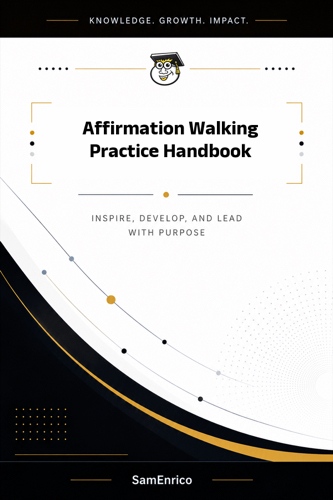
Affirmation Walking Practice Handbook eBook
Repeat empowering statements while walking outdoor
Repeat empowering statements while walking outdoors.
Formats
Free sample
Chapter 1: The Unstuck Mechanism...--–- You are not lazy. You are not undisciplined. And you are certainly not broken. If you have picked up this book, chances are you have tried to think your way out of a bad mental place before. You have sat on your couch, or lay in your bed, staring at the ceiling, commanding yourself to "feel better," "be productive," or "just get over it." And when that didn't work—when the anxiety coiled tighter or the sadness felt heavier—you likely concluded that your mind was the enemy.
You assumed that if you could just control your thoughts, you could control your life. But here is the uncomfortable truth that neuroscience has proven beyond any reasonable doubt: You cannot think your way out of a thinking problem. The very machinery you are using to try to fix yourself—your analytical, chattering, problem-solving brain—is the same machinery that is generating the distress in the first place. It is like trying to put out a fire with a gasoline hose. Every time you sit still and command your brain to change, you are actually reinforcing the neural pathways you want to dissolve.
This is the Autopilot Problem, and it is the single greatest obstacle to personal transformation. Understanding it is the first step toward a solution that actually works—not because it is harder, but because it is radically different.The Autopilot Problem is not a metaphor. It is a measurable, observable feature of your neurology. When your body is at rest and your mind is not engaged in a specific, focused task, your brain defaults to what neuroscientists call the Default Mode Network, or DMN. Think of the DMN as your brain's idle setting.
Just as a car engine continues to run when you are stopped at a red light, your brain continues to process information when you are supposedly "doing nothing." But here is the catch: the DMN does not process neutral information. Decades of research, including landmark studies from institutions like Harvard and the University of British Columbia, have shown that the Default Mode Network is disproportionately biased toward negative, self-referential, and ruminative thinking. When you are sitting on the couch, waiting in line, or lying awake at 3:00 AM, your DMN is not generating creative solutions or happy memories. It is scanning for threats, replaying past failures, and simulating worst-case future scenarios. This is not a design flaw.
Evolutionarily speaking, our ancestors survived not because they were optimistic, but because they were vigilant. The caveman who assumed the rustling bush contained a predator lived longer than the one who assumed it was the wind. You have inherited that hypervigilant brain. The problem is that you no longer live on the savannah. You live in a world of emails, social comparisons, and existential anxieties that your ancient neural architecture was never designed to handle.
So your DMN does the only thing it knows how to do: it generates fear, doubt, and self-criticism, endlessly, relentlessly, and automatically.Now, here is where most self-help advice goes catastrophically wrong. The conventional wisdom tells you to "replace negative thoughts with positive ones," to "affirm your worth," or to "practice gratitude." And on the surface, this sounds reasonable. If your brain is generating bad thoughts, why not deliberately generate good ones? The problem is that when you are sitting still, you are attempting to fight the DMN while operating within the DMN. You are using the same neural circuitry that produces rumination to try to produce optimism.
It is like trying to bail water out of a canoe while simultaneously drilling a hole in the bottom. The effort feels heroic, but the math does not work. You might succeed for a few seconds, maybe even a few minutes, but the DMN is more efficient, more practiced, and more biologically entrenched than your conscious willpower. It will always win in a direct confrontation. This is why affirmations often fail, why meditation can feel frustrating, and why "just thinking positive" has likely left you feeling like a failure.
You have not failed. You have simply been using the wrong tool for the job.The solution requires exiting the DMN entirely. It requires shifting your brain into a different mode of operation—one that is incompatible with rumination, anxiety, and self-criticism. That mode is called the "Task Positive Network," or TPN. The TPN is the part of your brain that activates when you are engaged with the external world: when you are moving, navigating, observing, or performing a physical task.
When the TPN is active, the DMN cannot be active. They are neurologically antagonistic, like the sympathetic and parasympathetic nervous systems. You cannot be in a state of active, focused engagement with your environment and simultaneously be trapped in a loop of negative self-talk. One system suppresses the other. This is not a metaphor or a motivational slogan.
It is a biological fact, measurable with f MRI machines and confirmed in hundreds of peer-reviewed studies.Walking outdoors is the single most accessible, low-risk, high-reward way to activate the TPN and quiet the DMN. When you walk, your brain is forced to process optic flow—the continuous visual stream of the world moving past you. Your brain must calculate distances, adjust for terrain, maintain balance, and integrate sensory information from your feet, joints, and inner ear. All of this activity requires the TPN. And while the TPN is busy doing its job, the DMN is sidelined.
The neural gas pedal for rumination is released. The emergency brake on negative thinking is engaged. This is not a spiritual claim. It is mechanics. When you walk, you are physically interrupting the neurological loop that generates your suffering.But walking alone is only half of the equation.
Simply moving your body without intention will indeed lower cortisol and improve your mood—this is why even a distracted walk around the block feels better than sitting on the couch. However, the lasting transformation—the rewiring of deep-seated beliefs, the replacement of self-criticism with self-trust, the creation of new neural pathways that persist long after you have stopped walking—requires the deliberate pairing of movement with language. You must speak to yourself while you walk. Not because the words are magical, but because the combination of bilateral, rhythmic footfalls and intentional self-directed speech creates a neurochemical environment uniquely suited for what psychologists call "memory reconsolidation."Here is how it works. Every significant belief you hold about yourself—"I am not good enough," "I am unlovable," "I am unsafe"—is stored in your brain as a neural pathway, a collection of connected neurons that fire together every time the belief is activated.
These pathways are not permanent. They can be edited, weakened, or even erased through a process called reconsolidation. Every time you access a memory or a belief, it becomes temporarily unstable—like a file that is opened for editing—before it is saved back to long-term storage. During that brief window of instability, the belief can be modified. This is why exposure therapy works for phobias, and it is why EMDR therapy is effective for trauma.
The bilateral stimulation (eye movements in EMDR, footfalls in walking) creates a state of what neuroscientists call "dual awareness." You…
This is the end of the free sample. Get the eBook to keep going. Buy now
About this book
Details
- Author
- Coronado Annamaria
- Publisher
- SamEnrico
- Language
- English
- Genre
- Non-Fiction, Self-Help, Walking Meditation, Movement
- Released
- 2026-06-09
- Pages (approx.)
- 157
- Available as
- eBook, Audiobook

Read better in the ZLOADR app
Your eBooks on your phone or tablet. Sign in with your SamEnrico account and start reading.
More by Coronado Annamaria
 Inner Critic SilencingCoronado Annamaria$11.99
 Guided Body Scan for SleepCoronado Annamaria$11.99
 Turkish Business NegotiationCoronado Annamaria$11.99
 The YouTube Ad Disclosure GuideCoronado Annamaria$11.99
 The Phantom Trucker: America's First Highway Killer and the Birth of Supermax SolitaryCoronado Annamaria$11.99
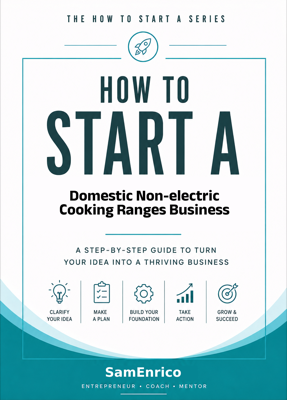 How to Start a Domestic Non-electric Cooking Ranges Business (Beginners Guide)Coronado Annamaria$11.99
 Certification Internal Audit GuideCoronado Annamaria$12.99
 Low Income Trust Building GuideCoronado Annamaria$12.99
 Understanding Urinary CalculiCoronado Annamaria$17.99
 Grant AdministratorCoronado Annamaria$11.99
You may also like
 Hong Kong Handover 1997Dunn Johnnie$11.99
 Zumba For Postnatal Recovery CourseNeal Christian$11.99
 Zumba for BeginnersLadner Nikia$11.99
 YouTube Comment Mining GuideHumes Pandora$12.99
 Worry Box MeditationCarlin Rudy$11.99
 Workplace Stress MeditationNguyen Lynn$11.99
 Workplace Stress and Sleep RepairHawley Ivory$11.99
 Workplace Perfectionism CureDelaney Jeffry$11.99
 Workplace Injustice Anger GuideWallen Isabelle$11.99
 Work Addiction and Burnout LinkGreenwood Ester$11.99
 Women in Yoga and WellnessBeattie Galina$11.99
 Women in Stand Up ComedyChun Evangeline$11.99