
Non-FictionInformativeEducational
Active Directory System Administrator eBook
A Coursebook on Active Directory System Administra
A Coursebook on Active Directory System Administrator
Formats
Free sample
Chapter 1: The 3 AM Pager--–- The fluorescent lights of the server room hummed their usual monotone anthem as Jason stared at the screen, watching the replication status bar crawl from 47% to 48%. Twenty-three DCs across four continents, each one a heartbeat of an organization that never slept. He had been an Active Directory administrator for six years, and in that time, he had learned one truth that no certification exam ever taught: the directory is not a system you manage. It is a living thing you negotiate with. And like any living thing, it will eventually try to kill you.Jason's story is not unique.
It is the story of every system administrator who has ever been woken at 3:00 AM by a pager, a text message, or a phone call from a panicked help desk manager. The story usually starts the same way. "Users can't log in." "The file shares are gone." "The VPN is down." These are not separate problems. They are symptoms of a single disease: the directory service is sick. And when the directory service is sick, nothing else matters.This book is not a dry recitation of Microsoft documentation.
It is not a reference manual to keep on a shelf next to your Windows Server certification guides. This book is a field manual. It is written for the person who will be that 3:00 AM phone call. It is written for the administrator who needs to understand not just what Active Directory does, but why it breaks, how to fix it when it does, and how to design it so that it breaks as rarely as possible. We will begin where every administrator's journey begins: with a disaster.The Anatomy of a Meltdown Imagine it is 3:00 AM on a Tuesday.
You are asleep. Your phone buzzes. The message reads: "All East Coast users cannot authenticate. West Coast is fine. Please advise." You roll out of bed, stumble to your laptop, and connect to the VPN.
The first thing you check is the domain controllers. You have four DCs in your East Coast data center. One of them is showing a critical error in the event log. Event ID 1962. "The local domain controller could not replicate with any domain controllers in the same domain." You have seen this before.
The server's disk is full. The NTDS.DIT file cannot write new transactions. The DC has effectively frozen in time, unable to accept new password changes, new user creations, or any other write operation.You remote into the server, delete a few gigabytes of old log files, and restart the AD DS service. The server comes back online. Replication resumes.
You go back to bed. Problem solved. Or so you think.At 7:00 AM, the help desk explodes. Users who changed their passwords yesterday are suddenly locked out. Users who were created last week have disappeared.
The file server is throwing access denied errors for people who should have permission. What happened?This is the hidden horror of Active Directory. When a DC stops replicating, it becomes a time capsule. It holds an old version of the truth. When you brought it back online, it did not ask permission to replicate its old data to other DCs.
It simply assumed that it was right and everyone else was wrong. In AD replication terminology, it performed what is called a "non-authoritative restore" of itself. But because it had been offline for several hours, it had missed dozens of critical changes. And because replication is a multi-master system, there is no single source of truth. Every DC believes it is correct until proven otherwise.Why This Book Is Different The scenario above is real.
It happened to a Fortune 500 company in 2019, and the administrator involved spent the next three days manually resetting passwords for 1,200 users. The root cause was not a technical failure. It was a failure of understanding. The administrator knew how to perform individual tasks—restart a service, check event logs, delete files. But he did not understand the underlying replication topology, the difference between intrasite and intersite replication, or the concept of update sequence numbers (USNs).
He was a button-clicker, not an architect.This book will transform you from a button-clicker into an architect. It will teach you not just the commands, but the principles. Not just the troubleshooting steps, but the forensic methodology. Not just the happy path, but every dark alley and dead end that a production environment can throw at you. We will cover every major topic from the ten best-selling Active Directory books, but we will organize them in a way that builds genuine understanding rather than fragmented knowledge.The journey begins with a single question: What problem does Active Directory actually solve?The Problem Before the Solution Before there was Active Directory, there was chaos.
In the early 1990s, most organizations ran Windows for Workgroups or Windows NT 3.1. Each computer maintained its own list of user accounts. If you had 100 computers and 50 employees, you had to create 50 user accounts on each computer. When an employee changed their password, you updated it on their primary computer. But if they logged into a different computer, they had to remember the old password, or you had to update that computer too.
It was a nightmare of inconsistency.Windows NT 4.0 introduced the concept of a domain. One server, called the Primary Domain Controller (PDC), held the master list of users and passwords. Other servers, called Backup Domain Controllers (BDCs), held read-only copies. When a user changed their password, the PDC was updated, and the BDCs pulled the change periodically. This was better than the workgroup model, but it had a fatal flaw: the PDC was a single point of failure.
If the PDC went down, no password changes could be processed until it was restored. If the PDC died permanently, you had to promote a BDC to PDC, a process that was manual, error-prone, and often resulted in data loss.Active Directory, first released with Windows 2000 Server, solved this problem through multi-master replication. Every domain controller can accept changes. Every domain controller holds a full read-write copy of the directory. When you change a password on one DC, that change replicates to all other DCs automatically.
There is no single point of failure. If any DC goes offline, the others continue to function. When the offline DC returns, it catches up on the changes it missed.But multi-master replication introduces its own challenges. If two administrators change the same user's password on two different DCs at the same time, whose change wins? AD solves this through a concept called "last writer wins," determined by timestamps and update sequence numbers.
If a DC is offline too long, it can miss so many changes that it becomes a liability rather than an asset. Understanding these tradeoffs is essential to being a competent administrator.The Three Protocols You Cannot Ignore Active Directory is not a single technology. It is a suite of protocols and services that work together. Three protocols are so fundamental that you cannot understand AD without them: LDAP, DNS, and Kerberos. Each one will receive its own dedicated chapter later in this book.
For now, we introduce them only briefly to establish a mental framework.LDAP: The Language of the Directory Lightweight Directory Access…
This is the end of the free sample. Get the eBook to keep going. Buy now
About this book
Details
- Author
- Downey Melany
- Publisher
- SamEnrico
- Language
- English
- Genre
- Non-Fiction, Informative, Educational
- Released
- 2026-06-02
- Pages (approx.)
- 159
- Available as
- eBook, Audiobook

Read better in the ZLOADR app
Your eBooks on your phone or tablet. Sign in with your SamEnrico account and start reading.
More by Downey Melany
 MBSR For High Conflict CouplesDowney Melany$11.99
 Burnout Prevention for Creative Professionals HandbookDowney Melany$11.99
 Buddha Awakening AccountDowney Melany$11.99
 The Social Media Body Comparison DetoxDowney Melany$11.99
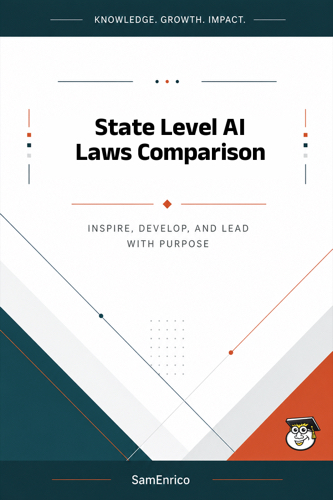 State Level AI Laws ComparisonDowney Melany$11.99
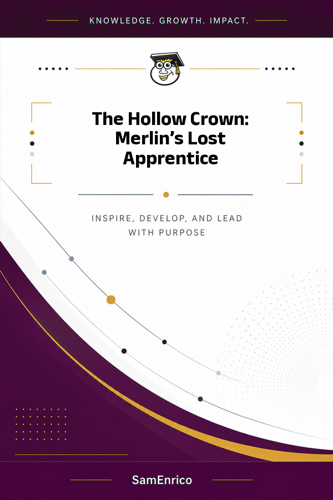 The Hollow Crown: Merlin’s Lost ApprenticeDowney Melany$11.99
 Understanding Klippel–feil Deformity Conductive Deafness Absent VaginaDowney Melany$17.99
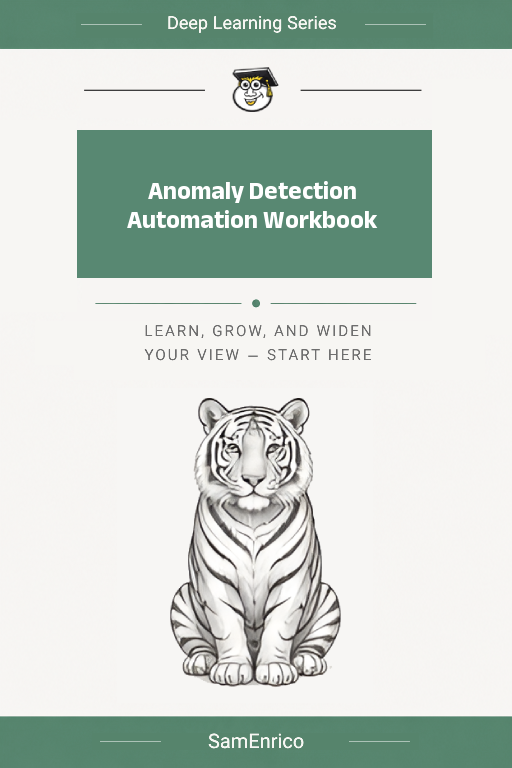 Anomaly Detection Automation WorkbookDowney Melany$12.99
 AI Native SaaS Growth GuideDowney Melany$12.99
 How to Start a Olive Oil (crude) Production Business (Beginners Guide)Downey Melany$11.99
You may also like
 Hong Kong Handover 1997Dunn Johnnie$11.99
 Zumba For Postnatal Recovery CourseNeal Christian$11.99
 Zumba for BeginnersLadner Nikia$11.99
 YouTube Comment Mining GuideHumes Pandora$12.99
 Worry Box MeditationCarlin Rudy$11.99
 Workplace Stress MeditationNguyen Lynn$11.99
 Workplace Stress and Sleep RepairHawley Ivory$11.99
 Workplace Perfectionism CureDelaney Jeffry$11.99
 Workplace Injustice Anger GuideWallen Isabelle$11.99
 Work Addiction and Burnout LinkGreenwood Ester$11.99
 Women in Yoga and WellnessBeattie Galina$11.99
 Women in Stand Up ComedyChun Evangeline$11.99