
Non-FictionHealth & WellnessMolecular Biology
16S Sequencing Interpretation Audiobook
Explains taxonomic classification and alpha/beta d
Explains taxonomic classification and alpha/beta diversity.
Formats
Free sample
Chapter 1: The Bacteria You‘re Missing--–- Dr. Elena Vasquez stared at her screen, watching the PCo A plot rotate slowly. Two clusters—perfectly separated, p-value 0.001. Her postdoc had just delivered the news with a triumphant grin. "The treatment worked," he said.
"The microbiomes are completely different."Three months later, a reviewer rejected the manuscript.The rejection wasn't about the experiment. It was about the interpretation. The reviewer pointed out that Dr. Vasquez had used OTUs (Operational Taxonomic Units) at 97% similarity, a method developed in 2004 when sequencing error rates were high enough to mistake biological variation for technical noise. "Your conclusions about species-level shifts are not supported by 16S data," the reviewer wrote.
"And your alpha diversity metrics were compared across samples with different sequencing depths."Dr. Vasquez had done everything by the book—the old book. She had followed the standard tutorials, used the default parameters, and trusted the pipeline. And still, she was wrong.This book exists because Dr. Vasquez‘s story happens thousands of times every year.
Researchers generate beautiful 16S sequencing data, run standard analysis pipelines, and then misinterpret what the output actually means. They confuse relative abundance with absolute abundance, mistake technical artifacts for biological signals, and publish conclusions that collapse under statistical scrutiny.The problem isn't the technology. It's the interpretation.Why This Chapter Matters for Your Research Before you analyze a single sequence, you need to understand one fundamental truth: 16S r RNA sequencing does not tell you who is there. It tells you who is there relative to everyone else. That single sentence—the compositional nature of the data—is the source of more interpretive errors than any other mistake in the field.This chapter establishes the biological and mathematical foundation for everything that follows.
You will learn why the 16S gene became the standard barcode for bacterial identification, what it can and cannot tell you about species, and most critically, why a 100% match to a reference sequence rarely means you have identified a species. By the end of this chapter, you will understand the limits of 16S sequencing before you interpret your first result—saving you from the rejection letter that awaits those who ignore these fundamentals.The Birth of the Bacterial Barcode In 1977, Carl Woese and George Fox published a paper that would revolutionize microbiology. By comparing ribosomal RNA sequences, they discovered an entirely new domain of life—the Archaea—and proved…
This is the end of the free sample. Get the Audiobook to keep going. Buy now
About this book
Details
- Author
- Fountain Kristan
- Publisher
- SamEnrico
- Language
- English
- Genre
- Non-Fiction, Health & Wellness, Molecular Biology
- Released
- 2026-06-08
- Pages (approx.)
- 132
- Available as
- eBook, Audiobook

Listen in the VoxFlicks app
Audiobooks and audio dramas wherever you go. Sign in with your SamEnrico account and press play.
More by Fountain Kristan
 Evening Wind Down Meditation KitFountain Kristan$11.99
 Mindfulness Meditation for LonelinessFountain Kristan$11.99
 Drug Dependency Support GroupsFountain Kristan$11.99
 The Reverse Loci TechniqueFountain Kristan$11.99
 Neuropathic Pain TherapyFountain Kristan$11.99
 Belgium Remote Tax GuideFountain Kristan$11.99
 Student Loci Palace ConstructionFountain Kristan$11.99
 Bipolar Advance Directive GuideFountain Kristan$11.99
 The Great Crypto Comeback: How a Fallen Empire Rose from the AshesFountain Kristan$11.99
 The Oracle’s Dilemma: Pythia’s Lost PropheciesFountain Kristan$11.99
 The Druid's Shadow: A Spy Among the Fair FolkFountain Kristan$11.99
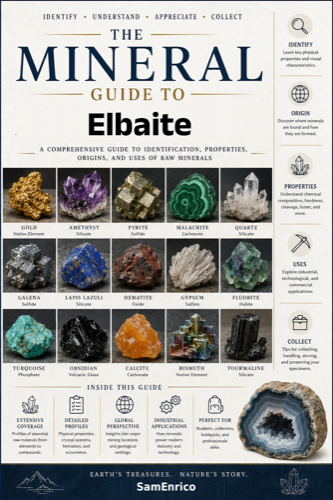 The Mineral Guide to ElbaiteFountain Kristan$11.99
You may also like
 Hong Kong Handover 1997Dunn Johnnie$11.99
 Zumba For Postnatal Recovery CourseNeal Christian$11.99
 Zumba for BeginnersLadner Nikia$11.99
 YouTube Comment Mining GuideHumes Pandora$12.99
 Worry Box MeditationCarlin Rudy$11.99
 Workplace Stress MeditationNguyen Lynn$11.99
 Workplace Stress and Sleep RepairHawley Ivory$11.99
 Workplace Perfectionism CureDelaney Jeffry$11.99
 Workplace Injustice Anger GuideWallen Isabelle$11.99
 Work Addiction and Burnout LinkGreenwood Ester$11.99
 Women in Yoga and WellnessBeattie Galina$11.99
 Women in Stand Up ComedyChun Evangeline$11.99