
Non-FictionConsumer Mind ReportSupplement Industry
Vitamins Supplement Study eBook
Analyzes Boomer doctor-recommended multivitamins v
Analyzes Boomer doctor-recommended multivitamins versus Gen Z targeted gummy and functional blends.
Formats
Free sample
Chapter 1: The Silent Epidemic...–- It starts, as most things do in modern medicine, with a routine blood test.You are forty-seven years old. You feel fine. A little tired in the afternoons, maybe. A little foggy when you haven't had enough sleep. Your joints crack when you stand up from your desk.
But nothing unusual. Nothing worth mentioning to your doctor. You are healthy. Or so you believe.Then the results come back. Your vitamin D is low.
Your B12 is borderline. Your magnesium is "suboptimal," a word that sounds like it belongs on a performance review rather than a medical chart. Your doctor recommends supplements. Not because you are sick, but because you are not quite as well as you could be. You walk out of the appointment with a list of pills to buy and a vague sense that your body has been quietly failing you without your permission.This is the silent epidemic of the twenty-first century.
Not a single disease with a dramatic name, but a slow, creeping inadequacy that affects nearly every adult in the developed world. Depending on which study you consult, between seventy-five and ninety percent of Americans are deficient in at least one essential nutrient. The majority are deficient in multiple. And most have no idea.The supplements you see on pharmacy shelves—the endless rows of bottles in every color and size—are not a marketing gimmick. They are a response to a genuine physiological crisis.
The food we eat no longer contains what it used to. The soil has been depleted. The supply chains have grown too long. The processing has stripped away what little remained. And our bodies, designed for a different era of human history, are struggling to keep up.This book is called the Vitamins Supplement Study for a reason.
It is not a catalog of products or a collection of marketing claims. It is an investigation into what is happening inside the human body, why the modern world has left us nutritionally stranded, and how we can navigate the confusing, contradictory, and sometimes dangerous landscape of supplementation.Before we can understand the clash between Boomer pills and Gen Z gummies, before we can evaluate the science of adaptogens or the risks of heavy metals, we have to answer a more fundamental question: Why do we need supplements at all?The answer is more disturbing than you might expect.The Myth of the Balanced Diet You have been told, probably since elementary school, that a balanced diet provides all the nutrients your body needs. Eat your vegetables. Get plenty of protein. Vary your colors on the plate.
This advice is not wrong, exactly. But it is outdated. It belongs to a world that no longer exists.The original nutritional science of the mid-twentieth century was based on food as it existed at that time. The Recommended Dietary Allowances (RDAs), established in 1941, assumed that a person eating a typical American diet would meet their nutritional needs through food alone. The RDAs were never intended to be achieved through supplements.
They were a guide for meal planning, for food fortification, for public health policy.But the food supply has changed dramatically since 1941. Consider these three trends.First, soil depletion. Industrial agriculture prioritizes yield over nutrition. A tomato grown in 1950 contained significantly more vitamin C, magnesium, and calcium than a tomato grown today. The same is true for wheat, corn, soy, and virtually every other staple crop.
The soil has been farmed continuously for generations, stripped of its mineral content, and replenished only with nitrogen, phosphorus, and potassium—the three macronutrients that plants need to grow large, but not necessarily the trace minerals that humans need to thrive. You can eat the same number of calories your grandparents ate and receive a fraction of the micronutrients.Second, long supply chains. The apple you buy at the grocery store was likely picked six to twelve months ago. It was stored in controlled atmosphere warehouses, shipped across the country or across the ocean, treated with wax to preserve its appearance, and finally placed on a shelf under fluorescent lights. During those months of storage, the vitamin C content of the apple declines by thirty to fifty percent.
The same is true for most produce. The vibrant, nutrient-dense food that you imagine when you think of a "balanced diet" is a memory. What you actually eat has been slowly dying for months.Third, food processing. The vast majority of calories in the modern diet come from processed foods. Even foods that appear healthy—whole grain bread, yogurt, granola bars—have been stripped of their natural nutrients and then "fortified" with synthetic versions.
The fortification is better than nothing, but synthetic vitamins are not identical to the forms found in whole foods. They are often less bioavailable, meaning your body absorbs less of them. And they are never accompanied by the thousands of phytonutrients that work synergistically in real food.You cannot eat your way out of this problem. Not because you lack willpower, but because the food system is structurally incapable of providing the nutrition you need.The Geography of Deficiency If you had asked a doctor in 1950 to describe the typical nutritional deficiency patient, they would have described someone poor, malnourished, and visibly unwell. Scurvy caused bleeding gums and bruising.
Rickets caused bowed legs. Pellagra caused the four Ds: dermatitis, diarrhea, dementia, and death. These were diseases of deprivation, and they were easy to spot.Today, deficiency looks different. It is not visible. It is not dramatic.
It is a thousand small failures accumulating over years.Vitamin D deficiency is the most common nutritional deficiency in the world. An estimated one billion people have low vitamin D levels. The symptoms are subtle: fatigue, bone pain, muscle weakness, low mood. But the long-term consequences are not subtle at all. Vitamin D deficiency is linked to osteoporosis, cardiovascular disease, diabetes, multiple sclerosis, and several types of cancer.
It is also linked to depression, particularly seasonal affective disorder (SAD), which affects millions of people who live in northern latitudes or spend most of their time indoors.Why is vitamin D deficiency so common? Because we no longer live outdoors. The human body produces vitamin D when skin is exposed to sunlight. But we work inside, commute inside, exercise inside, and spend our leisure time inside. When we do go outside, we wear sunscreen, which blocks the UVB radiation that triggers vitamin D production.
Sunscreen is essential for preventing skin cancer, but it also makes it nearly impossible to generate adequate vitamin D from sunlight alone. You cannot win.Magnesium deficiency affects roughly half the American population. The symptoms are also subtle: muscle cramps, fatigue, insomnia, anxiety, migraines, and irregular heartbeats. But magnesium is involved in more than three hundred enzymatic reactions in the body, including the production of ATP (cellular energy), the synthesis of DNA and RNA, and the regulation of blood pressure. Chronic low magnesium is a risk factor for hypertension, type 2 diabetes, osteoporosis, and migraine headaches.Why is magnesium deficiency so common?
Because modern agriculture has stripped magnesium from the soil, and modern processing has removed it from food. Refined grains, which…
This is the end of the free sample. Get the eBook to keep going. Buy now
About this book
Details
- Author
- Hulsey Margrett
- Publisher
- SamEnrico
- Language
- English
- Genre
- Non-Fiction, Consumer Mind Report, Supplement Industry
- Released
- 2026-06-07
- Pages (approx.)
- 148
- Available as
- eBook, Audiobook

Read better in the ZLOADR app
Your eBooks on your phone or tablet. Sign in with your SamEnrico account and start reading.
More by Hulsey Margrett
 Client Renewal StrategiesHulsey Margrett$11.99
 Shape Peg System For VisualsHulsey Margrett$11.99
 Fear of Failure in BusinessHulsey Margrett$11.99
 Substantiation and Receipt RulesHulsey Margrett$11.99
 Vitamin B6 Metabolism GuideHulsey Margrett$11.99
 Quit Smoking for Fertility GuideHulsey Margrett$11.99
 Gambling and DivorceHulsey Margrett$11.99
 The Green Lions of the Commonwealth: The Forgotten Eco-Warriors of the 1700sHulsey Margrett$11.99
 The Last Oracle of Delphi: When the Gods Spoke in FireHulsey Margrett$11.99
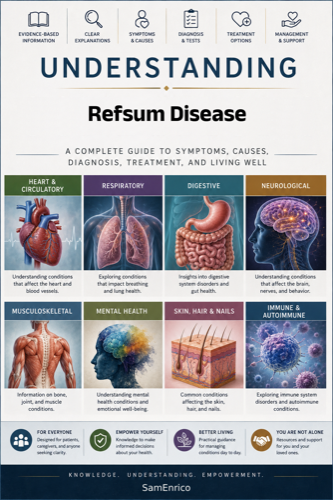 Understanding Refsum DiseaseHulsey Margrett$11.99
 How to Produce Sound Dampening Panels and FoamHulsey Margrett$11.99
 How to Produce Ginger RootHulsey Margrett$11.99
You may also like
 Hong Kong Handover 1997Dunn Johnnie$11.99
 Zumba For Postnatal Recovery CourseNeal Christian$11.99
 Zumba for BeginnersLadner Nikia$11.99
 YouTube Comment Mining GuideHumes Pandora$12.99
 Worry Box MeditationCarlin Rudy$11.99
 Workplace Stress MeditationNguyen Lynn$11.99
 Workplace Stress and Sleep RepairHawley Ivory$11.99
 Workplace Perfectionism CureDelaney Jeffry$11.99
 Workplace Injustice Anger GuideWallen Isabelle$11.99
 Work Addiction and Burnout LinkGreenwood Ester$11.99
 Women in Yoga and WellnessBeattie Galina$11.99
 Women in Stand Up ComedyChun Evangeline$11.99