
Non-FictionFirst 30 DaysRemote Hiring
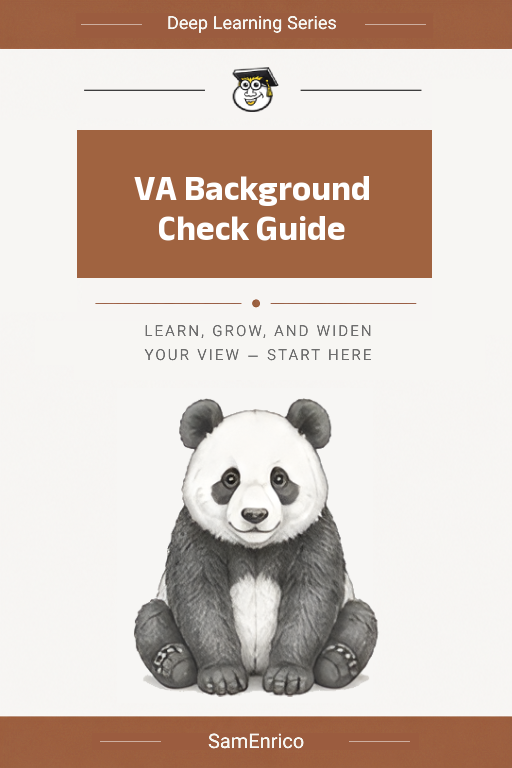
VA Background Check Guide eBook
Verify credentials of Filipino and Kenyan VAs. Ref
Verify credentials of Filipino and Kenyan VAs. Reference checks, portfolio review, and skills testing.
Formats
Free sample
Chapter 1: The Resume Mirage---– The email arrived at 11:47 PM on a Tuesday. Maria, a small business owner from Austin, Texas, had just finished interviewing a virtual assistant from Manila named “Jerome.” His resume was impeccable: a bachelor’s degree in business administration from a recognized university, three years of executive support for an Australian real estate firm, advanced certifications in Quick Books and Salesforce, and glowing testimonials from two previous clients. Maria had been burned before—a Kenyan VA who ghosted after three weeks—but Jerome felt different. He was polished, articulate, and prompt. She sent him a contract and granted him access to her customer relationship management system, her email inbox, and her company’s bank account for bill payments.Six weeks later, 14,000wasmissing.Jerome’srealnamewasnot Jerome.Hisdegreewaspurchasedfor14,000 was missing.
Jerome’s real name was not Jerome. His degree was purchased for 14,000wasmissing.Jerome’srealnamewasnot Jerome.Hisdegreewaspurchasedfor150 from a diploma mill that had since shut down. The Australian real estate firm never employed him. The glowing testimonials came from his cousins using burner email addresses. And Maria was left explaining to her accountant, her remaining clients, and eventually her lawyer why she had trusted a stranger on the internet without verifying a single thing.This is not an outlier.
It is not a cautionary tale you read once and dismiss. It is the predictable outcome of a system built on what we will call throughout this book the Resume Mirage—the dangerous assumption that a formatted document, a pleasant video call, and a few polished emails tell you anything meaningful about a stranger’s identity, history, or integrity.The $15 Billion Blind Spot Remote work has unlocked global talent pools. Entrepreneurs, agencies, and corporations now routinely hire virtual assistants from the Philippines and Kenya, two countries that have become powerhouses in the VA economy. The Philippines offers native-level English fluency, cultural alignment with Western business practices, and a government that actively promotes outsourcing. Kenya offers tech-savviness, entrepreneurial hustle, and a rapidly growing digital infrastructure.
Combined, these two nations supply hundreds of thousands of virtual assistants to businesses across North America, Europe, and Australia.Yet with this opportunity comes an uncomfortable truth: the same geographical distance that makes remote hiring efficient also makes fraud easier. According to industry estimates, the global cost of bad remote hires—including theft, lost productivity, legal fees, and reputational damage—exceeds $15 billion annually. A significant portion of that loss traces back to two fundamental failures: the failure to verify credentials and the failure to recognize that standard hiring practices were never designed for cross-border, low-trust environments.When you hire locally, you have informal verification systems at your disposal. You know the local universities. You might know someone who worked at the candidate’s listed employer.
You can visit an office. You can file a police report if something goes wrong. When you hire a VA in Davao or Nairobi, you have none of that. You have a PDF resume, a Whats App chat history, and hope.This book exists to replace hope with process.Why the Resume Mirage Persists The resume as a document was never designed to convey truth. It was designed to convey desirability.
Candidates craft their resumes to maximize their chances of getting an interview, not to provide a complete and accurate account of their history. This tension—between self-promotion and honesty—exists in every labor market. But in cross-border hiring, the usual checks and balances disappear, and the resume becomes virtually unfalsifiable.Consider what a typical VA resume claims to provide: identity, education, employment history, skills, and references. Each of these categories is vulnerable to falsification. Identity can be borrowed—a friend sits for the video interview.
Education can be fabricated—diploma mills exist explicitly to serve this market. Employment history can be invented—who will call a small business in a province you have never heard of? Skills can be exaggerated—watching You Tube tutorials does not make someone an expert. References can be faked—a second phone number and a cooperative friend are all that is required.The Resume Mirage is not a failure of individual morality. It is a structural feature of a system that places trust in unverifiable documents.
The solution is not to trust less. The solution is to verify differently.The Geography of Fraud: Philippines vs. Kenya Before we dive into verification techniques, we must understand the specific fraud landscapes of the two countries this book focuses on. General advice is useless. What works in one market may miss the most common lies in another.The Philippines: Diploma Mills and Ghosting The Philippines has one of the highest English proficiency rates in Asia, a long history of outsourcing through Business Process Outsourcing (BPO) hubs, and a workforce that is broadly familiar with American business culture.
These advantages have made Filipino VAs highly sought after. However, the same environment has produced two distinct risks.First, diploma mills are a persistent problem. The Philippine Commission on Higher Education (CHED) regularly publishes lists of non-accredited institutions, but many continue to operate or reopen under different names. A candidate can purchase a complete bachelor’s degree transcript for as little as $150. Worse, some candidates list legitimate universities but claim degrees they never completed.
Without verification, you will never know.Second, ghosting—the sudden, unexplained disappearance of a VA—is disproportionately common among Filipino remote workers. Multiple factors contribute: the ease of finding another contract (demand is high), cultural avoidance of direct conflict (ghosting feels less confrontational than resigning), and the lack of professional consequences (what are you going to do, file a complaint with a Philippine agency?). Ghosting is not fraud in the legal sense, but it is a costly failure mode that verification can predict.Kenya: Informal Employment and ID Challenges Kenya’s VA market is newer and more entrepreneurial than the Philippines’. Many Kenyan VAs are self-taught, highly motivated, and accustomed to working across time zones. However, the formal employment infrastructure is less developed.The first major challenge is informal employment history.
A candidate may truthfully claim five years of experience as a virtual assistant but have no pay stubs, no employment contracts, no tax records, and no supervisor willing to provide a reference. This does not mean they are lying. It means the standard tools of employment verification—calling HR, checking contribution records—will produce nothing. You need alternative methods, which we will cover in Chapter 4.The second challenge is national ID verification. Kenya’s Huduma Namba system was intended to create a centralized digital identity, but adoption remains uneven and verification databases are not always accessible to private employers.
A candidate can provide an ID number that is technically valid but belongs to someone else. Video calls help, but sophisticated fraud rings have been known to use multiple people to pass different verification stages.What Both Markets Share Despite their differences, the Philippines and Kenya share a critical vulnerability: both are high-volume, low-friction talent markets where speed is valued over diligence. Many Western employers hire VAs through platforms like Upwork, Online Jobs.ph, or Facebook groups, and the pressure to move quickly—to post a job, review applicants, and make an offer—overwhelms the impulse to verify. Fraudsters know this.…
This is the end of the free sample. Get the eBook to keep going. Buy now
About this book
Details
- Author
- Acosta Meaghan
- Publisher
- SamEnrico
- Language
- English
- Genre
- Non-Fiction, First 30 Days, Remote Hiring
- Released
- 2026-05-29
- Pages (approx.)
- 150
- Available as
- eBook, Audiobook

Read better in the ZLOADR app
Your eBooks on your phone or tablet. Sign in with your SamEnrico account and start reading.
More by Acosta Meaghan
 Data Scientists Net ExitAcosta Meaghan$11.99
 The Hussite Reformation PrecursorAcosta Meaghan$11.99
 Pendulum Swing FocusAcosta Meaghan$11.99
 The Dash Cam De escalationAcosta Meaghan$11.99
 Meditation for Divorce HealingAcosta Meaghan$11.99
 The Admiral’s Gambit: Yamamoto’s Doomed Strike on MidwayAcosta Meaghan$11.99
 Understanding Pignata Guarino SyndromeAcosta Meaghan$17.99
 JEE Last 30 Days Revision PlanAcosta Meaghan$12.99
 Ar AnalystAcosta Meaghan$11.99
 How to Start a Optical Projector (meteorological) Business (Beginners Guide)Acosta Meaghan$11.99
You may also like
 Hong Kong Handover 1997Dunn Johnnie$11.99
 Zumba For Postnatal Recovery CourseNeal Christian$11.99
 Zumba for BeginnersLadner Nikia$11.99
 YouTube Comment Mining GuideHumes Pandora$12.99
 Worry Box MeditationCarlin Rudy$11.99
 Workplace Stress MeditationNguyen Lynn$11.99
 Workplace Stress and Sleep RepairHawley Ivory$11.99
 Workplace Perfectionism CureDelaney Jeffry$11.99
 Workplace Injustice Anger GuideWallen Isabelle$11.99
 Work Addiction and Burnout LinkGreenwood Ester$11.99
 Women in Yoga and WellnessBeattie Galina$11.99
 Women in Stand Up ComedyChun Evangeline$11.99