
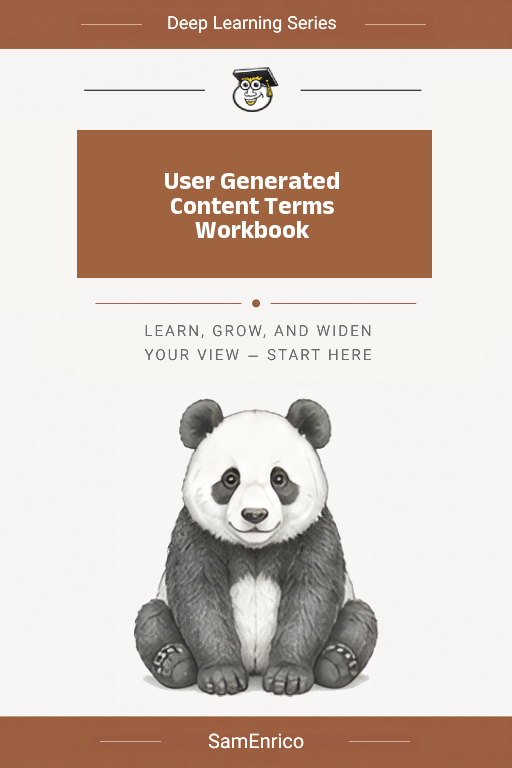
Non-FictionFirst 30 DaysContent Liability
User Generated Content Terms Workbook eBook
Draft terms for sites allowing comments, reviews,
by Than Toshia
Draft terms for sites allowing comments, reviews, or uploads. Protect your business from liability while granting yourself license to user content.
Formats
Free sample
Chapter 1: The Liability Trap--–- Imagine waking up to a lawsuit for $150,000 because one user, on a whim, uploaded a twelve-second clip of a song they heard on the radio. You did not upload it. You did not hear it. You did not even know it existed until the sheriff served you papers. Yet, under the law, you are the publisher, the distributor, and, in the eyes of the copyright holder, the thief.
This is not a hypothetical nightmare. It happens every day to platform owners who believed, mistakenly, that hosting user content came with automatic legal immunity. The truth is the opposite. Default law treats you as strictly liable for everything your users post. Every word.
Every image. Every grainy video filmed in a dark room at 2 a.m. Without a carefully constructed set of contractual shields, your business is legally naked.This chapter is not a gentle introduction. It is a fire alarm. Before we draft a single clause of your User Generated Content (UGC) terms, you need to understand the three specific legal disasters that have destroyed platforms larger than yours.
These are not edge cases or obscure legal theories. They are the top three lawsuits cited in every major legal reference on UGC liability, and they form the foundation of why your terms of service are the most important document your business will ever publish. By the end of this chapter, you will understand exactly what is at stake, why the license grant is only one piece of a larger shield system, and how the remaining eleven chapters of this workbook will build a complete defense, clause by clause.The Central Paradox: Your Greatest Asset Is Your Greatest Liability User generated content is the engine of the modern internet. It drives engagement, fuels search engine optimization, provides social proof, and creates network effects that competitors cannot replicate without users. A product review section turns a static catalog into a community.
A comment thread turns a blog post into a conversation. A photo upload turns a brand into a lifestyle. Without UGC, platforms like You Tube, Reddit, Trip Advisor, and Amazon would be hollow shells. You built your platform to attract content. You market it as a place where voices are heard and creativity is shared.
But every time a user clicks "post," they hand you a potential bomb.The law treats you as the publisher of everything that appears on your servers. In the analog world, a bookstore is not liable for every word printed in the books it sells. A newsstand is not sued for the opinions expressed in magazines on its shelves. But online, the rules are different. The Digital Millennium Copyright Act (DMCA) and Section 230 of the Communications Decency Act offer conditional immunity, not blanket protection.
Fail to comply with their requirements, and you lose those shields instantly. Without them, you face strict liability for copyright infringement, defamation, invasion of privacy, right of publicity violations, and a host of other state and federal claims. The user who posted the content walks away with a warning. You walk away with a judgment that can exceed your annual revenue.This paradox—that inviting content is essential but hosting it is dangerous—is the core tension this book resolves. Most platform owners discover this tension only after the lawsuit is filed.
By then, it is too late to draft better terms. Your terms must be in place before the first user uploads anything. This chapter introduces the three legal nightmares that have shaped UGC case law, synthesizing lessons from the best-selling legal references and the most cited judicial opinions. Each nightmare demonstrates a different failure mode: copyright infringement, defamation and harassment, and right of publicity violations. Each requires a different contractual shield.
And each will return as a case study in later chapters.Legal Nightmare One: Copyright Infringement and the DMCA Trap The first nightmare is the most statistically common. A user uploads a file that contains copyrighted material they do not own. It could be a photograph they found on Google Images, a thirty-second clip from a television show, a karaoke recording of a popular song, or a scanned page from a book. The copyright holder, often represented by an automated monitoring service, discovers the file on your server. Instead of suing the user, who has no money, they sue you.
Under the Copyright Act, statutory damages range from 750to750 to 750to30,000 per work, and up to 150,000perworkiftheinfringementisdeemedwillful.Ifauseruploadstensongsinasinglevideo,thatisupto150,000 per work if the infringement is deemed willful. If a user uploads ten songs in a single video, that is up to 150,000perworkiftheinfringementisdeemedwillful.Ifauseruploadstensongsinasinglevideo,thatisupto1.5 million in exposure. From one user. From one post.The trap is that you did not know about the infringement. Ignorance is not a defense.
The Copyright Act imposes strict liability, meaning your state of mind is irrelevant. The only way to avoid liability is to qualify for the DMCA safe harbor under Section 512 of the Act. The safe harbor is not automatic. It requires you to meet several technical requirements: designate a registered agent with the Copyright Office, implement a policy for terminating repeat infringers, accommodate standard technical measures, and, most critically, respond expeditiously to valid takedown notices. Miss any of these, and the safe harbor evaporates.
The case law is unforgiving. In Capitol Records v. MP3tunes, the court denied safe harbor because the platform owner was found to have "red flag" knowledge of infringement and failed to terminate repeat infringers. In BMG Rights Management v. Cox Communications, a jury awarded $25 million in damages after the court determined Cox failed to implement a meaningful repeat infringer policy.This nightmare is uniquely dangerous because it is silent and fast.
Unlike defamation, where the harmed party usually contacts you first, copyright infringement is often detected by bots that send automated takedown notices. If you miss a notice, or if your response is too slow, you lose safe harbor for all infringing activity, not just the one notice. The DMCA is a use-it-or-lose-it protection. Many platform owners learn they have lost it only when a copyright plaintiff moves for summary judgment and the judge rules that your response times were inadequate or your repeat infringer policy was merely decorative.The contractual shield for copyright infringement is two-part. First, Chapter 6 of this workbook provides a complete DMCA compliance toolkit, including agent designation, notice and takedown workflows, counter-notice procedures, and a defensible repeat infringer policy.
Second, the license grant you will draft in Chapter 3 gives you the right to remove infringing content without facing breach-of-contract claims from users. These two shields work together: the license grant authorizes removal, and DMCA compliance immunizes you from damages. Neither works alone.Legal Nightmare Two: Defamation, Harassment, and the Publisher Problem The second nightmare is the one that terrifies platform owners the most because it involves human judgment, not automated bots. A user posts a comment accusing a local business of fraud, a politician of corruption, or a private individual of a crime. The statement is false.
The harmed party sues you for defamation, claiming that you published the statement and that your platform gave it credibility. Your first instinct is to say, "I did not write…
This is the end of the free sample. Get the eBook to keep going. Buy now
About this book
Details
- Author
- Than Toshia
- Publisher
- SamEnrico
- Language
- English
- Genre
- Non-Fiction, First 30 Days, Content Liability
- Released
- 2026-05-28
- Pages (approx.)
- 160
- Available as
- eBook, Audiobook

Read better in the ZLOADR app
Your eBooks on your phone or tablet. Sign in with your SamEnrico account and start reading.
More by Than Toshia
 The Sugar Reset Meal Prep GuideThan Toshia$11.99
 IBS Iberogast GuideThan Toshia$11.99
 Tariff Internal Audit ProgramThan Toshia$11.99
 The Phantom of the Champs-Élysées: The $1 Million Car Heist That Shook ParisThan Toshia$11.99
 Shopping Addiction and RetirementThan Toshia$11.99
 Ultimate Handbook Guide to Douala : (Cameroon) Travel GuideThan Toshia$11.99
 How to Produce Appliance Repair ServicesThan Toshia$11.99
 Villiaumite MiningThan Toshia$11.99
You may also like
 Hong Kong Handover 1997Dunn Johnnie$11.99
 Zumba For Postnatal Recovery CourseNeal Christian$11.99
 Zumba for BeginnersLadner Nikia$11.99
 YouTube Comment Mining GuideHumes Pandora$12.99
 Worry Box MeditationCarlin Rudy$11.99
 Workplace Stress MeditationNguyen Lynn$11.99
 Workplace Stress and Sleep RepairHawley Ivory$11.99
 Workplace Perfectionism CureDelaney Jeffry$11.99
 Workplace Injustice Anger GuideWallen Isabelle$11.99
 Work Addiction and Burnout LinkGreenwood Ester$11.99
 Women in Yoga and WellnessBeattie Galina$11.99
 Women in Stand Up ComedyChun Evangeline$11.99