
Non-FictionFirst 30 DaysContent Platforms
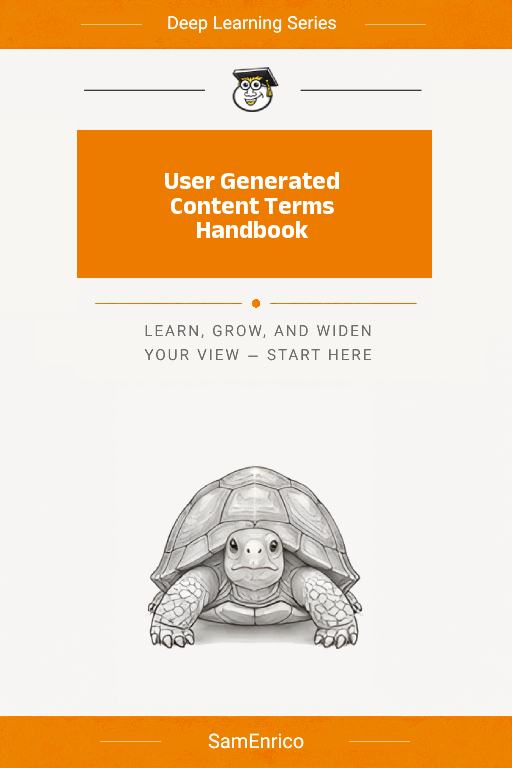
User Generated Content Terms Handbook Audiobook
Create Terms for platforms where users post conten
Create Terms for platforms where users post content. Cover ownership, moderation rights, and copyright infringement.
Formats
Free sample
Chapter 1: The Permission Revolution...–- The internet once operated like a broadcast television station: a small number of people created content, and the vast majority consumed it. That world ended sometime between the launch of You Tube in 2005 and the rise of Tik Tok in the 2020s. Today, the user is not merely a consumer but the primary engine of value, controversy, and legal risk. Every minute, users upload over 500 hours of video to You Tube, millions of images to Instagram, and countless posts on forums and platforms of every size. This shift from portals to platforms—from publishing to hosting—represents the single most important legal transformation in the history of digital media.Yet most platforms operate under terms of service that are either copied from competitors without understanding, drafted by lawyers who have never built a product, or written in such dense legalese that no user actually reads them.
The result is a ticking time bomb. A platform that fails to define "user content" properly may find itself liable for material it never knew existed. A platform that claims ownership of user content will lose its creators to competitors within weeks. A platform that ignores the Digital Millennium Copyright Act's safe harbor requirements can be sued into bankruptcy by a single determined copyright holder.This book exists because the rules of the user-generated content economy are not optional. They are the difference between a thriving community and a legal disaster.
And they begin with a single, seemingly simple question: what exactly is user-generated content?The Definition That Determines Everything Before any court can decide who owns what, who is liable for what, or who must remove what, the terms of service must establish what counts as "Content" and who counts as a "User." These definitions are not mere formalities. They are the foundation upon which every other clause rests. If the definition of Content is too narrow, the platform may inadvertently exclude material that later creates liability. If it is too broad, users may feel the platform is overreaching, claiming ownership of things they never intended to share.The most effective definitions of Content are both exhaustive and illustrative. They list specific categories while explicitly stating that the list is not exclusive.
A well-drafted definition includes "text, images, video, audio, code, metadata, comments, likes, shares, and any other material, information, or data that a User submits, posts, uploads…
This is the end of the free sample. Get the Audiobook to keep going. Buy now
About this book
Details
- Author
- Fisher Javier
- Publisher
- SamEnrico
- Language
- English
- Genre
- Non-Fiction, First 30 Days, Content Platforms
- Released
- 2026-05-28
- Pages (approx.)
- 155
- Available as
- eBook, Audiobook

Listen in the VoxFlicks app
Audiobooks and audio dramas wherever you go. Sign in with your SamEnrico account and press play.
More by Fisher Javier
 The Tsung Dao Lee Parity ViolationFisher Javier$11.99
 PCOS Anti Inflammatory DietFisher Javier$11.99
 Fireplace Visualization Warmth GuideFisher Javier$11.99
 School Zone Patience GuideFisher Javier$11.99
 Low Motivation Work Stress FixFisher Javier$11.99
 The Golden Quill: Timbuktu's Scholarly Feast of KnowledgeFisher Javier$11.99
 Understanding Osteoglophonic DwarfismFisher Javier$17.99
 Support AssociateFisher Javier$11.99Support AssociateFisher Javier$11.99
 Business English for Chinese ProfessionalsFisher Javier$12.99
 How to Start a Choreographers - Independent BusinessFisher Javier$11.99
You may also like
 Hong Kong Handover 1997Dunn Johnnie$11.99
 Zumba For Postnatal Recovery CourseNeal Christian$11.99
 Zumba for BeginnersLadner Nikia$11.99
 YouTube Comment Mining GuideHumes Pandora$12.99
 Worry Box MeditationCarlin Rudy$11.99
 Workplace Stress MeditationNguyen Lynn$11.99
 Workplace Stress and Sleep RepairHawley Ivory$11.99
 Workplace Perfectionism CureDelaney Jeffry$11.99
 Workplace Injustice Anger GuideWallen Isabelle$11.99
 Work Addiction and Burnout LinkGreenwood Ester$11.99
 Women in Yoga and WellnessBeattie Galina$11.99
 Women in Stand Up ComedyChun Evangeline$11.99