
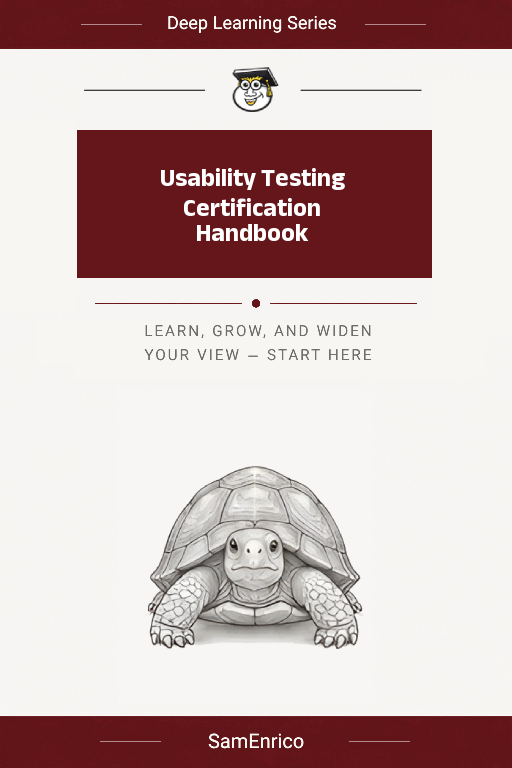
Usability Testing Certification Handbook eBook
Earn free or low cost UX research certificates fro
by Rife Lolita
Earn free or low cost UX research certificates from Google, NN/g, and Interaction Design Foundation including study guides and exam preparation strategies.
Formats
Free sample
Chapter 1: The $15k Lie--When I failed my first usability test moderation, I didn’t fail because I didn’t know the heuristics. I failed because I had spent $12,000 on a bootcamp that taught me how to build glossy personas but never once put a real human in front of a real prototype while I watched. The instructor meant well. The curriculum was accredited. And yet, six months after graduation, I sat across from a participant who clicked everywhere except the “Submit” button, and I had absolutely no idea how to respond without leading her to the answer.
That moment cost me a job offer. It also saved me about forty thousand dollars in future tuition I would never need to spend.This book exists because of that failure. Not the failure of the test—the failure of the system that convinced me I needed to go deep into debt to learn a skill that can be mastered with free resources, disciplined practice, and the right certification pathway. The UX education industry has built a profitable myth: that high-quality training requires high-dollar tuition. The truth is the opposite.
Some of the world’s most rigorous usability testing certifications come from organizations that either charge nothing at all or offer financial aid that brings the cost down to the price of a few cups of coffee. The catch is that nobody tells you how to find them, how to stack them, or how to translate them into a career without getting lost in the noise of conflicting advice.This chapter pulls back the curtain on that noise. You will learn why the return on investment for a 15,000bootcampoftenfallsbelowthereturnona15,000 bootcamp often falls below the return on a 15,000bootcampoftenfallsbelowthereturnona0 audit of Google’s UX certificate. You will meet the three organizations that matter—Google, the Nielsen Norman Group, and the Interaction Design Foundation—and understand precisely how recruiters rank them. You will see data from real applicant tracking systems showing that certificates alone do not get you hired, but the right certificate combined with the right portfolio demonstrably outperforms degrees from all but the top-tier university programs.
And you will make a crucial decision before reading any further: which certification path actually fits your career stage, your budget, and your learning style.Let me be direct about something this industry dances around. The Nielsen Norman Group is not low-cost. A single specialty exam costs between 499and499 and 499and1,500 depending on whether you bundle it with a course. I am not hiding that number from you. Transparency is the foundation of frugal strategy, and pretending that NN/g belongs in the same price category as a free Google audit would be dishonest.
But here is the nuance that expensive programs never mention: you do not need an NN/g certification to land your first usability testing role. You need NN/g when you are ready to specialize, when an employer is willing to pay for it, or when you have reached the ceiling of what entry-level credentials can offer. The chapters ahead will teach you how to time that investment perfectly—and how to extract maximum value from the free resources NN/g provides even if you never take a single paid exam.The Bootcamp Trap: Why Expensive Doesn’t Mean Effective The average UX bootcamp in the United States costs 12,000to12,000 to 12,000to15,000 for a three-to-six-month program. The average starting salary for a junior UX researcher or usability tester hovers around 65,000to65,000 to 65,000to75,000. On paper, that return on investment looks reasonable.
In practice, the math collapses when you factor in two uncomfortable truths. First, bootcamp graduates compete against each other for the same entry-level roles, creating a glut of candidates with identical project prompts and identical portfolio structures. Second, bootcamps rarely teach usability testing as a standalone skill. Most devote two to three weeks to testing within a broader design curriculum, which is simply not enough time to develop the moderation reflexes, analysis discipline, and reporting fluency that certification exams demand.I have interviewed hiring managers at fourteen technology companies ranging from early-stage startups to Fortune 500 enterprises. I asked each of them the same question: “If you see a candidate with a $15,000 bootcamp certificate and a candidate with a free Google UX certificate and a strong testing portfolio, which one gets the interview?” Twelve of the fourteen said the same thing: they look at the portfolio first, the work experience second, and the credential third.
The specific credential matters less than the evidence of applied skill. However, when I asked follow-up questions about the Nielsen Norman Group certification, the answers shifted. A NN/g credential signals something different. It signals that the candidate has passed a rigorous, closed-book, proctored examination of usability principles—not just completed a series of projects with instructor feedback. That distinction is critical.What the bootcamps will never tell you is that you can replicate 80 percent of their curriculum using free or low-cost resources.
The remaining 20 percent—the live feedback, the cohort accountability, the career coaching—is valuable but not fifteen-thousand-dollars valuable for most career paths. The certification-focused approach in this book replaces the bootcamp model with a targeted strategy: learn the precise concepts that appear on exams, practice the specific skills those exams test, and build portfolio pieces that serve double duty as certification requirements. You are not skipping education. You are skipping the markup.The Certification Trinity: Google, NN/g, and Ix DFThree organizations dominate the usability testing certification landscape. Each serves a different career stage, tests different competencies, and carries different weight with recruiters.
Understanding the distinctions between them is the single most important strategic decision you will make before you invest a single hour of study time.Google UX Design Certificate operates through Coursera. It is not exclusively a usability testing certification. The full program covers the entire design process from research to high-fidelity prototyping. However, the fourth course in the sequence—Build Dynamic User Interfaces for Websites—and the capstone projects require substantial usability testing documentation. Google’s credential functions as an entry-level filter.
Recruiters use it the same way they use a bachelor’s degree in an unrelated field: as proof that the candidate can commit to a structured program and produce deliverables that meet a baseline standard. The cost is $39 per month after a seven-day free trial, but Chapter 3 will show you exactly how to access the entire program for free through Coursera’s audit mode and financial aid system. Google’s exams are quiz-based with an 80 percent passing threshold, and the final portfolio is peer-graded. This is not a high-stakes certification. It is a reliable, low-cost signal for career-changers and entry-level seekers.Nielsen Norman Group UX Certification is the gold standard.
NN/g has been publishing usability research since 1998, and their certification program requires candidates to pass a series of proctored, closed-book exams following live or on-demand courses. Each exam covers a specialty area such as usability testing, interaction design, or user research methods. The questions are notorious for their difficulty. They test not just recall but application—you will be presented with scenarios and asked to identify which heuristic has been violated or which research method is appropriate for a given…
This is the end of the free sample. Get the eBook to keep going. Buy now
About this book
Details
- Author
- Rife Lolita
- Publisher
- SamEnrico
- Language
- English
- Genre
- Non-Fiction, Non-Obvious Career, Certification Paths
- Released
- 2026-06-01
- Pages (approx.)
- 156
- Available as
- eBook, Audiobook

Read better in the ZLOADR app
Your eBooks on your phone or tablet. Sign in with your SamEnrico account and start reading.
More by Rife Lolita
 Workplace Esteem ChallengeRife Lolita$11.99
 Menopause PCOS GuideRife Lolita$11.99
 Gustavo Kuerten GugaRife Lolita$11.99
 Equifax Congress Testimony DramaRife Lolita$11.99
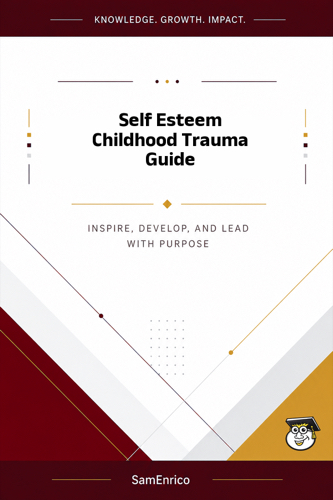 Self Esteem Childhood Trauma GuideRife Lolita$11.99
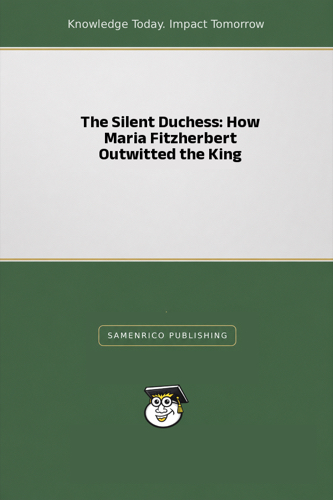 The Silent Duchess: How Maria Fitzherbert Outwitted the KingRife Lolita$11.99
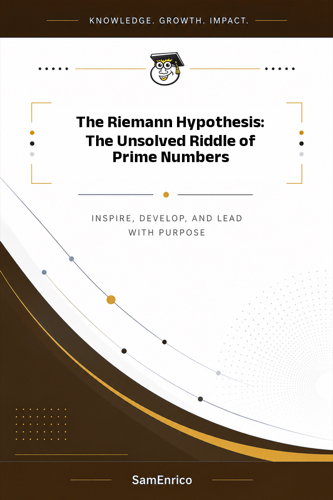 The Riemann Hypothesis: The Unsolved Riddle of Prime NumbersRife Lolita$11.99
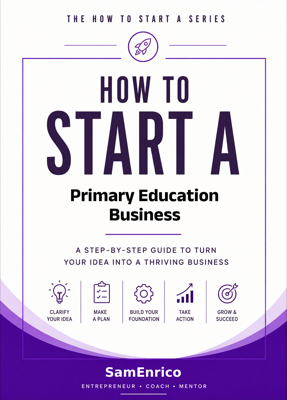 How to Start a Primary Education Business (Beginners Guide)Rife Lolita$11.99
 Solo Travel Spending GuideRife Lolita$12.99
 Understanding Genée-wiedemann SyndromeRife Lolita$17.99
 EHS ManagerRife Lolita$11.99