
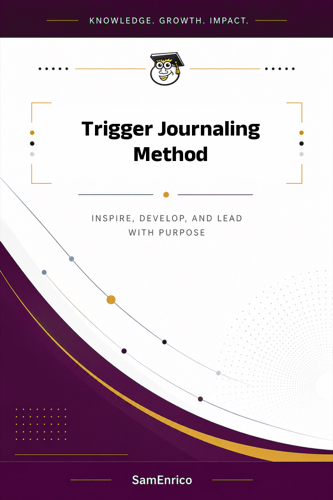
Trigger Journaling Method Audiobook
Use structured writing to identify patterns, early
Use structured writing to identify patterns, early warning signs, and effective interventions.
Formats
Free sample
Chapter 1: The Venting Trap--–- You have been told to “just write it out” your entire life. Journaling, you were promised, would unlock your feelings, clear your head, and set you free. So you bought a beautiful notebook, poured your heart onto the page after every argument, every disappointment, every wave of anxiety. And yet, here you are, reading this book, because something is not working. The same triggers keep exploding.
The same fights keep happening. The same shame keeps circling back. You are not alone. And the problem is not you. The problem is what you were taught journaling is supposed to be.For decades, the self-help world has promoted a simple, seductive idea: get it out of your head and onto paper.
Vent. Release. Catharsis. The image is powerful—a pressure valve opening, steam escaping, peace descending. But neuroscientists and clinical psychologists have discovered something unsettling.
Unstructured emotional venting does not always heal. Sometimes, it hurts. Sometimes, it rewires your brain to stay stuck in the very patterns you are trying to escape.This chapter is not an argument against journaling. It is an argument against lazy journaling. It is an invitation to understand why your current practice might be failing you, and what to do about it.
By the time you finish these pages, you will see the difference between describing a wound and treating it. You will understand the two neurological mechanisms that make structured writing one of the most powerful tools in mental health. And you will take the first step toward turning your journal from a confessional into a laboratory.The Myth of Catharsis The idea that venting anger reduces anger is called the catharsis hypothesis. It dates back to Aristotle, who wrote about drama purging strong emotions in audiences. In the twentieth century, Sigmund Freud and Josef Breuer suggested that “talking out” repressed memories could release pent-up emotional energy.
This idea seeped into popular culture and never left. Punch a pillow. Scream into a void. Write a furious letter you will never send. Let it out.Here is the problem: a mountain of research contradicts catharsis.
In a landmark series of studies, social psychologist Brad Bushman had participants become angry—by having someone insult their writing—and then gave them different outlets. Some sat quietly. Some punched a punching bag while thinking about the person who insulted them. Some punched a bag while thinking about…
This is the end of the free sample. Get the Audiobook to keep going. Buy now
About this book
Details
- Author
- Fenton Crysta
- Publisher
- SamEnrico
- Language
- English
- Genre
- Non-Fiction, Self-Help, Journaling
- Released
- 2026-06-08
- Pages (approx.)
- 135
- Available as
- eBook, Audiobook

Listen in the VoxFlicks app
Audiobooks and audio dramas wherever you go. Sign in with your SamEnrico account and press play.
More by Fenton Crysta
 Anger In Blended FamiliesFenton Crysta$11.99
 Hand Rejuvenation Age Spot ManualFenton Crysta$11.99
 Craft Supply Chemical ExposureFenton Crysta$11.99
 Alcohol Recovery and WeddingsFenton Crysta$11.99
 Gaming Industry InvestmentFenton Crysta$11.99
 The Executive Presence CourseFenton Crysta$11.99
 Parts Therapy Scripting GuideFenton Crysta$11.99
 Clinton Arkansas GovernorFenton Crysta$11.99
 The Silk Road of the Mind: Ibn Battuta’s Lost Anthropological ChroniclesFenton Crysta$11.99
 Magellan’s Gambit: The First Circumnavigation of the GlobeFenton Crysta$11.99
 Order Types and Execution MechanicsFenton Crysta$11.99
 Workbook Two Week Creation GuideFenton Crysta$12.99
You may also like
 Stress Journaling for TwoPoirier Melodie$11.99
 Workaholism Recovery JournalParis Cheyenne$11.99
 The Self Esteem Journal for WorkStock Cherrie$11.99
 The Mindset Shift JournalForman Marine$11.99
 The Assertiveness Journal MethodEdgar Ruthanne$11.99
 Sugar Addiction Recovery Journal WorkbookHelms Letitia$11.99
 Student Journaling for StressWagoner Joetta$11.99
 Procrastination Journal PromptsDover Delmar$11.99
 Procrastination Journal MethodShank Dona$11.99
 Pet Bereavement JournalEuler Ross$11.99
 Loneliness Journal WorkbookLoveless Rosanne$11.99
 Habit Journaling WorkbookLancaster Valentine$11.99