
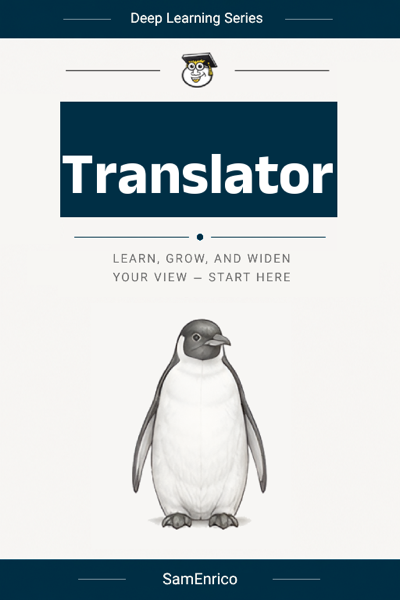
Translator
A Coursebook on Translator
A Coursebook on Translator
Formats
About this book
Free sample
Chapter 1: The Mistranslation That Started a War--–- On August 10, 1945, the Japanese government received the Allied response to their conditional surrender offer. The reply contained a single English word that would be translated into Japanese as "ignoring" when it should have read "no comment." Some historians believe this error led directly to the atomic bombing of Nagasaki three days later. A mistranslation did not merely change a sentence. It changed history. And the translator who made that error?
No one knows their name. No one ever will.This is not an isolated story. In 1980, a Spanish translator working for a major airline mistranslated the English word "altimeter" as "altura" (height) rather than "altímetro" in a maintenance manual. The crew of a commercial flight subsequently misread their altitude instruments. The plane crashed into a mountainside, killing all 146 people on board.
The word that killed them was three letters long. Alt. Three letters. One hundred and forty-six lives. And the translator?
Their name appears nowhere in the accident report. Only their error does.Welcome to the invisible world of translation. It is a world where single words carry the weight of wars, where sentences determine the fate of patients on operating tables, where the difference between "gift" (poison in German) and "Gift" (present in English) has ended diplomatic careers. It is also a world whose workers are almost entirely unseen, uncredited, and misunderstood by the very people who depend on them daily.If you have read a foreign novel, watched a subtitled film, used a translated software interface, read a UN report, taken a medication with instructions in your language, or eaten food with ingredients translated from another country — you have relied on a translator. You have almost certainly never thought about them.
That is about to change.The Great Myth: Translation as Substitution The most damaging myth about translation is also the most common. It goes like this: Translation is the process of finding equivalent words in another language. A word in Language A equals a word in Language B. The translator is a kind of human dictionary, swapping out lexical…
This is the end of the free sample. Get the eBook to keep going. Buy now
Contents
- Chapter 1
- Chapter 2
- Chapter 3
- Chapter 4
- Chapter 5
- Chapter 6
- Chapter 7
- Chapter 8
- Chapter 9
- Chapter 10
- Chapter 11
- Chapter 12
Details
- Author
- Sampson Claudette
- Publisher
- SamEnrico
- Language
- English
- Genre
- Non-Fiction, Informative, Educational
- Released
- 2026-06-02
- Pages (approx.)
- 144
- Available as
- eBook, Audiobook

Read better in the ZLOADR app
Your eBooks on your phone or tablet. Sign in with your SamEnrico account and start reading.
More by Sampson Claudette
 MBSR For Perfectionism WorkbookSampson Claudette$11.99
 Burnout Prevention for Parents HandbookSampson Claudette$11.99
 The RLS Progressive Muscle RelaxationSampson Claudette$11.99
 Cousteau's World Without SunSampson Claudette$11.99
 Fundamental Rights Impact AssessmentSampson Claudette$11.99
 Contract Review AI Assistant GuideSampson Claudette$12.99
 Understanding Keratosis, SeborrheicSampson Claudette$17.99
 How to Become a TumblerSampson Claudette$11.99