
Non-FictionBusiness BriefTechnology Careers
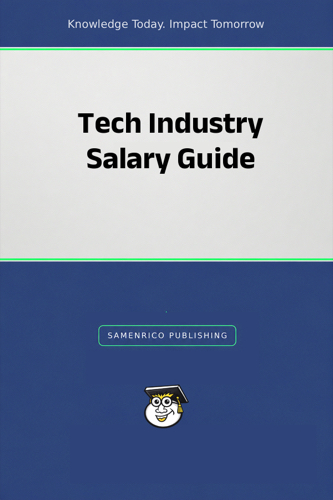
Tech Industry Salary Guide
Negotiates for software and engineering roles.
Negotiates for software and engineering roles.
Formats
About this book
Free sample
Chapter 1: The Imposter Syndrome Tax--–- The first time I lost $45,000, I wasn’t even in the room. I was sitting at my desk, staring at an offer letter from a Series C startup, feeling a strange combination of relief and dread. The number on the page was $165,000. I had done my research. I knew the market rate for a Staff Engineer with my tenure was $210,000.
I knew that the person who had held the role before me—someone I had objectively surpassed in technical ability—had been paid $195,000. And yet, when the recruiter called and asked, “Does this work for you?” I heard myself say, “Yes, thank you.” The call lasted forty-seven seconds. In that time, I had left $45,000 on the table. Not because I needed the money any less than the next person. Not because I was bad at math.
But because a voice in my head—the same one that had whispered during every code review, every architecture design meeting, every promotion conversation—said something I had learned to trust: Don’t rock the boat. They might find out you’re not as good as they think.This voice has a name. It is called Imposter Syndrome. And for software engineers, it is not merely an emotional inconvenience. It is a tax.
A recurring, compounding, career-long tax that extracts hundreds of thousands of dollars from people who are, by every objective measure, highly competent. This chapter is about understanding that tax, quantifying it, and building the cognitive tools to stop paying it.The Paradox of the High Performer Let us start with a data point that should unsettle you. In a survey of over 2,000 software engineers conducted by a major compensation analytics platform, respondents were asked two questions: “How would you rate your technical competence relative to your peers?” and “Did you negotiate your last job offer?” The results revealed a striking inverse correlation. Engineers who rated themselves as “above average” or “top 10%” were less likely to have negotiated their last offer than engineers who rated themselves as “average” or “below average.” The most self-critical engineers—the…
This is the end of the free sample. Get the eBook to keep going. Buy now
Contents
- Chapter 1
- Chapter 2
- Chapter 3
- Chapter 4
- Chapter 5
- Chapter 6
- Chapter 7
- Chapter 8
- Chapter 9
- Chapter 10
- Chapter 11
- Chapter 12
Details
- Author
- Mckinley Kimi
- Publisher
- SamEnrico
- Language
- English
- Genre
- Non-Fiction, Business Brief, Technology Careers
- Released
- 2026-06-07
- Pages (approx.)
- 113
- Available as
- eBook, Audiobook

Read better in the ZLOADR app
Your eBooks on your phone or tablet. Sign in with your SamEnrico account and start reading.
More by Mckinley Kimi
 Testosterone and Growth Hormone SynergyMckinley Kimi$11.99
 Surrender Through Step Three DecisionMckinley Kimi$11.99
 The Nonprofit Marketing Transition GuideMckinley Kimi$11.99
 Disulfiram Alcohol GuideMckinley Kimi$11.99
 Upwork Connects StrategyMckinley Kimi$11.99
 Goal Perfectionism CureMckinley Kimi$11.99
 Parent's Belongings and KeepsakesMckinley Kimi$11.99
 The Midnight Cabinet: Secrets of the White House’s Shadow AdvisorsMckinley Kimi$11.99
 The Lion’s Calculus: Mathematicians of the Ancient Kingdom of KushMckinley Kimi$11.99
 How to Produce MelodicasMckinley Kimi$11.99
 How to Produce Wood ProtectantMckinley Kimi$11.99
 Successor Liability Trap GuideMckinley Kimi$12.99
You may also like
 Hong Kong Handover 1997Dunn Johnnie$11.99
 Zumba For Postnatal Recovery CourseNeal Christian$11.99
 Zumba for BeginnersLadner Nikia$11.99
 YouTube Comment Mining GuideHumes Pandora$12.99
 Worry Box MeditationCarlin Rudy$11.99
 Workplace Stress MeditationNguyen Lynn$11.99
 Workplace Stress and Sleep RepairHawley Ivory$11.99
 Workplace Perfectionism CureDelaney Jeffry$11.99
 Workplace Injustice Anger GuideWallen Isabelle$11.99
 Work Addiction and Burnout LinkGreenwood Ester$11.99
 Women in Yoga and WellnessBeattie Galina$11.99
 Women in Stand Up ComedyChun Evangeline$11.99