
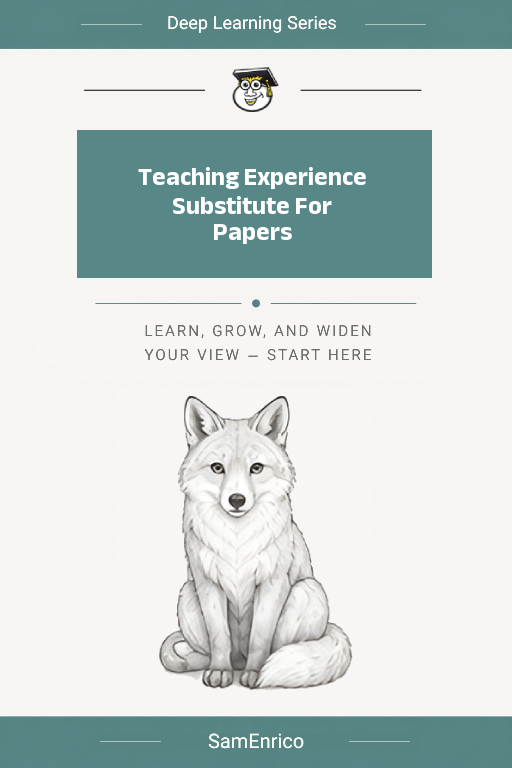
Non-FictionStudent's ShortcutTeaching
Teaching Experience Substitute For Papers
Emphasize teaching assistant roles and course desi
by Yee Loura
Emphasize teaching assistant roles and course design as evidence of academic readiness.
Formats
About this book
Free sample
Chapter 1: The Grading Lie--The first time a professor handed me a stack of sixty-two freshman composition papers and said, “These need to be graded by Thursday,” I smiled, nodded, and walked back to my windowless shared office with a sense of quiet purpose. I was twenty-three years old, six weeks into my first teaching assistantship, and I genuinely believed that grading was the price I paid for the privilege of being in graduate school. I opened the first essay—“The Importance of Social Media in Modern Activism”—and began to write comments in the margins. By the third paper, my hand cramped. By the tenth, my eyes glazed over.
By the twentieth, I had stopped reading for argument and started reading for errors, because errors were faster to find. By the fortieth, I gave a B- to a paper I could not remember five minutes after setting it down.That night, I told myself I was learning something valuable about rigor. I was not. I was learning to work faster, care less, and mistake quantity of labor for quality of insight. And here is the lie that graduate school told me, that most graduate schools still tell thousands of teaching assistants every semester: that grading papers is a menial chore, a necessary evil, something to survive until you can get back to your “real” research.
This chapter exists to expose that lie and to replace it with a truth that will transform how you understand your own teaching experience as evidence of academic readiness.Grading is not a chore. Grading is gap analysis. It is the same cognitive skill used by journal editors rejecting manuscripts, by software quality assurance testers finding bugs, by medical diagnosticians reading scans for anomalies, and by grant reviewers spotting weaknesses in research designs. When you grade a student paper, you are performing a systematic diagnosis of reasoning. You are asking: Where is the thesis weak?
Where does evidence fail to support the claim? Where is the logic broken? Where is a counterargument missing? These are not clerical questions. These are the fundamental questions of critical…
This is the end of the free sample. Get the eBook to keep going. Buy now
Contents
- Chapter 1
- Chapter 2
- Chapter 3
- Chapter 4
- Chapter 5
- Chapter 6
- Chapter 7
- Chapter 8
- Chapter 9
- Chapter 10
- Chapter 11
- Chapter 12
Details
- Author
- Yee Loura
- Publisher
- SamEnrico
- Language
- English
- Genre
- Non-Fiction, Student's Shortcut, Teaching
- Released
- 2026-06-01
- Pages (approx.)
- 154
- Available as
- eBook, Audiobook

Read better in the ZLOADR app
Your eBooks on your phone or tablet. Sign in with your SamEnrico account and start reading.
More by Yee Loura
 Sleep Time Self TalkYee Loura$11.99
 Context Dependent Body LanguageYee Loura$11.99
 The Krebs Cycle RevelationYee Loura$11.99
 John Paulson SubprimeYee Loura$11.99
 Metta for the Inner ChildYee Loura$11.99
 Drug Dependency and LGBTQ Plus CommunityYee Loura$11.99
 Anapanasati for RunningYee Loura$11.99
 Bill Hicks RevelationsYee Loura$11.99
 Dare to Defy: The Revolutionary Rise of Darcey Bussell and the Royal BalletYee Loura$11.99
 The Billion-Dollar Bamboozle: How a Math Genius Outsmarted Wall StreetYee Loura$11.99
 How to Produce Blu-ray PlayersYee Loura$11.99
 Wealth Display Comparison TrapYee Loura$12.99
You may also like
 Hong Kong Handover 1997Dunn Johnnie$11.99
 Zumba For Postnatal Recovery CourseNeal Christian$11.99
 Zumba for BeginnersLadner Nikia$11.99
 YouTube Comment Mining GuideHumes Pandora$12.99
 Worry Box MeditationCarlin Rudy$11.99
 Workplace Stress MeditationNguyen Lynn$11.99
 Workplace Stress and Sleep RepairHawley Ivory$11.99
 Workplace Perfectionism CureDelaney Jeffry$11.99
 Workplace Injustice Anger GuideWallen Isabelle$11.99
 Work Addiction and Burnout LinkGreenwood Ester$11.99
 Women in Yoga and WellnessBeattie Galina$11.99
 Women in Stand Up ComedyChun Evangeline$11.99