
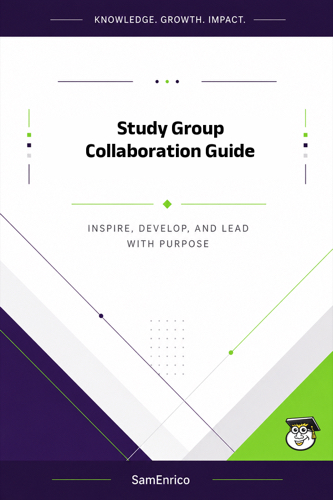
Non-FictionSelf-HelpCollaborative Learning
Study Group Collaboration Guide Audiobook
Work effectively with peers to fill gaps and expla
by Piper Arla
Work effectively with peers to fill gaps and explain concepts to each other.
Formats
Free sample
Chapter 1: The Lonely Genius Myth--–- Maria was a third-year pre-med student who did everything right. She attended every lecture, took color-coded notes, highlighted her textbooks like a professional, and spent an average of 35 hours per week studying alone in the library's silent floor. Before her organic chemistry midterm, she logged 47 hours of solo review over twelve days. She walked into the exam feeling prepared. She walked out in tears.
She scored a 62%. Her classmate, Javier, who had attended the same lectures but spent half as many total hours studying, scored an 89%. Javier studied with two other people for three hours every Thursday night.This is not a story about intelligence. Maria had a 3.7 GPA. This is a story about a hidden flaw in how most people are taught to learn.
And it is a story that plays out millions of times every semester, across every discipline, from first-year composition to doctoral seminars. The flaw has a name, and once you understand it, you will never study the same way again.The Most Expensive Mistake Students Make Let us begin with a simple experiment that you can perform in the next two minutes. Think of a concept you learned in the past month. Not something trivial, but a real idea with some depth: the Krebs cycle, supply and demand shifts, the structure of a sonnet, conditional probability, the causes of World War I. Got one?
Good. Now, without looking at any notes or books, explain that concept aloud to an imaginary friend who knows nothing about it. Go ahead. Do it now.If you are like ninety-four percent of the students who have performed this exercise across dozens of studies, you experienced something uncomfortable. You found gaps.
You realized that you could recognize the concept when you saw it written down, but you could not produce a clear, step-by-step explanation from memory. You might have said things like, "Well, it's kind of like..." or "There's this thing that happens, and then something else happens, but I'm not totally sure about the order." That feeling is not a sign that you are bad at studying. It is a sign that you have been victimized by one of the most powerful and least understood illusions in learning science.The Two Villains of Solo Studying Every time you study alone, two psychological traps are working against you. They are not character flaws. They are…
This is the end of the free sample. Get the Audiobook to keep going. Buy now
About this book
Details
- Author
- Piper Arla
- Publisher
- SamEnrico
- Language
- English
- Genre
- Non-Fiction, Self-Help, Collaborative Learning
- Released
- 2026-06-09
- Pages (approx.)
- 137
- Available as
- eBook, Audiobook

Listen in the VoxFlicks app
Audiobooks and audio dramas wherever you go. Sign in with your SamEnrico account and press play.
More by Piper Arla
 Career Transition Affirmation GuidePiper Arla$11.99
 DoorDash Cash Order HandlingPiper Arla$11.99
 Depression Biopsychosocial ModelPiper Arla$11.99
 Values Driven Success GuidePiper Arla$11.99
 Spitfire Pilot MemoirPiper Arla$11.99
 Citation Rules Reference Management SoftwarePiper Arla$11.99
 Panzer Tactics Against Soviet ArmorPiper Arla$11.99
 Resentment And InjusticePiper Arla$11.99
 The Verdict of the SphinxPiper Arla$11.99
 The Last Flight of the Icebreaker: A Race Against Time in AntarcticaPiper Arla$11.99
 The Healing Hands of Ankh: Egypt's Forgotten Medical PioneersPiper Arla$11.99
 Understanding Aplasia Cutis MyopiaPiper Arla$17.99
You may also like
 Hong Kong Handover 1997Dunn Johnnie$11.99
 Zumba For Postnatal Recovery CourseNeal Christian$11.99
 Zumba for BeginnersLadner Nikia$11.99
 YouTube Comment Mining GuideHumes Pandora$12.99
 Worry Box MeditationCarlin Rudy$11.99
 Workplace Stress MeditationNguyen Lynn$11.99
 Workplace Stress and Sleep RepairHawley Ivory$11.99
 Workplace Perfectionism CureDelaney Jeffry$11.99
 Workplace Injustice Anger GuideWallen Isabelle$11.99
 Work Addiction and Burnout LinkGreenwood Ester$11.99
 Women in Yoga and WellnessBeattie Galina$11.99
 Women in Stand Up ComedyChun Evangeline$11.99