
Non-FictionSelf-HelpCreative Aging
Senior Creative Expression Audiobook
Use art writing or music to reinforce identity and
by Amato Lupe
Use art writing or music to reinforce identity and self worth.
Formats
Free sample
Chapter 1: The Vintage Brain...–- The first myth this book needs to dismantle sits quietly in a rocking chair. It is the belief that your best creative days are behind you. You have heard it whispered in the waiting room of your doctor’s office, implied in the greeting card that jokes about “senior moments,” and shouted silently in your own mind when you forgot a name or struggled to learn a new phone. The myth says this: aging is a slow leak of capacity. Creativity, like memory and quickness, drains out year by year until nothing is left but routine, repetition, and regret.
This chapter is going to prove that myth is not only wrong but backwards. The aging brain, as neuroscientists have discovered over the past two decades, is not a dimming bulb. It is a different kind of light entirely—one that is often better suited to creative expression than the blazing, scattered illumination of youth.Let us begin with a story that will serve as a landmark for everything that follows. In the late 1990s, a researcher named Gene Cohen at the George Washington University School of Medicine launched a study that would challenge decades of geriatric orthodoxy. He followed 300 older adults, ages sixty-five to ninety-five, who were participating in community-based arts programs.
Some painted. Some wrote poetry. Some joined choruses. Over three years, Cohen measured not only their artistic output but their physical health, mental health, and social engagement. The results were stunning.
The arts participants visited their doctors less often, used fewer prescription medications, reported lower rates of depression, and showed higher levels of physical activity than the control group. They also fell less. This last finding—reduced fall risk—surprised everyone until Cohen explained it: creative engagement improved balance and coordination because it required sustained attention and fine motor control. But the deeper implication was even more radical. Creativity was not a luxury for the old.
It was a protective factor, as essential as exercise or nutrition. And it worked, in part, because the aging brain was not merely coping with decline but actively reorganizing itself into a more creative organ.This chapter will introduce you to three neural mechanisms that make the vintage brain uniquely suited to artistic expression: bilaterality, patterning, and neuroplasticity. Each mechanism will be explained in plain language, grounded in real research, and paired with practical exercises. But here is…
This is the end of the free sample. Get the Audiobook to keep going. Buy now
About this book
Details
- Author
- Amato Lupe
- Publisher
- SamEnrico
- Language
- English
- Genre
- Non-Fiction, Self-Help, Creative Aging
- Released
- 2026-06-07
- Pages (approx.)
- 107
- Available as
- eBook, Audiobook

Listen in the VoxFlicks app
Audiobooks and audio dramas wherever you go. Sign in with your SamEnrico account and press play.
More by Amato Lupe
 The Volunteer Who VanishedAmato Lupe$11.99
 Loneliness Animal Shelter GuideAmato Lupe$11.99
 Mediation Techniques GuideAmato Lupe$11.99
 Recurring Dreams in Children GuideAmato Lupe$11.99
 HR Tech Growth Capital GuideAmato Lupe$11.99
 Recovery from Leadership BurnoutAmato Lupe$11.99
 Driving Anxiety TranceAmato Lupe$11.99
 Inside The Diamond ClubAmato Lupe$11.99
 Silent Witness: The Trial of Jean-Gaspard Deburau and the Birth of Modern MimeAmato Lupe$11.99
 The Frozen Silk Road: How a Forgotten Explorer Mapped Antarctica's Hidden SecretsAmato Lupe$11.99
 The Container King: How One Man Built a Global Empire on Steel BoxesAmato Lupe$11.99
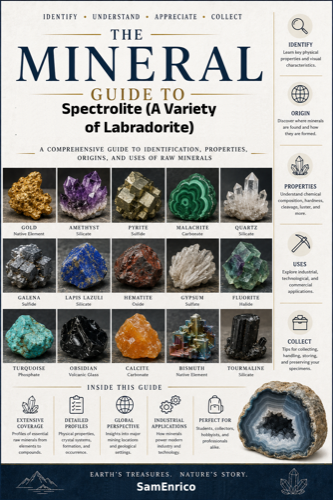 The Mineral Guide to Spectrolite (A Variety of Labradorite)Amato Lupe$11.99
You may also like
 Hong Kong Handover 1997Dunn Johnnie$11.99
 Zumba For Postnatal Recovery CourseNeal Christian$11.99
 Zumba for BeginnersLadner Nikia$11.99
 YouTube Comment Mining GuideHumes Pandora$12.99
 Worry Box MeditationCarlin Rudy$11.99
 Workplace Stress MeditationNguyen Lynn$11.99
 Workplace Stress and Sleep RepairHawley Ivory$11.99
 Workplace Perfectionism CureDelaney Jeffry$11.99
 Workplace Injustice Anger GuideWallen Isabelle$11.99
 Work Addiction and Burnout LinkGreenwood Ester$11.99
 Women in Yoga and WellnessBeattie Galina$11.99
 Women in Stand Up ComedyChun Evangeline$11.99