
Self Exclusion Programs Guide eBook
Ban yourself from casinos, online sites, and apps
Ban yourself from casinos, online sites, and apps using legal voluntary tools.
Formats
Free sample
Chapter 1: The Willpower Trap--The moment you stop blaming your willpower and start changing your environment is the moment self-exclusion transforms from a punishment into a superpower.You have probably told yourself some version of this lie at least a hundred times. Maybe you said it after a particularly devastating loss, staring at a bank balance that looked like a typo. Maybe you whispered it at three in the morning, scrolling through transaction histories you barely recognized. Maybe you shouted it in the car on the way home from a casino, windows rolled up so no one could hear. The lie sounds like this: I just need to try harder.
I just need to want it more. Next time, I will have more self-control.Here is the truth that the multi-billion-dollar gambling industry does not want you to understand: willpower is not a muscle you can strengthen through sheer determination. It is a finite resource that depletes with every decision, every temptation, every moment of resistance. And the modern gambling environment has been engineered with surgical precision to exploit exactly that limitation. The apps on your phone, the websites in your browser history, the slot machines on every corner of every casino floor—they are not passive entertainment.
They are behavioral weapons designed to bypass your rational brain and speak directly to your dopamine receptors.This book is not about trying harder. It is about building walls so high that trying becomes irrelevant. It is about using legal, voluntary self-exclusion tools to make gambling not just difficult, but impossible in the moments when your resolve is weakest. And before you can use those tools effectively, you need to understand why your willpower has been losing a fight it was never designed to win.The Neuroscience of the Chase To understand why self-exclusion works and why willpower alone fails, you need to look inside your skull. Deep in the center of your brain, tucked behind your eyes and wrapped in neural pathways older than human civilization, sits a collection of structures called the nucleus accumbens.
This is your brain's reward center. Its job is ancient and essential: to notice when something good happens and make you want more of it. When you eat a meal after being hungry, your nucleus accumbens releases dopamine. When you hug someone you love, same thing. When you win a bet—even a small one—the nucleus accumbens lights up like a Christmas tree.But gambling hijacks this system in a way that natural rewards cannot match.
The key is something called variable-ratio reinforcement. Here is how it works: if you knew exactly when a reward was coming—say, every tenth pull of a slot machine lever—your brain would release dopamine only on the ninth and tenth pulls. The predictability would dampen the excitement. But when the reward comes unpredictably—sometimes on the second pull, sometimes the fiftieth, sometimes not at all—your brain goes into overdrive. Each pull becomes a potential jackpot.
The uncertainty itself becomes addictive.This is not a metaphor. Scientists have scanned the brains of problem gamblers during simulated slot machine play. The dopamine spikes are highest not when they win, but in the split second before the result is revealed. The anticipation is the drug. And the gambling industry knows this better than any neuroscientist.
They design games with near-misses—two cherries and a third cherry that stops just one position away—because near-misses activate the same reward pathways as actual wins. They use flashing lights and celebratory sounds for small wins that barely cover the cost of the bet, because the sensory feedback conditions your brain to associate the act of gambling with pleasure, regardless of the financial outcome.You are not weak for getting caught in this system. You are human. And your human brain is doing exactly what evolution designed it to do: seeking reward, ignoring long-term consequences, and prioritizing immediate gratification over abstract future losses. The problem is not that your willpower is broken.
The problem is that you are asking your willpower to fight against a multi-billion-dollar industry that has spent decades studying exactly how to defeat it.The Friction Principle: Why Convenience Kills Control Consider two scenarios. In the first scenario, you want to gamble at a physical casino. You have to get in your car, drive twenty minutes (or an hour, or three hours, depending on where you live), find parking, walk through the entrance, navigate to the cashier or an ATM, withdraw money, find a machine or table, and then finally place your first bet. Along the way, you have dozens of opportunities to change your mind. You could turn the car around.
You could walk past the casino entrance. You could decide the ATM fees are too high. Each of these moments is a point of friction—a chance for your rational brain to catch up with your impulsive urges.In the second scenario, you want to gamble on your phone. You unlock the screen, tap an app icon, and within three seconds you are looking at a deposit screen. Facial recognition or a thumbprint authorizes the transaction.
You are betting before the thought I should not do this has even fully formed in your mind. There is no drive. No parking. No ATM. No moment of reflection.
The friction has been engineered down to zero.This is the Friction Principle: the easier an action is to perform, the more likely you are to perform it, regardless of your long-term intentions. Gambling operators understand this principle intuitively. That is why sports betting apps spend millions of dollars on one-click deposit technology, instant withdrawals, and push notifications that say things like "Your free bet is expiring in one hour." Every single feature is designed to remove friction between the impulse and the action.Self-exclusion works because it adds friction back into the system. When you enroll in a national database like GAMSTOP, id Pair, or Spelpaus, you are not just asking a casino to block your account. You are inserting a mandatory waiting period, a verification step, a legal barrier that your impulsive self cannot bypass in three seconds flat.
You are giving your rational brain a fighting chance.Why "Just Quitting" Almost Never Works There is a reason that New Year's resolutions fail at astonishing rates, and it is not because people lack sincerity. It is because resolutions rely on willpower alone. You wake up on January first and declare, "I will not gamble this year." But you have not changed your environment. Your phone still has the betting apps. Your browser still autofills the casino websites.
Your credit card is still linked to payment processors that approve gambling transactions. Your friends still send you links to their parlays. Your email inbox still fills with "free play" offers.You are trying to swim upstream in a current that has been engineered to carry you exactly where you do not want to go. And the current is stronger than you are.Research on addiction and behavior change consistently finds that environmental interventions are dramatically more effective than willpower-based interventions. A 2019 study published in the journal Addiction compared problem gamblers who tried to quit using…
This is the end of the free sample. Get the eBook to keep going. Buy now
About this book
Details
- Author
- Janes Pauletta
- Publisher
- SamEnrico
- Language
- English
- Genre
- Non-Fiction, Self-Help, Legal
- Released
- 2026-06-05
- Pages (approx.)
- 138
- Available as
- eBook, Audiobook

Read better in the ZLOADR app
Your eBooks on your phone or tablet. Sign in with your SamEnrico account and start reading.
More by Janes Pauletta
 Software Developer CrunchJanes Pauletta$11.99
 The Listening Space ClearingJanes Pauletta$11.99
 Twelve Step Programs For Food Addiction GuideJanes Pauletta$11.99
 Letting Go of Comparison to ExesJanes Pauletta$11.99
 Voiceover Niche SpecializationJanes Pauletta$11.99
 Social Casino AddictionJanes Pauletta$11.99
 House Without PetJanes Pauletta$11.99
 The Vanishing Doctor: Australia's First Forensic MysteryJanes Pauletta$11.99
 Pork Chop Hill: The Forgotten Fight for Honor (1953)Janes Pauletta$11.99
 How to Start a Anodising Business (Beginners Guide)Janes Pauletta$11.99
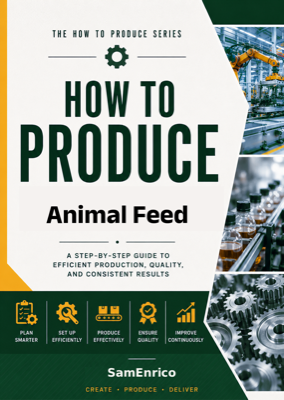 How to Produce Animal FeedJanes Pauletta$11.99
 A Collector's Handbook to the Pontiac Six (1937-38)Janes Pauletta$11.99
You may also like
 The Caregiver Legal and Financial PlanningCarden Danita$11.99
 Prosecutor Vicarious Trauma GuideWall Marya$11.99
 Mindful Stress Reduction for LawyersDixon Brendan$11.99
 Legal Profession BurnoutCurtin Rolanda$11.99
 Road Rage Legal Consequences GuideMccutcheon Jacalyn$11.99
 Litigation Lawyer Burnout GuideSwartz Elia$11.99
 Emotional Regulation For LawyersLeal Wiley$11.99
 Drug Dependency and Legal IssuesBertrand Domitila$11.99
 Courtroom Anger De escalationDoan Federico$11.99
 Workaholism in Law FirmsCheek Jarrett$11.99
 Imposter Syndrome In LawRiley Greg$11.99
 Drug Addiction Legal TroubleOjeda Yer$11.99