

Non-FictionBusiness BriefMacroeconomic Adaptation
Sector Specific Pricing Guide eBook
Apply pricing strategies for specific sectors duri
by Redden Aimee
Apply pricing strategies for specific sectors during inflation. Retail, manufacturing, services.
Formats
Free sample
Chapter 1: The Margin Mirage--–- In the spring of 2022, a midsized grocery chain in the Midwest did exactly what every textbook and consultant had told them to do. Their costs were up—wholesale food prices had climbed 12 percent in six months, fuel surcharges were multiplying on every truck, and labor costs had risen three times faster than the previous decade. So they raised prices. Across the board. By 8 percent.
Clean, simple, mathematically defensible.Three months later, their margins had actually decreased. Same-store sales had dropped 9 percent, but the customers who remained had traded down to cheaper private-label alternatives. The 8 percent price increase had generated only 2.3 percent net margin improvement after accounting for volume loss. They had done everything "right" by conventional inflation playbooks—and they had lost.This is the margin mirage: the deceptive belief that raising prices uniformly when costs rise will protect profitability. It is the single most expensive mistake businesses make during inflationary periods, and it is shockingly common.
According to a 2023 survey of 500 midmarket companies, 78 percent responded to inflation with across-the-board price increases. Only 12 percent of those companies achieved their target margin outcomes. The other 88 percent either saw margins erode further, lost market share, or both.The problem is not inflation itself. The problem is that most business leaders are fighting the last war. Their mental models of inflation were forged in the 1970s—oil shocks, wage-price spirals, and across-the-board cost pass-through.
But today's inflation is structurally different. It is driven by fragmented supply chains, labor shortages that vary wildly by sector, and a phenomenon called shrinkflation that barely existed forty years ago. More importantly, customer behavior during inflation has fundamentally changed. The age of uniform pricing is over.This chapter dismantles the margin mirage. It explains why the inflation playbook you inherited from previous generations is not merely outdated but actively dangerous.
It introduces the diagnostic framework that underpins every strategy in this book: the distinction between temporary and permanent cost spikes, between victim and profiteer sectors, and between sticky services inflation and volatile goods inflation. Most critically, it resolves a tension that will appear throughout the book—the dual nature of shrinkflation as both a driver of inflation and a legitimate strategic tool, depending entirely on intent and transparency.By the end of this chapter, you will understand why your last price increase may have done more harm than good. And you will have the diagnostic tools to ensure that every subsequent pricing decision is sector-specific, strategic, and sustainable.The Three Drivers of Modern Inflation Before you can price effectively during inflation, you must understand what is actually causing the inflation you are experiencing. The 1970s model—demand-pull inflation from overheated spending colliding with supply shocks from oil embargoes—captures only part of today's reality. Modern inflation has three distinct drivers, each with different implications for pricing strategy.Driver One: Supply Chain Inflation The first driver is the one most business leaders recognize: supply chain inflation.
When a container ship from Shanghai to Los Angeles cost 1,500in2019and1,500 in 2019 and 1,500in2019and15,000 in 2021, that tenfold increase did not stay with the shipping lines. It flowed through every link in the supply chain. Raw materials became scarce and expensive. Chips that powered everything from cars to coffee machines faced 52-week lead times. Lumber prices tripled, then crashed, then spiked again.Supply chain inflation is characterized by volatility and, in many cases, transience.
The container freight spike reversed within eighteen months as capacity returned. Lumber prices normalized as sawmills restarted. But not all supply chain inflation is temporary. Reshoring initiatives, tariffs on Chinese goods, and the structural shift toward just-in-case inventory over just-in-time have permanently increased warehousing and logistics costs.The key insight for pricing strategy is this: temporary supply chain inflation should be managed with surcharges, not base price increases. When you raise base prices in response to a freight spike that will reverse within a year, you face the painful choice of either lowering prices later (which customers rarely forgive) or keeping them high and losing volume.
Chapter 6 provides the surcharge framework that separates temporary logistics costs from permanent base price adjustments.Driver Two: Demand-Pull Inflation The second driver is demand-pull inflation, which most business leaders think they understand but frequently misdiagnose. During the pandemic, government stimulus programs put trillions of dollars into consumer hands. Household savings rates, which had averaged 7 to 8 percent for a decade, spiked to over 30 percent in 2020. People who could not travel, dine out, or attend entertainment events redirected that spending toward durable goods: bicycles, home gym equipment, electronics, outdoor furniture, home improvement supplies.Demand surged into supply chains that had been idled by lockdowns. The result was classic demand-pull inflation: too many dollars chasing too few goods.
But unlike the demand-pull inflation of the 1970s, which was driven by wage increases that created persistent pressure, this demand spike was temporary. By 2022, savings rates had normalized, and the spending categories that had boomed—home gyms, bicycles, office furniture—crashed just as supply finally arrived.The pricing lesson is counterintuitive: do not raise base prices to capture temporary demand spikes. The companies that doubled prices on home exercise equipment in 2021 found themselves holding overpriced inventory in 2023. Instead, use temporary demand-pull inflation as an opportunity to test premium tiers and new product features (see Chapter 7) without abandoning your base price architecture.Driver Three: Shrinkflation The third driver is the most misunderstood and controversial: shrinkflation. When a cereal manufacturer reduces the box size from 20 ounces to 18 ounces but keeps the price at $4.99, they have engaged in shrinkflation.
The price per ounce has increased by 11 percent, but the transaction price has remained unchanged. Shrinkflation is inflation by another name, invisible to customers who notice price more than quantity.Shrinkflation has become a defining feature of modern inflation for a simple reason: customers hate price increases and barely notice size reductions. A 2022 consumer study found that 76 percent of shoppers could correctly identify a 10 percent price increase on a product they bought regularly, but only 34 percent noticed a 10 percent size reduction. The asymmetry is enormous. For manufacturers and retailers, shrinkflation offers a way to pass through cost increases without triggering the price-sensitivity alarms that lead to trading down.But shrinkflation has a dark side, and this book will not pretend otherwise.
Deceptive shrinkflation—reducing size without disclosure, using "new look, same great taste" labels to distract from smaller packages, or shrinking products in categories where size is a key selling feature—erodes trust. When customers eventually notice (and they usually do, eventually), the brand damage can be permanent. A 2023 analysis of online reviews found that products with unannounced shrinkflation had 40 percent more one-star reviews than products with announced size changes.This creates a tension that runs throughout the book. In Chapter 1 (this chapter), we name shrinkflation as a driver of inflation. In Chapter 3, we will present strategic shrinkflation as a legitimate tool for the Good tier of retail architecture.
The difference is not the action but the intent and transparency. Deceptive shrinkflation—hidden, manipulative, unilateral—is a driver of inflation and a destroyer of trust. Strategic shrinkflation—disclosed, tiered, customer-choice-driven—is a tool for preserving affordability for price-sensitive customers while maintaining margins. You cannot use shrinkflation ethically without understanding this…
This is the end of the free sample. Get the eBook to keep going. Buy now
About this book
Details
- Author
- Redden Aimee
- Publisher
- SamEnrico
- Language
- English
- Genre
- Non-Fiction, Business Brief, Macroeconomic Adaptation
- Released
- 2026-06-01
- Pages (approx.)
- 157
- Available as
- eBook, Audiobook

Read better in the ZLOADR app
Your eBooks on your phone or tablet. Sign in with your SamEnrico account and start reading.
More by Redden Aimee
 Memory Loss And Self IdentityRedden Aimee$11.99Memory Loss And Self IdentityRedden Aimee$11.99
 Crisis Internal Comms ProtocolRedden Aimee$11.99
 The Gambler Relapse Prevention PlanRedden Aimee$11.99
 Loving Kindness For Panic DisorderRedden Aimee$11.99
 The Active Listening for CouplesRedden Aimee$11.99
 The Healing Hands of the Dogon: Ancient Medicine and Cosmic WisdomRedden Aimee$11.99
 Weekend HARO StrategyRedden Aimee$12.99
 Understanding Spastic Ataxia Charlevoix–saguenay TypeRedden Aimee$17.99
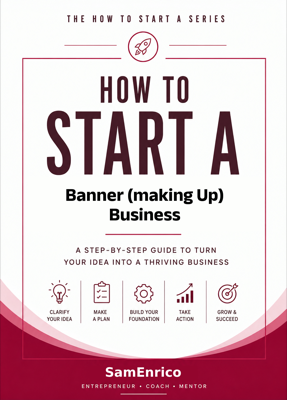 How to Start a Banner (making Up) Business (Beginners Guide)Redden Aimee$11.99
 To Go SpecialistRedden Aimee$11.99
You may also like
 Hong Kong Handover 1997Dunn Johnnie$11.99
 Zumba For Postnatal Recovery CourseNeal Christian$11.99
 Zumba for BeginnersLadner Nikia$11.99
 YouTube Comment Mining GuideHumes Pandora$12.99
 Worry Box MeditationCarlin Rudy$11.99
 Workplace Stress MeditationNguyen Lynn$11.99
 Workplace Stress and Sleep RepairHawley Ivory$11.99
 Workplace Perfectionism CureDelaney Jeffry$11.99
 Workplace Injustice Anger GuideWallen Isabelle$11.99
 Work Addiction and Burnout LinkGreenwood Ester$11.99
 Women in Yoga and WellnessBeattie Galina$11.99
 Women in Stand Up ComedyChun Evangeline$11.99