
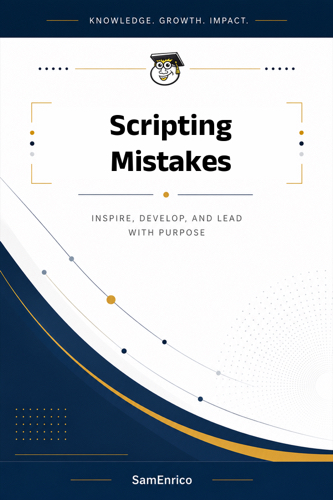
Free sample
Chapter 1: The Compiler's Lie...--The compiler said your code was fine. It ran without errors. The tests passed—all twelve of them. You deployed on a Friday afternoon, high-fived your teammates, and went home feeling like a champion.Then the pager went off at 2:47 AM.Not a crash. Not an exception.
Just a slow, creeping degradation. The system was still running, but it was getting slower by the hour. By Monday morning, the database connection pool was exhausted. The payment queue had 40,000 stalled transactions. Your "working code" had cost the company $87,000 in failed charges and customer support tickets.The code worked.
That was never the problem.The problem was that "working" is the lowest possible bar. A sandwich that won't kill you is technically "working." A car that starts but has no brakes is technically "working." Your code compiled, and you mistook that for goodness.This chapter dismantles the most expensive mistake in software development: the belief that correct execution equals correct design. You will learn why your colleagues secretly hate maintaining your code, why technical debt is compound interest on laziness, and how one broken window invites a thousand more. Most importantly, you will learn to distinguish between tactical programming (shipping features today) and strategic programming (building systems that last for years).By the end of this chapter, you will never look at a green test suite the same way again.The Day Working Code Bankrupted a Rocket Let us begin with a cautionary tale that costs $370 million to tell.On June 4, 1996, the European Space Agency launched the Ariane 5 rocket. It was the rocket's first flight.
Onboard were four scientific satellites worth half a billion dollars. The launch was flawless for the first 36 seconds. Then the rocket veered off course, triggered its self-destruct mechanism, and exploded in a fireball over French Guiana.The cause? A single line of code that worked perfectly.Here is what happened. The Ariane 5 used guidance software inherited from the Ariane 4 rocket.
The software contained a routine that converted a 64-bit floating point number (the rocket's horizontal velocity) into a 16-bit signed integer. On Ariane 4, this conversion was safe because the horizontal velocity never exceeded the 16-bit limit. On Ariane 5, the horizontal velocity was much higher. The number overflowed. The software threw an exception.
The exception crashed the guidance computer. The backup computer was running the same software. It crashed too. The rocket had no guidance. It destroyed itself.Here is the crucial detail: the conversion routine was not even needed during powered flight.
It was only used after liftoff for alignment calibration. The software ran it anyway because the engineers had never thought to turn it off. The code worked on Ariane 4. It compiled without errors. It passed every test.
It was, by every conventional measure, correct.And it blew up a rocket.This story reveals the first and most important truth of this book: correct execution is not the same as correct design. The compiler checks syntax. It does not check sense. The test suite checks expected behavior. It does not check unexpected conditions.
Your code can run for years and still be a disaster waiting to happen.The Ariane 5 explosion was not a fluke. It was a predictable consequence of confusing "it runs" with "it is right." Every day, in every software company, smaller versions of this disaster unfold. A payment system charges the wrong amount because an integer overflow wraps around. A medical device malfunctions because a null pointer slips through. A social media algorithm goes viral for the wrong reasons because a developer assumed a value would always be positive.The code runs.
That is not enough.Technical Debt Is Compound Interest for Cowards Ward Cunningham, who coined the term "technical debt" in 1992, described it this way: shipping imperfect code is like taking out a loan. You get the feature out faster—that is the loan principal. But every future change costs extra effort—that is the interest. Eventually, the interest payments become so large that you cannot make progress at all. You are bankrupt.Most developers misunderstand technical debt.
They think it means "messy code" or "lazy programming." It does not. Technical debt is a financial metaphor, not a moral judgment. Sometimes, taking out debt is smart. You borrow money to buy a house because the house appreciates faster than the interest accumulates. Similarly, you might ship imperfect code to meet a market deadline because the revenue from shipping today outweighs the future cost of fixing it.The mistake is not technical debt.
The mistake is ignoring the interest.Let me give you a concrete example. Suppose you need to add a new feature to a payment processing system. The clean way takes two weeks: you would refactor the payment module, add proper abstractions, write comprehensive tests. The quick way takes two days: you add an if statement inside an existing 500-line function and call it done.You choose the quick way. You have taken out a debt of 1.8 weeks of future work (the difference between two days and two weeks).
That is your principal.Now, six months later, a new requirement arrives: support multiple currencies. The clean way would have taken three days because the refactored module was designed for extensibility. The quick way now takes two weeks because you have to untangle the original mess, plus the three other if statements that developers added later, plus the two bug fixes that hard-coded assumptions about currency.Your interest payment is 1.7 weeks of extra work. And you will pay it every time you touch that module.After three features, you have paid more in interest than the original debt. After five features, you cannot pay down the principal at all—the code is so tangled that refactoring would require rewriting everything.
You are in technical bankruptcy.This is not theoretical. I have consulted for companies where a three-day feature took six weeks because the codebase was so degraded. I have seen teams spend 80% of their time fixing bugs caused by previous quick fixes. I have watched senior engineers quit out of frustration because they could no longer do good work in a broken environment.The interest on technical debt is paid in developer hours, bug reports, customer complaints, and missed deadlines. It is the single largest hidden cost in software development.The Broken Windows Theory of Software In the mid-1980s, criminologists James Wilson and George Kelling proposed the Broken Windows Theory.
They argued that visible signs of disorder—a broken window, graffiti, litter—invite more disorder. A building with one broken window, left unrepaired, will soon have all its windows broken. Why? Because the broken window signals that no one is in charge. The norms have collapsed.
Vandalism is acceptable.The same is true for code.Imagine you join a new team. You open the repository and find clean, consistent, well-formatted code. Every function has a clear name. Every class follows a clear pattern. Tests are comprehensive and fast.
What do you do? You follow the same standards. You respect the norms. You do not want to be the one who introduces sloppiness.Now imagine you open the repository and find the opposite. Files are inconsistently formatted.
Functions are named do Stuff() and process Data(). There are commented-out blocks of code and TODO notes from 2019. Tests…
This is the end of the free sample. Get the eBook to keep going. Buy now
About this book
Details
- Author
- Estrada Molly
- Publisher
- SamEnrico
- Language
- English
- Genre
- Non-Fiction, Self-Help / Mistakes
- Released
- 2026-06-06
- Pages (approx.)
- 129
- Available as
- eBook, Audiobook

Read better in the ZLOADR app
Your eBooks on your phone or tablet. Sign in with your SamEnrico account and start reading.
More by Estrada Molly
 I Statements for AssertivenessEstrada Molly$11.99
 Weekly Interruption Audit GuideEstrada Molly$11.99
 Napoleon Death Theories GuideEstrada Molly$11.99
 Fluency Persuasion GuideEstrada Molly$11.99
 Charlie Munger PartnerEstrada Molly$11.99
 Fishing Trip Alibi CheckEstrada Molly$11.99
 Golfer's Elbow Rehabilitation PlanEstrada Molly$11.99
 The Freelance Automated InvoicingEstrada Molly$11.99
 The Great Unmasking: How the Internet Outed a Secret SocietyEstrada Molly$11.99
 The Battle of the Bulge: Hitler's Last Gamble in the ArdennesEstrada Molly$11.99
 The Complete Guide to the No Fad DietEstrada Molly$11.99
 US Visa Interview For Art StudentsEstrada Molly$12.99
You may also like
 Pain Meditation MistakesBourque Jolyn$11.99
 Remote Work MistakesSherill Paris$11.99
 Parent Time MistakesSimpson Marian$11.99
 Chunking MistakesDoan Sarina$11.99
 Grit Mistakes GuideChandler Natalie$11.99
 Memory Palace MistakesAmmons Jina$11.99
 Interruption MistakesEdmonds Darcy$11.99
 Habit Mistakes GuideStrauss Asha$11.99
 Goal Setting MistakesLemieux Arnetta$11.99
 Difficult Conversation MistakesChamberlain Sharron$11.99
 Anticipatory Grief MistakesMarcum Talisha$11.99