
Non-FictionSelf-HelpRemote Work
Remote Worker Time Block eBook
Creates structure without office cues and boundari
Creates structure without office cues and boundaries.
Formats
Free sample
Chapter 1: The Vanished Scaffolding--–- On a Wednesday afternoon in October, a project manager named David did something that, three years earlier, would have been unimaginable. He finished a complex budget reconciliation, submitted it to his boss, received a “great work” reply within minutes, and then — instead of feeling satisfied — he opened his laptop again two hours later to “just check if anything else came in.” Nothing had. He checked again at 9 PM. Again at 11 PM. He fell asleep with his phone on his chest, Slack still open.David had not been asked to work late.
His boss had praised his efficiency. His team had logged off at 5 PM. By every objective measure, David was done. But he could not stop. The invisible leash that tied him to his workstation had no physical length, no natural endpoint, no moment when the door locked and the lights dimmed and the universe itself signaled: go home.If this feels familiar, you are not alone.
You are not weak-willed. You are not addicted to your job. You are experiencing the single most destructive consequence of remote work — the disappearance of what psychologists call environmental scaffolding.This entire book is built on a simple promise: by the time you finish Chapter 12, you will have rebuilt that scaffolding from scratch, using tools that require no willpower, no expensive equipment, and no permission from your boss. But before we can rebuild, we must understand what we have lost. And to understand that, we must look backward — at the office we thought we hated, at the cues we never noticed, and at the silent crisis unfolding in millions of homes around the world.The Architecture You Never Saw Let us walk through a typical office day in the Before Times.
Not because we should romanticize it — the office had plenty of problems. But because we need to see the invisible machinery that structured your work without you ever having to think about it.7:45 AM. Your alarm goes off. You shower, dress, eat something. You grab your bag and keys.
The act of leaving your apartment — stepping through the front door, locking it, walking down the stairs — is the first cue. You are no longer at home. You are in transit, a liminal space between roles.8:30 AM. You swipe your badge, walk through the lobby, ride the elevator. The sounds change — from street noise to office hum.
The lights are fluorescent, not natural. You smell coffee from the breakroom. You hear the first “good morning” of the day. These are not decorations. They are triggers, telling your brain: work mode engaged.10:00 AM.
You settle into your cubicle or desk. The partition gives you privacy but not isolation. You see other people working — heads down, typing, frowning at spreadsheets. Their visible effort cues your own. You do not decide to focus.
The environment focuses you.12:30 PM. The lunch rush begins. Chairs scrape. Voices rise. People migrate to the breakroom, the cafeteria, the food trucks outside.
The collective movement is permission. You do not feel guilty about leaving your desk because everyone else is leaving too. The pause is shared.4:30 PM. The energy shifts. People start packing up.
Jackets come out of closets. Goodbyes are exchanged. The cleaning crew arrives, a walking reminder that the building is about to close. You do not decide to stop working. The environment decides for you.5:15 PM.
You are in your car or on the train. The transition has begun. You listen to music, scroll your phone, stare out the window. By the time you unlock your front door, you have already performed the psychological work of leaving work behind.Now contrast this with the typical remote work day.8:55 AM. Your alarm goes off.
You roll over, check your phone. Three Slack messages. One email from your boss. You answer them from bed. You have not brushed your teeth.
You have not eaten. You have not left your bedroom. But you are already working.9:15 AM. You shuffle to your desk — which is also your dining table, also your child’s homework station, also where you ate dinner last night. You open your laptop.
The screen is the same screen you used for Netflix last night. The chair is the same chair. The room is the same room. There is no transition. There is no cue.
There is just more work.12:00 PM. You are hungry, but you are also in the middle of something. You keep typing. By 12:45, you grab something from the kitchen and eat it over your keyboard. You are not taking a break.
You are fueling a machine. The pause is gone.4:30 PM. The afternoon has melted into evening. You have not moved much. You have not talked to anyone face to face.
Your neck hurts. Your eyes are tired. But there is no cleaning crew. No jackets being zipped. No collective exodus.
Just you and the endless screen.6:30 PM. You close your laptop — not because you decided to, but because your partner just put dinner on the table. You eat quickly, distracted, half-reading emails on your phone. After dinner, you open the laptop again. “Just one more thing.” Two hours later, you are still there.10:00 PM.
You are in bed, but your brain is still at work. You cannot sleep. You pick up your phone. Slack. Email.
Just checking. Just in case.The difference is not about discipline. The difference is about architecture.The office was a scaffold — a system of cues, boundaries, and social pressures that held your work in place and kept it from leaking into the rest of your life. The scaffold was invisible when it worked. You did not notice the cues because you were never taught to see them.
But they were there, every single day, holding up the structure of your attention.Remote work did not just move your desk. It removed the scaffold entirely. And now you are standing in the rubble, wondering why you cannot build anything that stays standing.The Three Pillars That Collapsed The office scaffold rested on three pillars. When you understand these pillars, you will understand exactly what remote work has taken from you — and exactly what you need to rebuild.Pillar One: Physical Separation The office was a different place. Different air, different light, different sounds, different smells.
The very act of walking through the door triggered a shift in your psychology. This is not mysticism; it is context-dependent memory, a well-documented phenomenon in cognitive science. Your brain associates specific environments with specific behaviors. The office was associated with work. Your home was associated with rest.When you work from home, those associations collide.
The same space that should trigger relaxation now triggers deadlines. The same chair that should signal comfort now signals back pain from five hours of typing. Your brain cannot hold two conflicting associations in the same environment without paying a price. That price is called role blurring — the feeling that you are never fully at work and never fully at home, but always somewhere in between, trapped in a gray zone of perpetual half-attention.Pillar Two: Temporal Rhythm The office had a heartbeat. Mornings were for focus.
Midday was for collaboration and eating. Afternoons were for meetings and shallow work. Evenings were for leaving. This rhythm was…
This is the end of the free sample. Get the eBook to keep going. Buy now
About this book
Details
- Author
- Knudson Kennith
- Publisher
- SamEnrico
- Language
- English
- Genre
- Non-Fiction, Self-Help, Remote Work
- Released
- 2026-06-08
- Pages (approx.)
- 148
- Available as
- eBook, Audiobook

Read better in the ZLOADR app
Your eBooks on your phone or tablet. Sign in with your SamEnrico account and start reading.
More by Knudson Kennith
 Global Tech Talent Migration ReportKnudson Kennith$11.99
 Sinead OConnor Nothing ComparesKnudson Kennith$11.99
 H&M Outfit Comparison GuideKnudson Kennith$11.99
 The Startup Financial ModelKnudson Kennith$11.99
 Email Mobile Swipe RulesKnudson Kennith$11.99
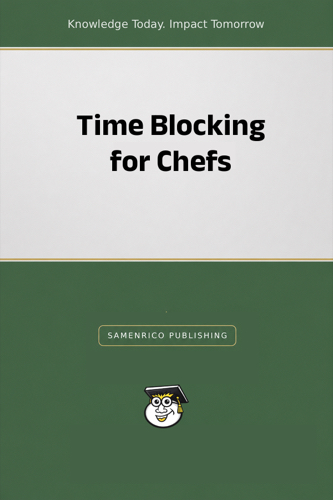 Time Blocking for ChefsKnudson Kennith$11.99
 Scripting for Study FocusKnudson Kennith$11.99
 The Cairo Library Wars: A Battle for Knowledge in the Heart of Egypt (1920s)Knudson Kennith$11.99
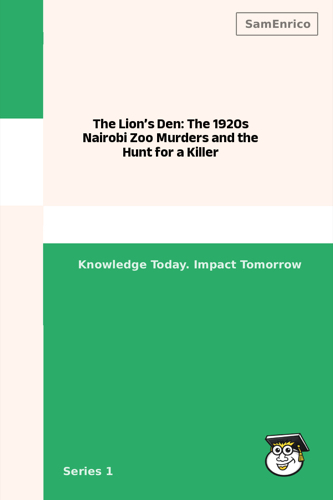 The Lion’s Den: The 1920s Nairobi Zoo Murders and the Hunt for a KillerKnudson Kennith$11.99
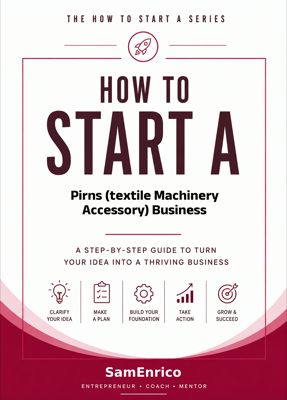 How to Start a Pirns (textile Machinery Accessory) Business (Beginners Guide)Knudson Kennith$11.99
 How to Produce Pommel HorsesKnudson Kennith$11.99
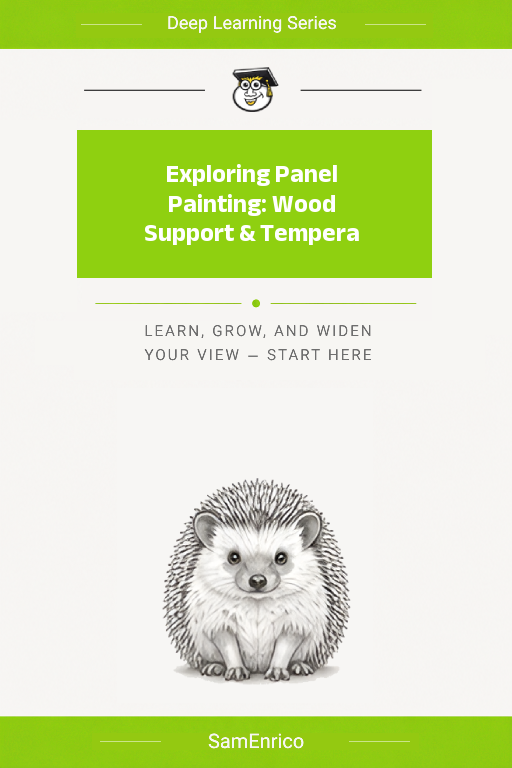 Exploring Panel Painting: Wood Support & TemperaKnudson Kennith$11.99
You may also like
 Hong Kong Handover 1997Dunn Johnnie$11.99
 Zumba For Postnatal Recovery CourseNeal Christian$11.99
 Zumba for BeginnersLadner Nikia$11.99
 YouTube Comment Mining GuideHumes Pandora$12.99
 Worry Box MeditationCarlin Rudy$11.99
 Workplace Stress MeditationNguyen Lynn$11.99
 Workplace Stress and Sleep RepairHawley Ivory$11.99
 Workplace Perfectionism CureDelaney Jeffry$11.99
 Workplace Injustice Anger GuideWallen Isabelle$11.99
 Work Addiction and Burnout LinkGreenwood Ester$11.99
 Women in Yoga and WellnessBeattie Galina$11.99
 Women in Stand Up ComedyChun Evangeline$11.99